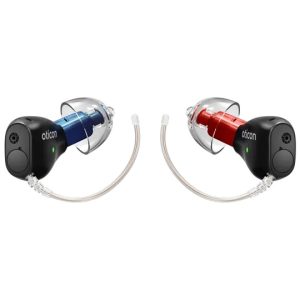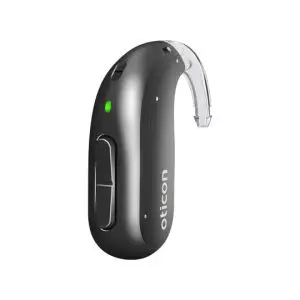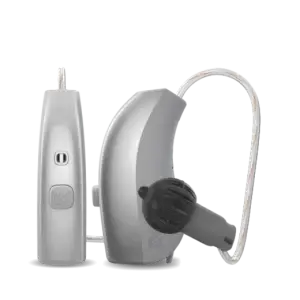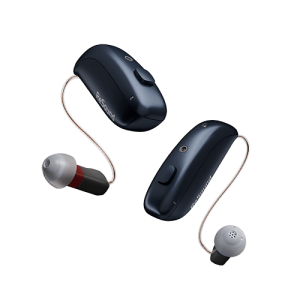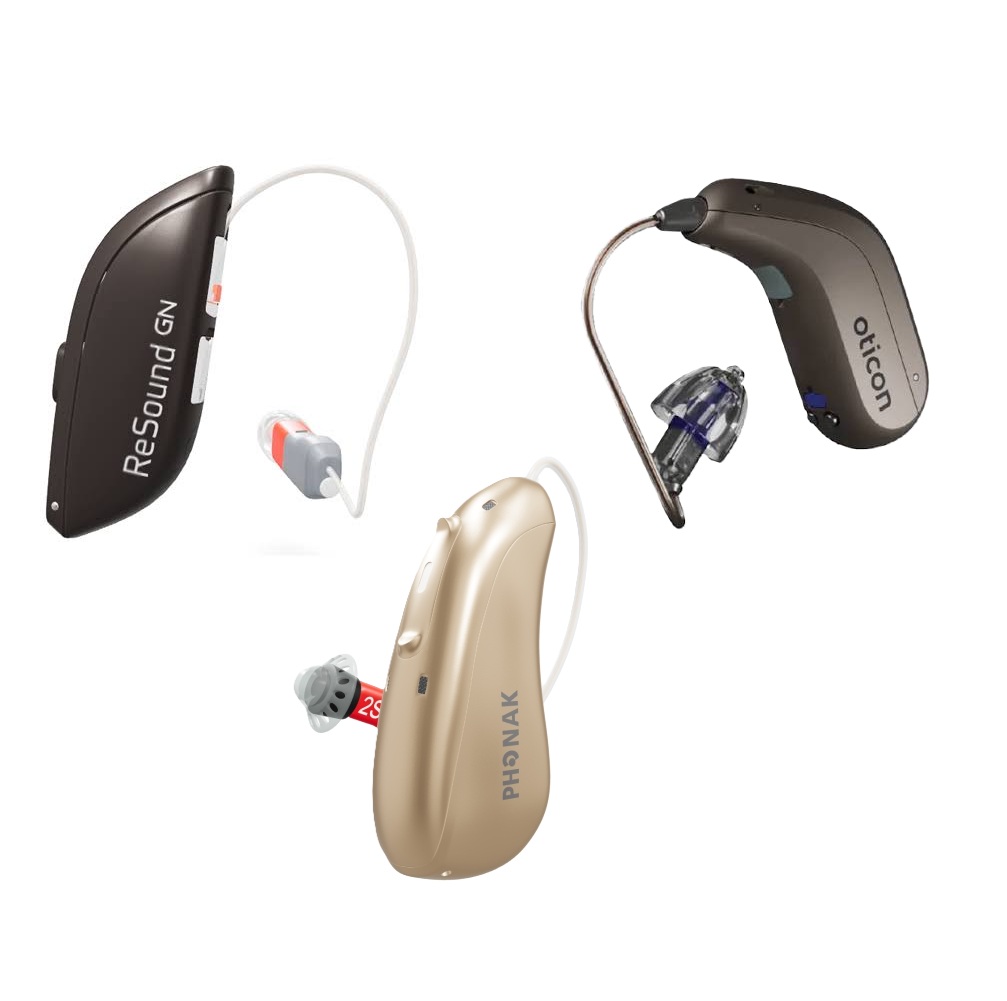
Three of the most clinically significant prescription hearing aid platforms on the market right now are the ReSound Vivia, the Oticon Intent, and the Phonak Audeo Ultra Sphere Infinio. We carry and fit all three at Hears Hearing & Hearables, which puts us in a position to compare them from actual clinical experience rather than from marketing materials.
The honest answer before we get into specifics: no single platform is best for everyone. The right choice depends on your hearing profile, your listening priorities, your connectivity needs, and whether you need fully remote care. This post is designed to help you understand what each platform genuinely does well so you can make a more informed decision before a demo or a purchase. For a direct head-to-head between Oticon and Phonak specifically, see our dedicated comparison post.
The Three Platforms at a Glance
ReSound Vivia: Organic Hearing and M&RIE
ReSound’s current flagship is built around what they call Organic Hearing, a processing philosophy that prioritizes preserving the natural acoustic characteristics of sound rather than aggressively managing it. The Vivia’s most distinctive feature is M&RIE, the Microphone and Receiver In Ear, which places a third microphone inside the ear canal to capture sound after it has already been shaped by the patient’s own outer ear. No other manufacturer has an equivalent. ReSound is owned by GN Hearing and recently announced a sale to Amplifon, though clinical operations continue unchanged for now.
ReSound introduced a new flagship, Sensia, in August 2026, built around an AI classifier and beamforming system rather than M&RIE. We don’t yet have hands-on data on how it stacks up against Oticon and Phonak here, once we’ve spent time with it in clinic, we’ll update this comparison.
Oticon Intent: BrainHearing and 4D Sensors
Oticon’s platform is built on the philosophical premise that the brain should do the work of deciding what to focus on rather than the hearing aid making those decisions. BrainHearing gives the listener access to a full, balanced sound scene. The Intent adds 4D Sensor technology that detects head movement, body movement, conversation activity, and acoustic environment simultaneously, adapting noise support in real time based on what the wearer is physically doing. Ranked number one of 34 prescription hearing aids by HearAdvisor in independent testing.
Phonak Audeo Sphere Infinio: Dedicated AI Chip
Phonak’s approach uses a separate, dedicated AI processing chip specifically for noise suppression, running alongside the main processing chip without competing with it for resources. AutoSense OS 7.0 classifies environments automatically. Phonak has the largest global market share of any hearing aid manufacturer, universal Bluetooth connectivity to iPhone and Android without restrictions, and the Roger wireless microphone ecosystem for educational and multi-listener settings.
Sound Philosophy: Three Different Approaches to the Same Problem
All three platforms are trying to solve the same fundamental challenge: making speech intelligible in noise while preserving sound quality and reducing listening fatigue. They approach it differently enough that the differences are audible and preference-determining for many patients.
- ReSound Vivia: uses the patient’s own outer ear acoustics through M&RIE, preserving natural spatial cues and localization. Sound tends to feel more like hearing than like listening through a device. Strongest for patients who prioritize spatial awareness, own voice naturalness, and outdoor use where wind noise reduction from the sheltered in-ear microphone is a practical benefit.
- Oticon Intent: provides a full, open sound scene and trusts the brain to process it, rather than aggressively directing attention. The 4D Sensor’s real-time adaptation based on physical movement adds a layer of naturalness that is most audible in varied, active listening situations. Consistently the sound preference winner in our demo sessions.
- Phonak Sphere: uses aggressive, AI-chip-driven noise processing to make speech stand out against background noise. Most effective in the most demanding multi-talker situations. Some patients find the sound slightly more processed than Oticon or ReSound; others specifically prefer how cleanly Phonak separates speech from noise in difficult environments.
M&RIE: ReSound’s Unique Differentiator
The M&RIE receiver is worth its own section in any comparison because it has no equivalent from Oticon or Phonak. Standard hearing aid microphones sit behind the ear, picking up sound before the outer ear has shaped it. M&RIE picks up sound from inside the ear canal, after the outer ear has already applied the natural localization and spatial processing it evolved to provide.
For patients whose primary complaint with previous hearing aids was that sound felt directionless, artificial, or difficult to locate in space, M&RIE addresses the root cause rather than trying to digitally simulate what the outer ear already does naturally. For outdoor and active patients, the sheltered microphone position produces dramatically less wind noise than behind-the-ear microphones. No Oticon or Phonak device offers an equivalent architecture.
Connectivity: Where Phonak Has a Clear Advantage
Phonak’s universal Bluetooth Classic connectivity to iPhone, Android, Windows, and virtually any Bluetooth-enabled device without compatibility restrictions is one of its most practical differentiators. ReSound uses Bluetooth LE Audio with strong connectivity to current iPhone, iPad, Mac, and select Android devices, plus Auracast support. Oticon uses the same Bluetooth LE Audio architecture.
For most patients this difference does not affect daily use. Those with Android phones, Windows computers, or multiple Bluetooth devices they want to connect simultaneously, Phonak’s connectivity is more reliable across the board. For patients interested in Auracast, both ReSound and Oticon are better positioned than Phonak’s current platform.
Telehealth and Remote Care
- ReSound: supports remote programming for follow-up adjustments through the Smart 3D app. First fittings can be performed remotely under certain circumstances through ReSound’s remote care framework, giving it more flexibility than Oticon for fully remote patients.
- Oticon: supports remote follow-up programming through the Companion app but does not currently permit first fittings to be performed remotely, and tinnitus program adjustments require an in-person visit. The most limited remote care of the three brands. [LINK to Oticon telehealth post]
- Phonak: supports comprehensive remote fitting workflows including initial fittings under appropriate circumstances. The most capable remote care framework of the three brands for patients who cannot easily access in-person care.
Tinnitus Management
- ReSound: ReSound Relief program with nature sounds, white noise, pink noise, notched sounds, and customizable soundscapes available at all four Vivia technology levels. Strong app-based patient control through Smart 3D allows independent adjustment without clinic visits.
- Oticon: Tinnitus SoundSupport with ocean waves, white noise, pink noise, and customizable sounds at all four Intent technology levels. Program adjustments require in-person appointments.
- Phonak: Tinnitus Balance available through the myPhonak app on compatible platforms.
Roger System: Phonak Only
Phonak’s Roger wireless microphone system for classrooms, lecture halls, multi-listener group settings, and educational environments has no equivalent from ReSound or Oticon. Roger uses 2.4 GHz digital transmission, supports unlimited simultaneous receivers, and integrates directly into Phonak hearing aids through RogerDirect. For patients in educational settings, patients with children who use hearing aids in school, or anyone who needs multi-listener wireless microphone capability, Phonak is the only option among these three.
Fitting Experience
- ReSound: generally straightforward fitting with predictable dome and receiver compatibility. M&RIE requires stable ear canal retention for full benefit, and patients whose anatomy does not suit the M&RIE receiver well may need a standard receiver instead.
- Oticon: fitting is generally predictable and straightforward. Battery life on the Intent is a consistent patient comment, improved from older Oticon platforms but still slightly behind some competitors.
- Phonak: dome and receiver fitting can be less predictable across a wider range of ear anatomies than ReSound or Oticon, and feedback management is more frequently a limiting factor. Custom molds solve most fitting challenges but may require planning from the start for patients with anatomically challenging ear canals.
Pricing
All three brands operate under minimum advertised price policies that prohibit online price display. We cannot list prices for ReSound, Oticon, or Phonak on this page. Contact Hears Hearing & Hearables for current pricing on all three platforms at each technology level, along with an honest comparison of what each costs relative to what it delivers for your specific listening situation.
Who Should Choose Which
ReSound Vivia:
- M&RIE’s spatial and localization benefits appeal to you: particularly if previous hearing aids felt directionless or artificial.
- You spend significant time outdoors: the sheltered in-ear microphone produces dramatically less wind noise than behind-the-ear alternatives.
- Your own voice quality through hearing aids has been a past complaint: M&RIE captures voice resonance more naturally than any behind-the-ear microphone.
- You want strong app-based tinnitus management control: Relief’s independent adjustment capability through Smart 3D is stronger than Oticon’s clinic-dependent approach.
- You need some remote care flexibility: ReSound’s remote fitting capability is more comprehensive than Oticon’s.
Oticon Intent:
- Natural, open sound quality is the top priority: the BrainHearing approach and 4D Sensor combination produce the sound most patients prefer in our demo sessions.
- You have an active, varied listening life: the 4D Sensor’s real-time adaptation based on movement produces the most seamless automatic experience across changing environments.
- You are comfortable with an in-person first fitting: the telehealth limitation is not relevant for patients with clinic access.
- Build quality and device feel matter: Oticon is consistently perceived as the most premium-feeling device of the three.
Phonak Audeo Sphere Infinio:
- Maximum noise suppression in demanding environments is the priority: the dedicated AI chip shows its largest advantage in multi-talker and complex noise conditions.
- You use Android phones or Windows computers: Phonak’s universal Bluetooth is more reliable across a wider device range.
- You need or want the Roger system: no ReSound or Oticon equivalent exists.
- You need fully remote care: Phonak’s telehealth framework is the most comprehensive of the three.
There is no definitive published research comparing these three platforms head-to-head in the same study population under the same conditions. Independent testing organizations like HearAdvisor provide standardized data, and patient preference in real-world conditions is a different and equally valid data point. The right choice ultimately comes down to your specific hearing profile, listening priorities, and what sounds right to your ears in a demo.
Want to hear all three platforms before deciding? We offer hearing aid demonstrations at Hears Hearing & Hearables at our Hopkins, Minnesota clinic and via telehealth. Contact us to arrange a comparison demo.
Frequently Asked Questions: ReSound vs Oticon vs Phonak
Which is the best hearing aid, ReSound Vivia, Oticon Intent, or Phonak Sphere?
There is no single best hearing aid across all patients. HearAdvisor’s independent testing places Oticon Intent at number one overall in standardized conditions. In our clinical demo experience, Oticon’s sound wins most often for patients who prioritize naturalness. ReSound M&RIE wins for patients who prioritize spatial accuracy and wind noise reduction. Phonak wins for patients who need maximum noise suppression in demanding environments or universal Bluetooth connectivity. The right choice depends on your specific priorities and what you hear in a demo.
What makes ReSound Vivia different from Oticon and Phonak?
ReSound’s most distinctive feature is M&RIE, the Microphone and Receiver In Ear, which places a third microphone inside the ear canal to capture sound after the patient’s own outer ear has shaped it. No other manufacturer has an equivalent. This produces meaningfully better spatial localization, own voice naturalness, and wind noise reduction than behind-the-ear microphone designs can achieve through digital processing alone.
Which hearing aid has the best Bluetooth connectivity?
Phonak has the broadest Bluetooth compatibility through its universal Bluetooth Classic technology, connecting reliably to iPhone, Android, Windows, and most Bluetooth devices without restrictions. ReSound and Oticon both use Bluetooth LE Audio, which offers excellent connectivity to current iPhone, iPad, Mac, and select Android devices and supports Auracast. For patients with Android phones or Windows computers, Phonak’s connectivity is the most reliable of the three.
Which brand is best for fully remote hearing care?
Phonak has the most comprehensive remote care framework, including initial fitting under appropriate circumstances. ReSound offers more remote care flexibility than Oticon, which requires in-person first fittings and in-person tinnitus adjustments. For patients who cannot access in-person care at all, Phonak is the strongest choice. For patients who can manage one initial in-person visit, both ReSound and Phonak work well for remote follow-up.
Do all three brands hide their prices online?
Yes. ReSound, Oticon, and Phonak all operate under minimum advertised price policies that prohibit authorized retailers from publicly displaying prices. Contact Hears Hearing & Hearables for current pricing on all three platforms, along with an honest comparison of what each costs relative to what it delivers for your hearing situation.