Our consignment store has hearing aids coming and going all the time. We are always happy to help you sort through them, but we also know many people like to shop on their own first. So here is a cheat sheet: a short list of questions to ask yourself so you can pick out the right hearing aid at the right price.
Consignment hearing aids are professionally cleaned, previously owned prescription hearing aids, typically at half the price of a new one or less. If you are still deciding whether prescription hearing aids are right for you, start with our buying and choosing a hearing aid guides and our prescription hearing aid comparison. Read why our consignment hearing aids are safe to buy.
How Our Consignment Store Works
We help each seller choose a fair price for the hearing aid. That price reflects the age of the technology, the brand, the condition, and whether a manufacturer warranty remains.
If you find an aid you love and the price is just out of reach, you can always ask us to ask the seller if they would accept a lower price. We are happy to pass it along. Please keep it respectful, because many sellers are families who have lost a loved one, or people who need to recoup some of what they invested.
Step 1: Decide How New You Want the Technology
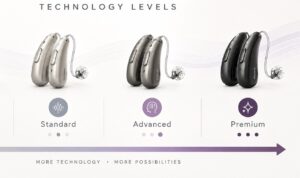
Newer technology costs more. Hearing aid technology improves every year or two, and the newest platforms tend to be better at speech in noise, streaming, and artificial intelligence features. If those matter to you, shop for newer models. If you mostly need clear sound in quiet and one-on-one conversation, older technology can do the job well at a much lower price.
Step 2: Decide Whether You Want a Warranty
A warranty is a real guarantee. It means the hearing aid can go back into the lab or to the manufacturer for repair. Premium, newer technology with a warranty remaining is usually the highest price in the consignment store. Even so, it is typically half the price of a new one, or less.
Check the warranty end date on the listing before you buy. Warranty and age go hand in hand: the newer the aid, the more likely it still has coverage.
Step 3: Know What to Expect at Each Price
- Highest consignment prices: newer, premium technology with a warranty. Still often half the price of new or less. I have only seen one consignment hearing aid sold at $3500 but it was only two months old, with essentially three years warranty. New it would be $4000 plus. Why not save $1000 dollars.
- Middle of the range: last year’s or two-year-old technology, sometimes with a little warranty left.
- Lowest prices, as low as $500: older technology, roughly three years old, with no warranty. We do not list much technology older than about three years, and we cannot sell for much less than that. At lower prices, there is not enough value in the technology to share, and not enough to cover the costs for the seller and us.
If you find a $500 hearing aid, go in knowing it will not have a warranty, and the technology is a few years old. For many people, that is still a good deal. Just make it a choice, not a surprise. Also a great price for a backup hearing aid!
Step 4: Shop by Brand if You Have One
If you wore a particular brand before, or you are replacing a specific aid, start by shopping that brand. You will find an assortment of technology levels and prices within each brand. Staying with a brand you know can make the transition easier, and it can help you stay with accessories you already own.
Step 5: Think About What You Liked and Did Not Like
Ask yourself what you liked and what you did not like about your previous hearing aids. Was the sound too harsh? Was the battery a hassle? Was it uncomfortable? Did it whistle? Did you struggle with the phone? Use those answers to look for something different this time.
Step 6: Use the Filters
Our consignment store lets you search by features. Here is what to filter for:
- Rechargeable: no tiny batteries to change. Good for dexterity and convenience.
- Streaming: Bluetooth connection to your phone, TV, and other devices.
- Style: behind-the-ear or receiver-in-canal styles are what we carry.
- Level of technology: premium, advanced, or standard. Higher levels adapt better to complex environments.
- AI functions: newer aids use artificial intelligence to separate speech from noise.
- T-coil: a telecoil lets you connect to hearing loops in places like churches, theaters, and airports. Learn more in our hearing loops and FM systems guide.
More Things to Check Before You Buy
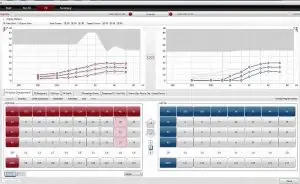
- Hearing loss match: a hearing aid must be programmed to your audiogram. Many styles use a receiver chosen for your degree of loss, so make sure the aid can be fit for your hearing, not just someone else’s.
- Brand and software: make sure a provider you can reach can program that brand. Ask us if you are not sure.
- Age of the technology: ask how old the platform is. A newer platform usually means better support from the manufacturer.
- Included items: check whether the charger, ear tips, domes, and cleaning tools are included.
- Condition: all of our aids are professionally cleaned. Ask about cosmetic wear if it matters to you.
Do Not Forget Consignment Accessories
Accessories are often available on consignment too: remote microphones, TV streamers, chargers, and more. They can save you money, and buying them is another way to help a good cause. Check that the accessory works with your specific hearing aid platform before you buy.
Thinking About a Backup Pair?
Consignment is a smart way to buy a backup. If your main hearing aids ever need repair, a spare pair means you are not left without hearing while they are in the lab. A low-cost backup in the same brand is the best choice because it can often share a charger, accessories, and app with your main pair. Same-brand aids are also programmed with the same software, so your provider can set them up quickly. Before you buy, check that the backup uses the same charger and accessories as your main aids, since chargers and accessories can differ by generation within a brand. A backup does not need to be the newest technology. Its job is to keep you hearing, and consignment lets you do that at a small cost.
What We Do Not Sell: Custom Hearing Aids
People ask why we do not carry custom hearing aids on consignment. A custom aid is made for one person’s ear, so it is not a good fit for someone else, and manufacturers generally do not want those resold. We respect our manufacturer relationships. We are a small part of the market, helping people who need to save a little, and helping families who lost a loved one who rarely wore their hearing aids and have a lot of money tied up in them.
We understand that some hearing aids were bought for $6,000 or more. Much of that price is bundled service, not just the hardware.
Service Is Sold Separately
Consignment prices are for the hearing aids and accessories only. Service is sold separately. We hope you have a local provider who can program and maintain your hearing aids. We are happy to help too. If you need a hearing evaluation, contact us, and we can see you at our Hears to U clinic in Hopkins, Minnesota or help you find a provider near you. All prescription hearing aids need a current audiogram for programming. See how to buy prescription hearing aids online.
Why Buy Consignment?
- You save money: typically half the price of new or less.
- You keep good technology in use: recycling hearing aids keeps them out of drawers and landfills.
- You help real people: sellers and families get something back for a hearing aid they no longer use.
- The quality can be excellent: in my experience as an audiologist, some of our consignment aids are much better than a heavily promoted retail aid.
Cheat Sheet: Consignment Shopping in 60 Seconds
- Newer technology or older? Newer costs more.
- Do I want a warranty? It usually adds to the price.
- Set a budget: warranty plus newer is highest, and $500 is the low end with no warranty.
- Pick a brand I know, or look at several.
- Think about what I liked and did not like about my last aids.
- Filter by rechargeable, streaming, style, level, AI, and T-coil.
- Check accessories on consignment too.
- Line up a provider for programming and service.
- Cannot find what I want? Ask us.
Frequently Asked Questions: Consignment Hearing Aids
Can I negotiate the price?
You can ask us to ask the seller if they would accept less. We will pass it along. Please be respectful of the seller’s needs.
What is the cheapest consignment hearing aid?
About $500. Those aids have no warranty and use technology that is about three years old.
Do consignment hearing aids come with a warranty?
Some do. Newer aids may have a manufacturer’s warranty remaining, which is listed on the product. Older aids usually do not.
Do you sell custom hearing aids on consignment?
No. Custom aids are made for one person’s ear, and manufacturers generally do not want them resold.
What if I cannot find what I need?
Reach out to us and we can help. We are always looking for last year’s technology at a great price, maybe with a little warranty.
Spread the word about consignment. Thanks for reading.