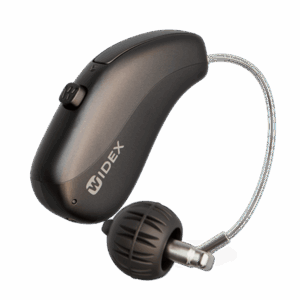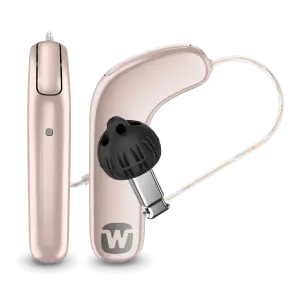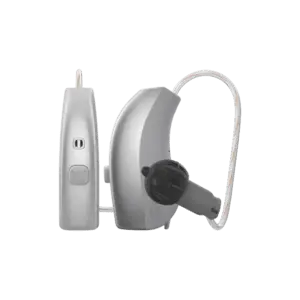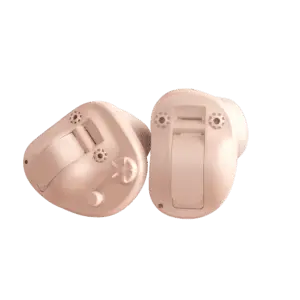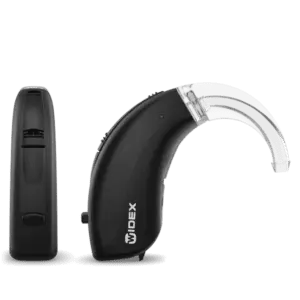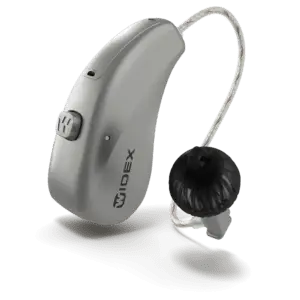
Widex was founded in 1956 by Erik Westermann and Christian Tøpholm in Lynge, Denmark. From their first transistor hearing aids to today’s Allure platform, one thread runs through nearly seventy years of Widex engineering: the belief that a hearing aid should amplify the world as faithfully as possible, manipulating the sound signal only when doing so genuinely helps the listener. That philosophy has made Widex a consistent favorite among audiologists, musicians, and patients who value natural sound above all else.
The following is a clinical and personal perspective on Widex’s evolution, from the early days of fitting hearing aids to the current platform choices that face today’s patients.
The Early Years: Natural Sound as a Design Goal
Widex entered the digital hearing aid era with a reputation already established for sound quality. The Menu hearing aid in 2012 introduced a modular approach, and users could add features as their needs changed. It was ahead of its time in concept if not in market adoption.
The Game Changer: Widex Dream
For many audiologists who fit Widex, the Dream was the pivotal product. The naturalness of the sound was immediately evident, not the processed, amplified quality that characterized most hearing aids of that era, but something closer to how the world actually sounds. For patients with hearing loss who had felt that hearing aids made them aware of the device rather than unaware of the hearing loss, the Dream offered a different experience.
Widex Unique: A Step Further
The Unique technology brought meaningful improvements in sound quality over the Dream. Many patients noticed the difference and chose to upgrade. The sound became more refined, the dynamic range broader. It reinforced the pattern that would define Widex’s trajectory: each generation improving natural sound fidelity rather than chasing feature lists.
Beyond, Evoke, and the Streaming Era
The Beyond was Widex’s first streaming hearing aid with an app. The Evoke brought further improvements in clarity and reduced feedback, with early AI integration through a universal program that adapted to environments. Each generation updated existing devices through software rather than requiring new hardware, a design philosophy that is patient-friendly and environmentally responsible.
Widex Moment and Moment Sheer: ZeroDelay Changes the Game
The Moment series introduced ZeroDelay PureSound, Widex’s solution to the comb filter effect that had given hearing aids their characteristic artificial quality in open-fit configurations. By reducing processing delay to 0.5 milliseconds, the Moment eliminated the interference between aided and unaided sound paths that made open hearing aids sound metallic or echoey.
The Moment Sheer is the current version of this platform, updated software, and the same foundational ZeroDelay architecture. For patients who need telehealth remote care or tinnitus management with Zen fractal tones, the Moment Sheer remains the recommended Widex platform.
The Allure: Current Platform
The Allure launched in 2024-2025 on the W1 chip, with quadrupled processing speed, Speech Enhancer Pro, broader Bluetooth LE Audio architecture, and new form factors, including Widex’s first rechargeable ITE. This hearing aid represents the next chapter in natural sound, more processing power without sacrificing the philosophy of minimal signal manipulation.
Two important limitations for current patients: the Allure does not support telehealth remote programming, and Zen fractal tones are not yet available on the Allure platform. Both features remain on the Moment. Widex has indicated that future firmware updates will continue to evolve the Allure feature set.
The T-Coil: A Consistent Commitment
Throughout its history, Widex has maintained strong telecoil implementation across most of its lineup. T-coils connect hearing aids to hearing loops, electromagnetic induction systems installed in theaters, airports, churches, and public venues that transmit audio directly to the hearing aid without distance or background noise. The Widex SmartRIC does not have built-in telecoils, but the SoundAssist accessory provides telecoil capability for this model. Update: The Widex Allure has T-Coil.
The Widex Passion, a popular early RIC model, was eventually discontinued in part because it lacked a telecoil as hearing loop awareness grew. The history of Widex’s product decisions reflects this ongoing awareness of accessibility infrastructure.
The Accessory Evolution
Widex accessories have evolved significantly alongside the hearing aids themselves:
- TV Dex (discontinued): the original TV streamer requiring a digital-to-analog converter.
- TV Play: replaced the TV Dex with a cleaner connection. Compatible with Evoke and Moment hearing aids.
- TV Play 2 (current): the updated version, compatible with Allure and Moment via Bluetooth LE. The original TV Play is no longer sold.
- Com-Dex: the Bluetooth neck loop streamer for older Widex platforms. Superseded by the Sound Assist for Moment and newer users.
- Sound Assist (current): three-in-one remote mic, Bluetooth streamer, and remote control for Moment and Moment Sheer hearing aids. Compatible with Moment only, not Allure.
- Soundconnect dongle: USB Dongle that plugs into a computer that will stream to the Moment hearing aids only.
Widex and WS Audiology
In 2018 Widex merged with Sivantos to form WS Audiology. The merger brought Widex under the same corporate umbrella as Signia and Rexton. Widex has continued to operate as a completely independent brand with its own processing philosophy, engineering team, product line, and accessory ecosystem. The merger has not changed what Widex sounds like.
The Sound No Other Brand Replicates
Some patients ask why Hears Hearing & Hearables carries multiple brands when Widex is so good. The answer is that hearing is personal. Not everyone wants to hear the squirrel. Not everyone benefits from soft sound emphasis. The clinic has patients who tried Widex and found the amplified world too rich, too present, too much. They needed something different and found it elsewhere.
But for the patients who do want to hear the soft world, musicians who want their instruments to sound like instruments, patients who have felt cut off from the subtle texture of daily life, first-time users who find other hearing aids feel artificial, Widex is the answer that keeps coming up. Decades of fitting hearing aids, across multiple brands and platforms, produce that conclusion consistently.
Interested in Widex? The best way to understand what makes Widex different is to hear it. Contact Hears Hearing & Hearables to arrange a demonstration.
Frequently Asked Questions: Widex History
When was Widex founded?
Widex was founded in 1956 by Erik Westermann and Christian Tøpholm in Lynge, Denmark. The company has been headquartered in Denmark since its founding and has maintained Danish engineering leadership through its evolution into a global hearing aid brand.
Who owns Widex now?
Widex is owned by WS Audiology, formed in 2018 through the merger of Widex and Sivantos. WS Audiology also owns Signia and Rexton. Despite the shared parent company, Widex operates as a completely independent brand with its own sound processing philosophy, product line, and accessory ecosystem.
What is the latest Widex hearing aid?
The Widex Allure is the current flagship platform, built on the W1 chip with PureSound ZeroDelay, Speech Enhancer Pro, Bluetooth LE Audio architecture, and available in RIC, BTE, and ITE form factors including a rechargeable ITE. The Moment Sheer remains the recommended platform for patients who need telehealth remote programming or Zen fractal tones for tinnitus management.
What happened to the Widex Evoke, Dream, and Unique?
These are previous-generation platforms that have been superseded by the Moment and Allure series. The Dream, Unique, Evoke, and Beyond were each significant in their time and Widex updated them via software rather than requiring new hardware purchases. Making it a patient-friendly approach. If you are wearing an older Widex platform, contact Hears Hearing & Hearables to discuss whether the current Moment or Allure platform would offer meaningful improvements.