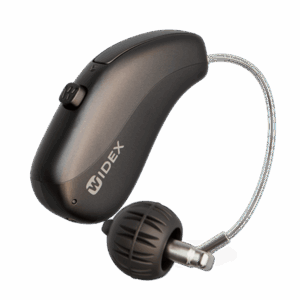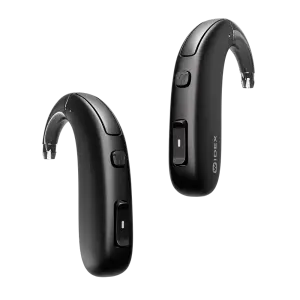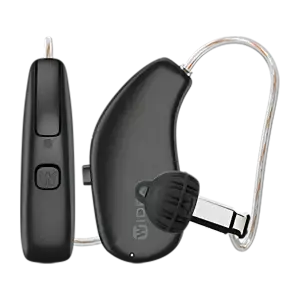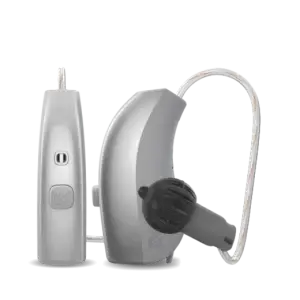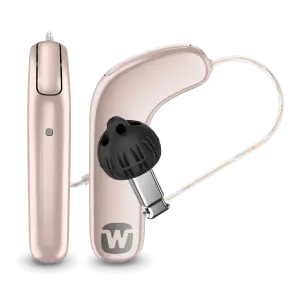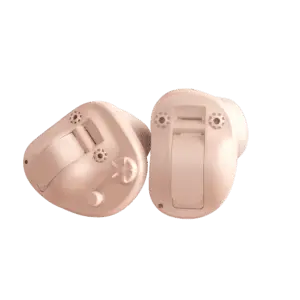
When people describe other hearing aids as sounding artificial, metallic, or tinny, particularly their own voice, they are usually describing the comb filter effect. It is a specific acoustic artifact caused by a processing delay inside the hearing aid. Widex engineers spent years solving it. The result is ZeroDelay PureSound, and understanding how it works explains why Widex consistently sounds different from competitors.
This post covers the problem, the solution, and the broader sound philosophy that led Widex here.
The Problem: Processing Delay and the Comb Filter Effect
Every digital hearing aid must perform a sequence of operations on incoming sound before delivering it to the ear: capture the acoustic signal through the microphone, convert it to digital data, process it through noise reduction and amplification algorithms, and deliver the result through the receiver. All of this takes time.
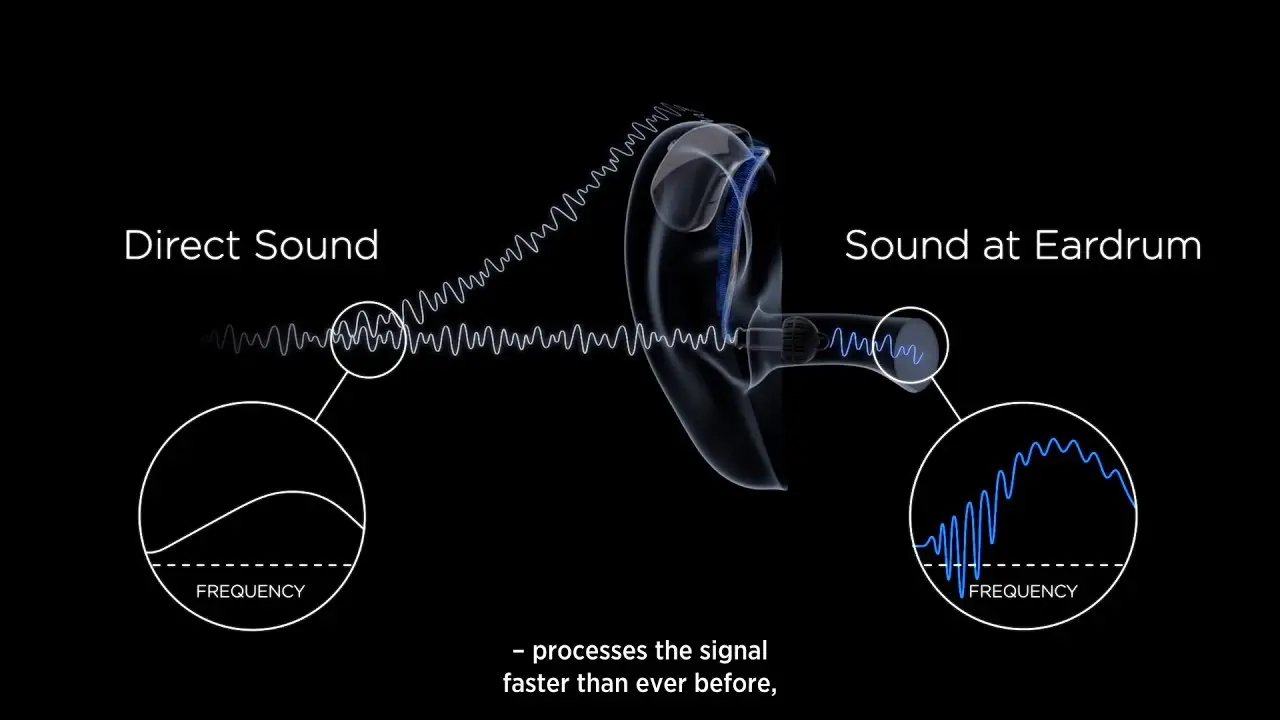
Traditional hearing aids take 5 to 8 milliseconds to complete this process. In a closed-fit hearing aid, one that seals the ear canal, this delay is less noticeable because the only sound reaching the eardrum travels through the hearing aid. But in an open-fit hearing aid, both paths exist simultaneously: direct sound reaches the eardrum naturally at the speed of sound, and aided sound arrives 5 to 8 milliseconds later. Two versions of the same signal, slightly offset in time, combine and interfere with each other.
This interference is the comb filter effect. It causes specific frequencies to cancel partially or reinforce each other in a regular pattern, producing the metallic, echoey, or artificial quality that new hearing aid users often find immediately off-putting. It is most noticeable in open-fit hearing aids because the direct sound path is strongest, which is also the most common fitting style for mild to moderate hearing loss.
The Solution: ZeroDelay Accelerator
Widex engineers developed the ZeroDelay Accelerator, a dedicated ultra-fast signal processing pathway that compresses all necessary amplification and sound shaping into less than 0.5 milliseconds. At that processing speed, the time offset between direct and aided sound is below the threshold of perceptual interference. The comb filter effect is eliminated.
0.5 milliseconds is ten to sixteen times faster than traditional hearing aid processing. At this speed, the aided and unaided sound paths are essentially synchronized, the brain cannot detect the timing difference, and the interference pattern that produces metallic sound does not form. This is not a marginal improvement; it is a categorical one.
Widex calls the resulting sound experience PureSound. In an internal Widex survey, 95% of participants reported that sounds appeared exactly where they would expect them to be, preserving the natural spatial characteristics of the listening environment that traditional processing disrupts.
The Foundation: TruSound Compression
ZeroDelay addresses the timing problem. TruSound Compression addresses the amplitude problem, how hearing aids handle the enormous range of sound levels in the real world.
True Input Technology
Widex True Input Technology gives their hearing aids an input dynamic range from 5 dB SPL (near absolute silence) up to over 113 dB SPL without distortion or peak clipping. Most competitors begin compressing or clipping sound signals well before reaching high input levels, which flattens the natural dynamic range. Louder sounds become compressed versions of themselves rather than accurately represented audio. Widex captures the full range.
Soft Sound Amplification
TruSound applies compression with very low thresholds; the hearing aid begins amplifying soft sounds at levels far below where most competitors engage. This is why Widex wearers report hearing things that went unnoticed in their previous hearing aids: rustling leaves, distant conversations, quiet ambient sounds. The aids are engineered to amplify those sounds faithfully, not wait for sounds to reach a threshold before responding.
TruSound Stabilizers
In dynamic environments where sound levels shift rapidly, a door slamming, transitioning from a quiet room to a noisy one, answering the phone, TruSound Stabilizers manage abrupt changes to prevent distortion and smooth sound peaks without compromising the natural character of the transition. The result is consistent quality across rapidly changing acoustic conditions.
TruSound Softener
Transient sounds, brief unexpected noises like a dropped utensil, keyboard clicks, fireworks, or a car horn, can be startling and fatiguing for hearing aid wearers. TruSound Softener reduces the irritation of transient sounds without eliminating them, distinguishing between different levels of transient noise and managing them according to their impact on comfort. The goal is audibility and comfort simultaneously, not hiding sounds, but delivering them without the jarring quality that makes transient sounds in amplification fatiguing.
Speech Enhancer Pro: The Allure Update
The Widex Allure platform adds Speech Enhancer Pro to the ZeroDelay foundation, a 52-band high-resolution spectral analysis engine that continuously monitors and separates speech from noise in real time, applying targeted gain and compression with greater frequency-band precision than previous platforms. Earlier Widex platforms adjusted broader frequency regions; Speech Enhancer Pro adjusts in narrower bands, preserving subtle speech cues more selectively in dynamic noisy environments.
Why This Matters for Musicians
Musicians consistently prefer Widex hearing aids over competitors, and the engineering above explains why. Music has a wide dynamic range; the difference between the softest pianissimo and the loudest fortissimo is enormous. There are also transient events, percussive attacks, consonants, and plucked strings. Music has harmonic complexity that peak clipping and aggressive compression destroy.
Widex hearing aids preserve the dynamic range, handle transients without softening them into mush, and process audio without introducing the spectral artifacts that make music sound processed. No other hearing aid brand has produced the same consistent preference among musical patients.
Want to hear the difference ZeroDelay makes? Hears Hearing & Hearables offers demonstration sessions for Widex hearing aids. Contact us to arrange one; the sound quality is the argument.
Frequently Asked Questions: ZeroDelay and PureSound
What is the comb filter effect in hearing aids?
The comb filter effect occurs in open-fit hearing aids when two versions of the same sound arrive at the eardrum at slightly different times: direct sound through the open canal and aided sound through the hearing aid processing pathway, which typically takes 5 to 8 milliseconds. The time offset causes certain frequencies to partially cancel each other, producing a metallic, tinny, or artificial quality. It is most noticeable in the wearer’s own voice and in music.
How does ZeroDelay eliminate the comb filter effect?
ZeroDelay reduces hearing aid processing time to below 0.5 milliseconds, ten to sixteen times faster than traditional hearing aid processing. At that speed, the time offset between direct and aided sound is below the threshold of perceptual interference. The two sound paths are effectively synchronized, and the interference pattern that produces the comb filter effect does not form.
Is ZeroDelay available on all Widex hearing aids?
ZeroDelay PureSound is available on Widex Moment, Moment Sheer, and all Allure platform models. It is incorporated in the Widex Allure RIC, BTE, and ITE models, and in the SmartRIC. Earlier Widex platforms (Evoke, Beyond, Unique, Dream) predate ZeroDelay but still reflect Widex’s broader philosophy of minimal signal manipulation.
Why is Widex better for music than other hearing aids?
Widex True Input Technology captures a wider dynamic range without peak clipping. TruSound Softener handles transient sounds without dulling percussive attacks. ZeroDelay eliminates the spectral interference that makes music sound processed. The combination preserves what makes music sound like music, dynamic range, transient attack, and harmonic complexity, in a way that more aggressively processed hearing aids do not.