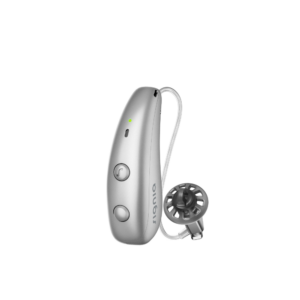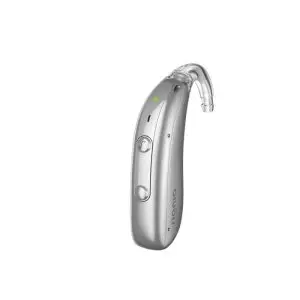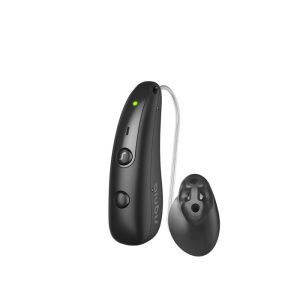
Most tinnitus sound therapies work by adding sound, broadband noise, nature sounds, or masking tones to reduce the perceived contrast between tinnitus and silence. Signia’s Notch Therapy works differently. It removes a narrow band of frequencies from the hearing aid’s amplified output rather than adding anything, targeting tonal tinnitus at a neurological level without the patient being aware that the therapy is running.
This post covers how Notch Therapy works, what the research shows, who is a candidate, and how it compares to other hearing aid tinnitus programs.
What Tonal Tinnitus Is and Why It Matters for Treatment
Tinnitus is not a single condition. It presents in several distinct forms, and the distinction between tonal and non-tonal tinnitus is clinically important because different types respond to different interventions.
- Tonal tinnitus: the perception of a continuous sound with a specific, identifiable pitch, ringing, whistling, buzzing, or a pure tone. This is the most common form of tinnitus. Tonal tinnitus is the only type for which Notch Therapy is indicated.
- Non-tonal tinnitus: sounds without a defined pitch, humming, clicking, crackling, rumbling, or pulsing. These forms do not respond to Notch Therapy because the mechanism depends on targeting a specific frequency.
Notch Therapy is specifically designed for tonal tinnitus, the continuous ringing, whistling, or buzzing with an identifiable pitch. If your tinnitus is non-tonal (humming, clicking, crackling), Notch Therapy is not appropriate. Your audiologist will confirm your tinnitus type before recommending this approach. Other sound therapy options remain available for non-tonal presentations.
How Notch Therapy Works: The Neuroscience
The mechanism behind Notch Therapy is grounded in what researchers understand about how tonal tinnitus originates and persists.
Current evidence suggests that tonal tinnitus arises from maladaptive neural activity in the auditory cortex. When hearing loss reduces input at specific frequencies, the auditory cortex over-activates in those frequency regions, generating phantom sound. The brain is essentially filling in missing frequency information with an internally generated signal.
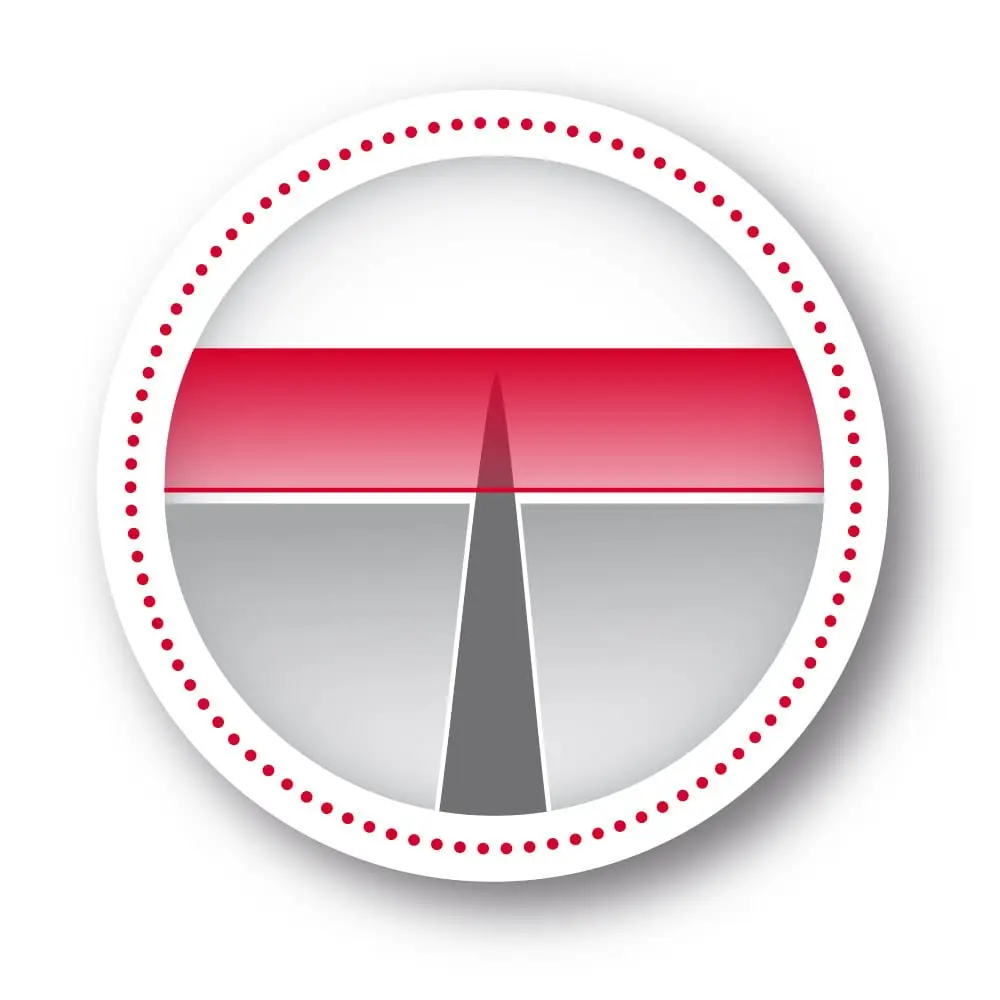
Notch Therapy works by creating a filtered notch in the hearing aid’s amplified output — a narrow band of reduced gain centered precisely at the patient’s tinnitus pitch. The surrounding frequencies continue to receive normal amplification. The result is that those frequency regions adjacent to the notch receive relatively more stimulation than the tinnitus frequency itself, which researchers believe promotes lateral inhibition — a suppression of activity at the tinnitus frequency through competition from adjacent frequency regions.
Notch Therapy is inaudible. Unlike noise therapy, ocean wave programs, or fractal tones, the patient does not hear the therapy running. The notch is a filtering modification to the amplification signal, not an added sound. This means Notch Therapy can run continuously during normal hearing aid wear without any conscious effort from the patient.
The Research Behind Notch Therapy
Powers, dos Santos, and Jons; AudiologyOnline, 2016
The foundational clinical study on Signia Notch Therapy was published in AudiologyOnline by Leanne Powers, Gisele Munhoes dos Santos, and Catherine Jons.
In a double-blind study comparing patients using hearing aids with Notch Therapy activated against control subjects using hearing aid amplification alone, those with Notch Therapy showed a clear improvement in tinnitus symptoms in as few as three weeks. The improvement was maintained for over six months. Importantly, the benefit was observed even in patients without measurable hearing loss, suggesting that Notch Therapy can provide relief for tinnitus patients regardless of audiometric status.
Powers, L., dos Santos, G.M., & Jons, C. (2016, September). Notch Therapy: A new approach to tinnitus treatment. AudiologyOnline, Article 18365.
Huang et al.; Frontiers in Human Neuroscience, 2022
A 2022 study published in Frontiers in Human Neuroscience by Bixue Huang and colleagues at Sun Yat-sen University investigated the neurological mechanism by which notched sound reduces tinnitus.
Using functional near-infrared spectroscopy (fNIRS), the researchers found that notched sound alleviates tinnitus through reorganization of Brodmann area 46 (BA46), a region of the prefrontal cortex associated with emotional processing. The study provided neuroimaging evidence that notched sound therapy does not simply mask tinnitus but produces measurable reorganization in brain regions that govern the emotional response to tinnitus. This helps explain why patients treated with notch-based approaches often report reduced distress rather than just reduced awareness of the sound.
Huang, B., Wang, X., Wei, F., Sun, Q., Sun, J., Liang, Y., Chen, H., Zhuang, H., & Xiong, G. (2022). Notched sound alleviates tinnitus by reorganization of emotional center. Frontiers in Human Neuroscience, 15, 762492. DOI: 10.3389/fnhum.2021.762492
How Notch Therapy Is Set Up
Notch Therapy is programmed by an audiologist using Signia’s Connexx fitting software. The process:
- The audiologist conducts a tinnitus pitch match, identifying the specific frequency at which the patient perceives their tinnitus
- The notch filter is centered at that frequency in the hearing aid’s processing
- The width and depth of the notch can be adjusted based on patient response
- Notch Therapy runs silently in the background during all normal hearing aid use — no separate program or conscious activation needed
- Follow-up appointments monitor tinnitus scores using validated measures such as the Tinnitus Handicap Inventory (THI) and Tinnitus Functional Index (TFI)
The inaudible nature of Notch Therapy is a meaningful clinical advantage. Patients who find broadband noise therapy fatiguing or who object to wearing audible sound therapy can receive treatment passively during the course of normal amplification use.
Which Signia Hearing Aids Include Notch Therapy
Notch Therapy has been available across Signia platforms from Primax onward and is included in current Signia IX and AX platform hearing aids:
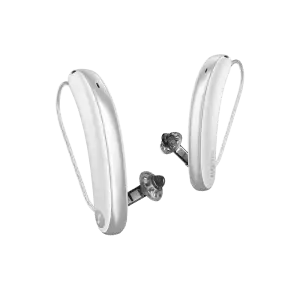
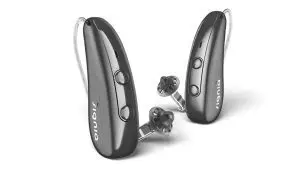
- Signia Pure Charge & Go MaX: Current flagship, Same features for tinnitus as the IX models.
- Signia Pure Charge&Go IX: , last generation, Notch Therapy available alongside static noise and ocean wave options.
- Signia Pure Charge&Go AX: previous generation, Notch Therapy included.
- Signia IX and AX models broadly: Notch Therapy is a platform-level feature available across the Signia lineup.
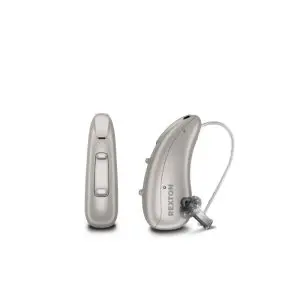
- Rexton hearing aids: share the Sivantos platform and include the same tinnitus feature suite.
Notch Therapy is complementary to the other tinnitus options in Signia hearing aids, static noise (white, pink, speech, high tone, Brownian), ocean wave modulated noise, and custom frequency shaping. Patients can use Notch Therapy alone or in combination with other therapy signals. However, this depends on their tinnitus type and preference.
Who Is a Candidate for Notch Therapy
- Tonal tinnitus: a continuous sound with an identifiable pitch. The single most important candidacy criterion.
- Tinnitus patients with or without hearing loss: the Powers et al. research demonstrated benefit in patients without measurable hearing loss, making Notch Therapy available to a broader population than hearing aids alone would typically serve.
- Patients who find audible sound therapy difficult: because Notch Therapy is inaudible, it is appropriate for patients who find noise-based therapy fatiguing or distracting.
- Not appropriate for: non-tonal tinnitus (humming, clicking, pulsing), or patients who cannot reliably identify a consistent tinnitus pitch for matching.
Notch Therapy vs Other Tinnitus Programs: When to Choose Which
- Notch Therapy (Signia): best for tonal tinnitus with an identifiable pitch. Inaudible and passive — no conscious effort from patient. Neurologically targeted at the tinnitus source rather than masking.
- Widex Zen fractal tones: best for patients who benefit from audible tonal therapy, who find noise therapy fatiguing, or who want tinnitus therapy that also addresses relaxation and stress. Works for both tonal and some non-tonal presentations.
- Broadband noise therapy: white, pink, or ocean wave masking is available across most hearing aid brands. Broadest applicability but least targeted. Effective for many patients as a first-line approach.
- Phonak Tinnitus Balance: structured sound therapy programs via the myPhonak app. Solid broadband approach across four sound types.
If your tinnitus is a persistent tone at a specific pitch, a ringing or whistling you can match to a note, Signia Notch Therapy is worth discussing with your audiologist. Contact Hears Hearing & Hearables or our Hears to U clinic in Hopkins, Minnesota to discuss whether Signia hearing aids are the right fit for your tinnitus profile.
Frequently Asked Questions: Signia Notch Therapy
What is Signia Notch Therapy?
Signia Notch Therapy is a tinnitus treatment built into Signia hearing aids that works by filtering a narrow band of frequencies from the amplified output, centered at the patient’s specific tinnitus pitch. Unlike noise masking or sound therapy that adds sound, Notch Therapy modifies what the hearing aid amplifies. It runs inaudibly during normal hearing aid use. Therefore promoting lateral inhibition that suppresses activity at the tinnitus frequency through neurological reorganization over time.
Does Signia Notch Therapy actually work?
Research supports its effectiveness for tonal tinnitus. A double-blind study published in AudiologyOnline (Powers, dos Santos, & Jons, 2016) showed measurable improvement in tinnitus symptoms in as few as three weeks, maintained past six months, compared to amplification alone. A 2022 neuroimaging study published in Frontiers in Human Neuroscience (Huang et al.) demonstrated that notched sound produces measurable reorganization in brain regions governing emotional response to tinnitus, not just surface-level masking.
Can Notch Therapy treat all types of tinnitus?
No. Notch Therapy is specifically indicated for tonal tinnitus, a continuous sound with an identifiable pitch such as ringing, whistling, or buzzing. It is not appropriate for non-tonal tinnitus presentations, including humming, clicking, crackling, or pulsing sounds, which do not have a specific frequency for the notch to target.
Is Signia Notch Therapy audible?
No. This is one of its key advantages over noise-based sound therapy. Notch Therapy is a modification of the hearing aid’s amplification processing, not an added sound. The patient hears their environment through the hearing aids as normal, with no awareness that tinnitus therapy is running. This makes it particularly suitable for patients who find audible sound therapy fatiguing or intrusive.
Do you need hearing loss to use Notch Therapy?
No. The Powers et al. study demonstrated tinnitus relief from Notch Therapy in patients without measurable hearing loss. This distinguishes it from amplification-based tinnitus relief, which primarily benefits patients whose tinnitus is linked to hearing loss.