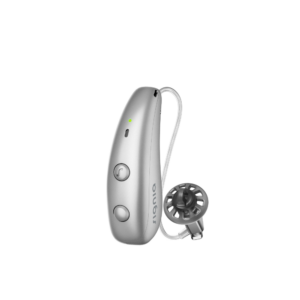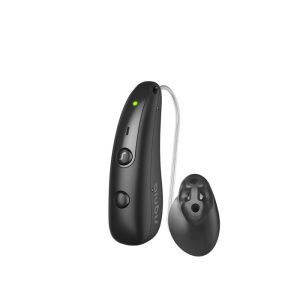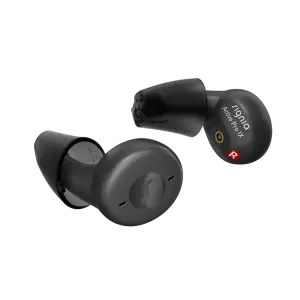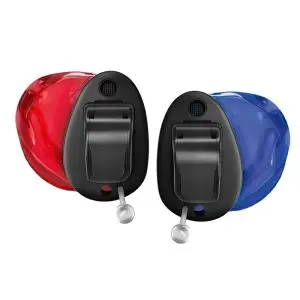
Signia has been developing split processing technology for hearing aids since the AX platform in 2021. The Integrated Xperience (IX) platform, launched in 2023, takes that foundation significantly further with RealTime Conversation Enhancement, a multi-stream architecture that tracks multiple moving speakers simultaneously.
This post explains how the technology actually works, starting from the fundamental problem it is trying to solve, through the engineering approach, to what the clinical research shows. It consolidates three earlier posts on this topic into one definitive reference.
The Problem: Why Group Conversations Are Hard for Hearing Aids
To understand why Signia’s approach is meaningful, you need to understand what traditional hearing aids have done wrong in group settings.
Imagine you are at a dinner table with four people. Traditional hearing aid processing does one of two things: it either amplifies everything equally, which makes background noise just as loud as speech, or it focuses a directional microphone forward, which helps you hear the person directly in front of you but cuts off everyone else.
Neither approach matches how normal hearing actually works. Human hearing uses both ears together to create a three-dimensional sound map. The brain uses the tiny time and volume differences between what the left and right ears hear to locate sounds, separate voices from noise, and follow different speakers without losing awareness of the room. Traditional hearing aids process sound within each aid independently and cannot replicate this binaural spatial processing.
The sound engineer analogy: when a sound engineer mixes a recording, they do not apply the same processing to every track. The vocal track, the drums, the guitar each gets independent treatment before being combined into the final mix. Signia’s split processing applies the same logic to hearing aids: speech and background noise get independent processing before being recombined for the listener.
The Foundation: Split Processing (AX Platform, 2021)
Signia introduced split processing with their Augmented Xperience (AX) platform in 2021. The concept was straightforward but the implementation was genuinely novel at the time:
- Two audio streams: incoming sound is split into a focus stream (sounds from the front, typically speech) and a surrounding stream (sounds from behind, typically background noise).
- Independent processing: each stream is processed separately. The focus stream receives less aggressive noise reduction to preserve speech clarity. The surrounding stream receives more aggressive noise reduction since it is primarily background.
- Recombination: the two processed streams are recombined into a single output for the listener. The result is speech that stands out more clearly against background noise, without the wearer losing awareness of their surroundings entirely.
The AX approach was a real clinical improvement over single-stream processing. But it had a fundamental limitation: it divided the sound world into front and back, which works well for one-on-one conversation but struggles with group settings where speakers are positioned at different angles and moving around.
The Advancement: RealTime Conversation Enhancement (IX Platform, 2023)
The Integrated Xperience platform takes split processing further with RealTime Conversation Enhancement (RTCE). Where AX created two streams, RTCE creates multiple dynamic focus streams that cover the entire front hemisphere simultaneously.
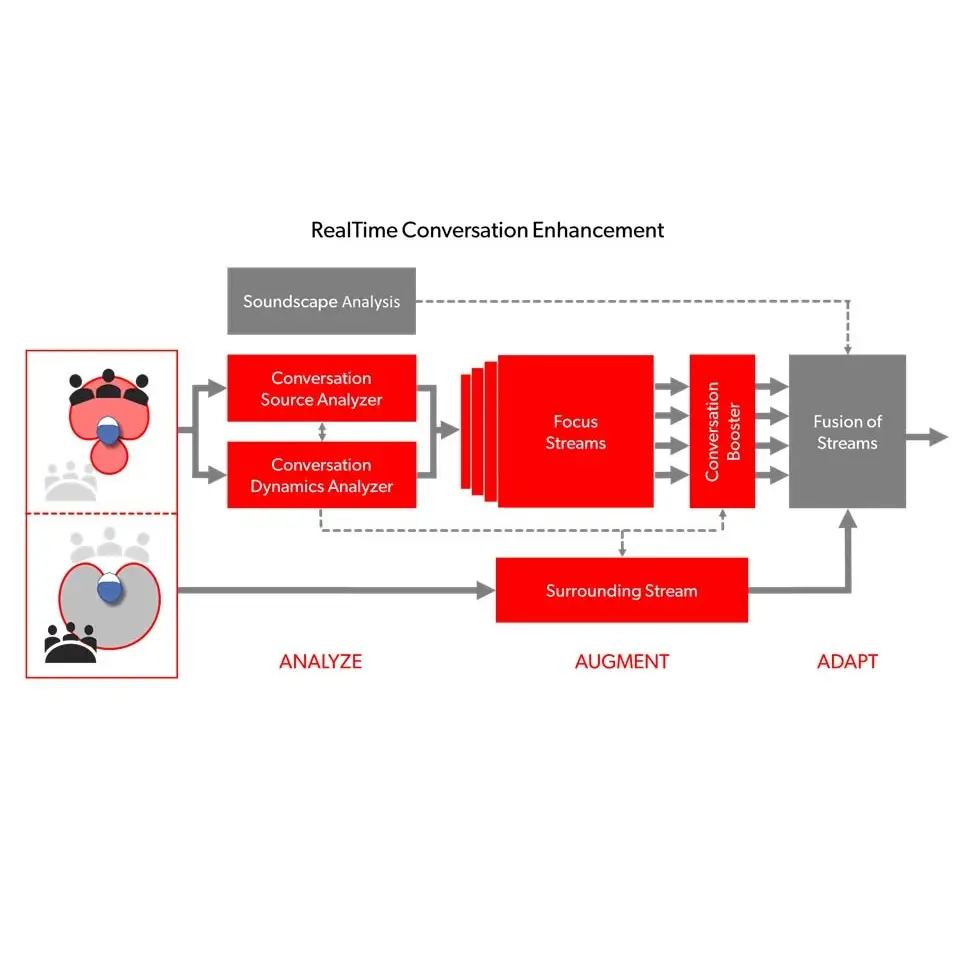
RTCE operates in three stages: Analyze, Augment, and Adapt.
Stage 1: Analyze
The Conversation Source Analyzer examines incoming sound to determine whether speech is present in the front hemisphere and assesses the proximity and relevance of that speech. It distinguishes between relevant speech from nearby conversation partners and irrelevant background noise or distant talkers.
Simultaneously, the Conversation Dynamics Analyzer maps the entire conversation layout: who is speaking, where they are positioned, whether they are moving, and how turn-taking is unfolding. This analysis processes 192,000 data points per second.
Stage 2: Augment
Using the conversation map from the Analyze stage, RTCE creates three additional dynamic focus streams through advanced binaural beamforming. These three streams, combined with the existing split-processing focus stream from the front hemisphere, create four total focus streams covering the entire front hemisphere.
Each focus stream can independently process speech coming from a different direction. A person speaking to your left, one speaking to your right, and one speaking directly ahead can all be tracked and enhanced simultaneously. Noise from non-speech directions is suppressed between these focus streams.
Stage 3: Adapt
The four focus streams and the surrounding stream are continuously harmonized. This adaptation happens 1,000 times per second, responding to changes in the conversation layout as speakers move, pause, or switch. The result is that the hearing aids track the conversation rather than requiring the wearer to physically orient toward whoever is speaking.
The Next Step: Acoustic Intelligence (MaX Platform)
Signia’s newest platform, MaX, extends this same lineage rather than replacing it. RTCE, the four-stream architecture introduced with IX, remains part of MaX, now folded into a broader framework Signia calls Acoustic Intelligence. Where IX’s RTCE was one sophisticated multi-stream system focused specifically on spatial speech separation, MaX adds three additional dedicated deep neural networks that run alongside it and share information in real time: Own Voice Detection, Ambient Scene Adaptation, and Dynamic Noise Control. The idea is that the hearing aid no longer just tracks who is speaking and where; it simultaneously understands your own voice, the type of environment you’re in, and the character of the surrounding noise, all informing each other rather than operating as separate, isolated functions.
RTCE itself got faster too. Signia describes MaX’s version of RTCE as processing 75% more data points per second than the IX platform’s 192,000 per second, which would put MaX in the range of roughly 336,000 data points per second, though we haven’t seen Signia publish that exact combined figure directly. Running four networks simultaneously, all day, at that data rate is only possible because of a new chip built for MaX, which Signia says delivers 54 times more processing power and twice the memory of the previous generation, at 50 percent better energy efficiency.
I’m wearing MaX myself right now, and my honest first impression is that it feels like a genuine continuation of what IX started, not a reinvention. The fitting software is very similar to what we already use for IX. Physically, the device itself is a little larger than IX. As of this writing, MaX exists only as the Pure Charge&Go RIC style, and it hasn’t reached Rexton or any other rebranded Signia-platform line yet. We’re attending Signia’s official MaX training in September 2026 and will update this section with anything that changes what’s written here.
AX vs IX: The Technical Comparison
| Feature | Signia AX (2021) | Signia IX (2023) | Signia MaX (2026) |
| Processing architecture | 2 streams: focus + surrounding | 4 focus streams + surrounding | 4 focus streams + surrounding, plus 3 additional AI networks (Own Voice, Scene, Noise) sharing data in real time |
| Speaker tracking | Fixed front hemisphere focus | Multiple moving speakers tracked simultaneously | Multiple moving speakers tracked simultaneously (same RTCE core as IX), now informed by real-time voice and scene context |
| Data analysis rate | Not specified | 192,000 data points per second | ~336,000 data points per second (derived: IX’s 192,000 × the 75% increase Signia states for MaX; not an officially published combined figure |
| Adaptation speed | Standard | 1,000 times per second | Not stated yet |
| OVP version | OVP 1.0 | OVP 2.0 | Not stated yet |
| Best scenario | One-on-one conversation with some noise | Group conversations with multiple moving speakers | Group conversations with multiple moving speakers, plus own-voice comfort and changing environments, processed together |
What the Research Actually Shows
Signia has published research on both the AX and IX platforms. Understanding the evidence requires knowing who funded it and what it measured.
The RTCE Study (IX Platform)
Twenty participants between the ages of 55 and 82 (average age 72), all with sensorineural sloping hearing loss, were fitted with Signia Pure Charge&Go T IX hearing aids. They were tested in two conditions: standard quiet conversation and a simulated group conversation with background noise and speakers coming from different directions.
Each participant was tested with RTCE turned on and RTCE turned off, in randomized order. Participants did not know which setting was active during each test.
Results:
- In the standard one-on-one test, RTCE produced a significant improvement in speech understanding for 90% of participants
- In the simulated group conversation test, 95% of participants performed better with RTCE on than with RTCE off
- The improvement was consistent across both closed and vented coupling types
MaX is too new to have comparable independent or peer-reviewed research published yet. We’ll update this section once meaningful data on the MaX platform specifically becomes available, in the same spirit of transparency as the AX and IX research above.
The Signia IX vs Competitor Study
A separate study compared Signia IX performance in group conversation settings against a competitor device using deep neural network (DNN) processing:
- 86% of participants performed better with Signia IX than with the competitor device
- Average improvement of 1.4 dB in Speech Reception Threshold, equivalent to a 22% improvement in speech understanding
- 85% longer engagement time: participants reported being willing to stay in the conversation longer with Signia IX
Research transparency note: both studies were conducted by Signia or their affiliated researchers. Manufacturer-funded research should be evaluated alongside independent clinical evidence where available. The results are consistent with what we observe clinically, and the methodology of the RTCE on/off comparison is more rigorous than many manufacturer studies because participants were blinded to the setting being tested.
Own Voice Processing: The Other Critical Technology
RTCE addresses how Signia handles external speech. Own Voice Processing (OVP) addresses a completely separate problem: how the hearing aid handles the sound of the wearer’s own voice.
When someone first puts on hearing aids, one of the most disorienting experiences is hearing their own voice sound strange. Too loud. Hollow. Boomy. This happens because the hearing aid microphones pick up the wearer’s voice both through air conduction (the normal path) and through bone conduction (vibration through the skull), creating an unnatural dual-path perception.
Traditional hearing aids process the wearer’s voice the same way they process everything else. OVP identifies the wearer’s voice by its unique acoustic characteristics, separates it into a dedicated processing stream, and applies different processing to it than to external sounds. The result is a more natural self-voice perception that significantly reduces new-user abandonment.
OVP is now in its second generation (OVP 2.0) in the Active Pro IX and is available across all current IX platform devices. It remains the feature that most consistently differentiates the Signia experience for first-time hearing aid users.
How This Technology Translates to Real Listening Situations
- Restaurants and noisy venues: RTCE’s multi-stream architecture identifies the person across from you and the person to your left simultaneously, enhancing both while reducing table noise and kitchen sounds from directions where no speech is present.
- Family gatherings: multiple people speaking from different positions and moving around, the scenario where traditional directional microphones fail most obviously, is exactly the use case RTCE was designed for.
- Walking conversations: as a conversation partner moves from your left to your right, RTCE’s 1,000 Hz adaptation rate tracks that movement and adjusts the focus streams continuously without requiring you to turn to face them.
- Meetings and conference rooms: speakers presenting from different positions, others asking questions from around the table, RTCE maps the room and maintains clarity across multiple simultaneous speech sources.
- First-time wearers: OVP reduces the single most common reason patients abandon hearing aids in the first two months by making their own voice sound natural from day one.
A Note on Signia’s Approach vs Competing DNN Platforms
It is worth explaining how Signia’s architecture relates to the deep neural network (DNN) approach used by other brands. Phonak’s DEEPSONIC chip, Starkey’s DNN 360, and ReSound’s DNN processing all use neural networks trained on large datasets to separate speech from noise.
Signia’s RTCE is also a DNN-based system — the 192,000 data points per second analysis and 1,000 Hz adaptation rate are both machine learning functions. The distinction is in how that processing is structured. Rather than a single DNN trained to output speech versus noise globally, RTCE uses a multi-stream architecture where different focus streams handle different spatial directions simultaneously.
In the research Signia published comparing IX to a competitor DNN device, Signia performed better in group conversation scenarios. This does not mean Signia is better than every DNN implementation in every scenario; hearing aid performance is highly situation-specific and individual. But in the particular scenario of multiple moving speakers in background noise, the multi-stream RTCE architecture appears to offer a meaningful advantage. MaX extends this same multi-stream philosophy further, running RTCE alongside three additional dedicated neural networks rather than RTCE alone, though independent research specifically on MaX doesn’t exist yet to confirm how that translates into real-world outcomes.
If group conversations in noise are your primary challenge, Signia IX is one of the strongest options currently available. Contact our team for a demo of your choice, Phonak Infinio Sphere, Starkey Omega AI, and ReSound Vivia or Signia MaX for your specific situation.
See Pricing for the IX technology Hearing Aids
See Pricing for the MaX technology Hearing Aids
Frequently Asked Questions: Signia IX Technology
What is RealTime Conversation Enhancement (RTCE)?
RTCE is Signia’s multi-stream processing technology, introduced with the IX platform in 2023. It creates four dynamic focus streams covering the entire front hemisphere simultaneously, allowing the hearing aids to track and enhance multiple moving speakers at once. The system analyzes 192,000 data points per second and adapts 1,000 times per second to changing conversation dynamics. In research, 95% of participants performed better in group conversation scenarios with RTCE on versus RTCE off.
What is the difference between Signia AX and Signia IX?
Both platforms use split processing, separating incoming audio into speech and background streams for independent processing. AX created two streams: one for the front hemisphere and one for surrounding sound. IX adds three additional dynamic focus streams to the front hemisphere, creating four total focus streams that track multiple speakers simultaneously. IX also includes OVP 2.0 and a broader device lineup. The research showed 86% of participants performed better with IX than with a competing DNN device in group conversations.
What is Signia MaX, and how is it different from IX?
MaX is Signia’s newest platform, and it builds on IX rather than replacing its approach. RTCE, the four-stream architecture from IX, remains part of MaX, now running alongside three additional dedicated neural networks, Own Voice Detection, Ambient Scene Adaptation, and Dynamic Noise Control, that share information with RTCE in real time under a framework Signia calls Acoustic Intelligence. MaX’s version of RTCE processes 75% more data points per second than IX. As of this writing, MaX is available only as the Pure Charge&Go RIC style, and independent research on MaX specifically doesn’t exist yet; we’ll update this section as that becomes available.
What is split processing in hearing aids?
Split processing separates incoming sound into two or more distinct audio streams that are processed independently before being recombined. In Signia’s implementation, sounds from the front (typically speech) are processed differently from sounds from behind (typically background noise). This allows more aggressive noise reduction in the background stream without affecting speech clarity in the focus stream. Signia introduced split processing with the AX platform in 2021 and extended it significantly with RTCE in the IX platform.
How does Signia IX compare to Phonak Sphere or Starkey Omega AI?
All three use DNN-based AI processing for speech in noise. Phonak Infinio Sphere uses a dedicated DEEPSONIC chip for speech separation. Starkey Omega AI uses DNN 360 for 360-degree spatial awareness. Signia IX uses multi-stream RTCE for simultaneous multi-speaker tracking. Each approach has different strengths. Signia’s research specifically shows advantages in group conversation with multiple moving speakers. Phonak Sphere leads in overall speech-in-noise scores per HearAdvisor. Starkey Omega AI leads in spatial awareness. The right choice depends on your specific hearing profile and primary listening challenges. Our professional team can help you compare.
Is Signia IX research independent?
The studies referenced in this post were conducted by Signia and affiliated researchers. Manufacturer-funded research should be evaluated alongside independent clinical evidence. The RTCE study used a blinded design (participants did not know which setting was active), which is more methodologically rigorous than many manufacturer studies. The results are consistent with what we observe clinically at Hears to U. Independent evaluation of Signia IX by third-party labs is ongoing.