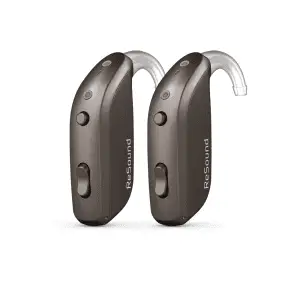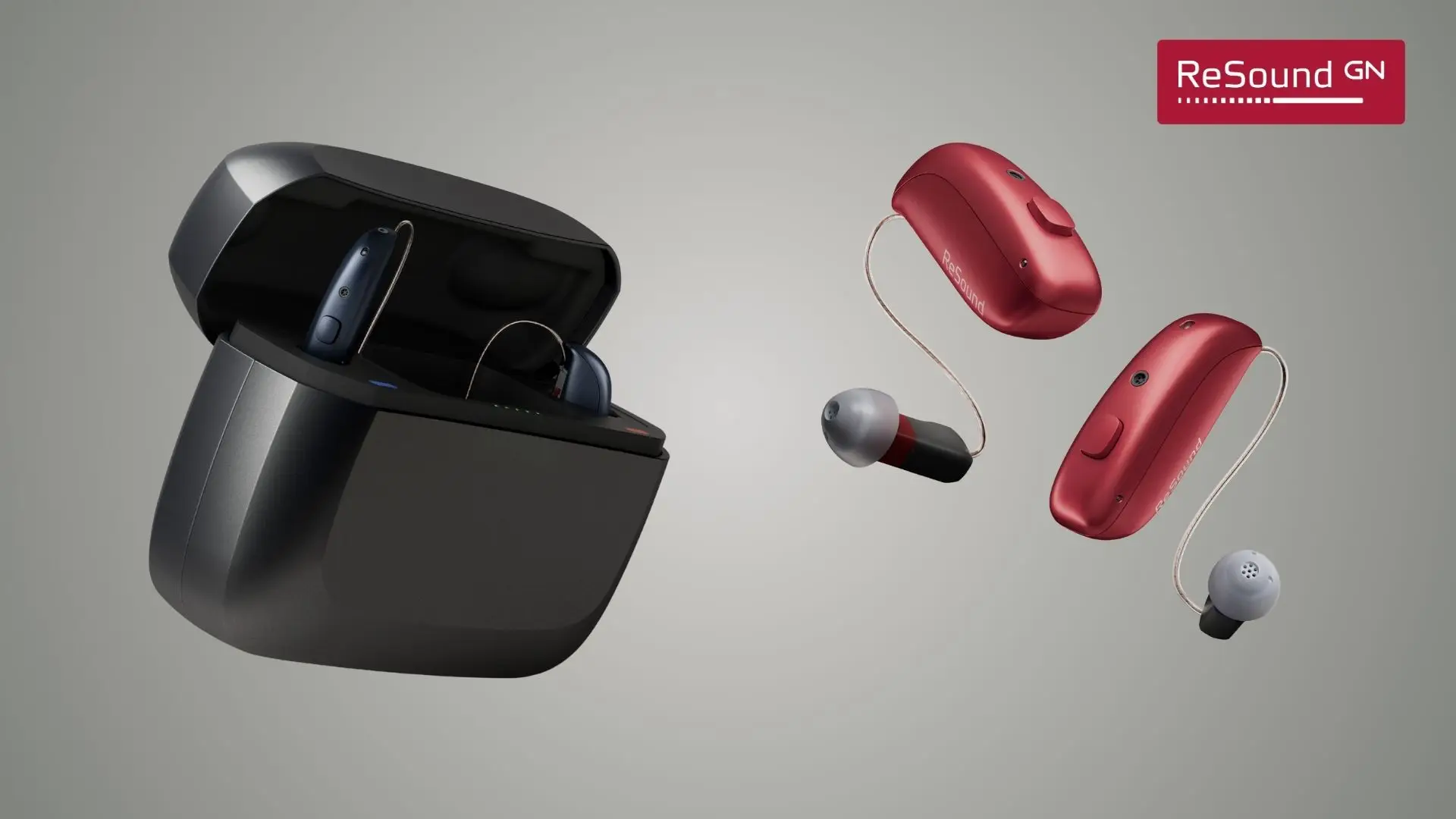
ReSound has released three significant platform generations in relatively quick succession: the Omnia in 2022, the Nexia in 2023, and the Vivia in 2025. Now in 2026, the Sensia has been released as ReSound’s new flagship. Since the Sensia is so new, we don’t yet have the hands-on data to fairly compare it against Vivia, Nexia, and Omnia, so for now this guide focuses on those three. If you own one of the earlier platforms or are comparing options, understanding what actually changed between generations helps you make a genuinely informed decision rather than one driven by marketing
The honest answer: not every upgrade represents a dramatic leap. Some changes are incremental. Others are genuinely significant. This comparison identifies which is which.
The Short Answer Before the Detail
- Omnia: strong hearing aid, released 2022. Excellent value in the consignment market. No Auracast. If you own one and are satisfied, no urgency to upgrade unless Auracast is a priority
- Nexia: the first ReSound with Auracast, released 2023. Still an excellent prescription hearing aid at a lower price than Vivia or Sensia. If you own one and it is performing well, upgrading is incremental rather than essential.
- Vivia: released 2025. Adds DNN chip at Level 9 rechargeable only, refined WARP processing, M&RIE compatibility at Level 9, and the dedicated Auracast Assistant in Smart 3D. A strong choice for buyers who want the full current-generation feature set at a lower price than Sensia.
Side-by-Side Comparison Table
|
Feature |
Omnia (2022) | Nexia (2023) | Vivia (2025) |
|
Yes |
Yes | Refined, up to 17 channels | |
|
DNN AI chip |
No |
No |
Level 9 rechargeable only |
|
No |
Activated |
Activated | |
|
No | Assistant available in Smart 3D app | Full dedicated assistant in Smart 3D app | |
|
TV Streamer accessory | TV Streamer+ (Auracast) | TV Streamer+ (Auracast) | |
|
Remote mic accessory |
Multi Mic (classic) | Multi Mic+ (Auracast) | Multi Mic+ (Auracast) |
|
M&RIE receiver option |
Yes |
Yes |
Level 9 only |
|
MicroRIE size |
Mini Omnia (larger) |
Micro Nexia (16% smaller) |
MicroRIE (smallest AI RIC) |
|
Bluetooth |
LE Audio, MFi, ASHA |
LE Audio, MFi, ASHA |
LE Audio, MFi, ASHA |
|
IP68 water resistance |
Yes |
Yes |
Yes + nanocoating |
|
CROS/BiCROS |
No |
First in Nexia |
Yes |
|
Price position |
What Changed Between Each Generation
Omnia to Nexia: The Auracast Leap
The single most significant change from Omnia to Nexia was Auracast. ReSound activated Auracast on the Nexia platform in 2023, making it the first hearing aid manufacturer to deliver consumer Auracast. This was not an incremental improvement; it was a fundamentally different connectivity capability.
The Nexia also introduced CROS and BiCROS capability for the first time in the ReSound lineup, addressing single-sided deafness with wireless signal routing. And the Micro Nexia RIC was 16% smaller than the Mini Omnia, a meaningful form factor reduction for patients who prioritize discretion.
What did not change from Omnia to Nexia: the core WARP compression foundation, the noise reduction approach, and the directional microphone system all carried forward with refinement rather than replacement. The Nexia built on the Omnia’s acoustic strengths while adding the connectivity layer the Omnia lacked.
Nexia to Vivia: The AI Layer
The move from Nexia to Vivia added one genuinely new processing capability: the dedicated DNN chip at Level 9 rechargeable. Everything else in the Vivia is a refinement of what the Nexia already did well, more processing channels, a more complete Auracast Assistant, a slightly smaller form factor, and enhanced nanocoating.
The DNN chip is meaningful for patients in consistently complex acoustic environments. It is the difference between rule-based noise management and machine learning-based noise prediction. For most everyday listening situations, the Nexia’s noise management performs very well. The DNN advantage is most pronounced in the most challenging group conversation scenarios.
Key fact for current Nexia owners: if your Nexia is performing well and Auracast is working for your needs, the Vivia upgrade is not urgent. The DNN chip adds measurable value in specific scenarios. It is not a technology generation gap in the way the Omnia-to-Nexia Auracast transition was.
Accessories: What Changed and What Is Compatible
The Omnia to Nexia transition brought a complete accessory change that is critically important for anyone upgrading:
Omnia accessories (TV Streamer 2, Multi Mic, Micro Mic) use classic Bluetooth and are NOT compatible with Nexia or Vivia for audio streaming. Nexia and Vivia use Auracast-based accessories (TV Streamer+ and Multi Mic+). If you are upgrading from Omnia to Nexia or Vivia, you need new accessories. Budget for this.
Nexia and Vivia and Sensia use the same Auracast-based accessories. If you own a Nexia and upgrade to Vivia, your TV Streamer+ and Multi Mic+ are still compatible. No accessory replacement needed for that transition.
Who Should Consider Each Platform
- Current Omnia owners: consider upgrading if Auracast matters to you, the Omnia cannot be firmware-updated for Auracast. If you are satisfied with sound quality and connectivity, no urgency unless you specifically want Auracast’s public venue capabilities.
- Current Nexia owners: consider upgrading to Vivia if you consistently struggle in very noisy group environments and want the DNN chip’s Intelligent Noise Tracker. Otherwise, the Nexia remains a strong current-platform hearing aid. No accessory changes needed if you upgrade.
- New buyers comparing Nexia and Vivia: Vivia is the better choice for most new buyers who want the full current platform. The DNN chip at Level 9 is meaningful. The Auracast Assistant is more complete. The Nexia is a strong option if budget is a consideration and the DNN tier is not a priority.
- Budget-conscious buyers: Omnia on the consignment market offers excellent ReSound sound quality and WARP compression at significantly reduced pricing. The trade-off is no Auracast and the legacy accessory ecosystem. Worth considering for patients who primarily use their hearing aids at home or in quieter environments.
Upgrading from Omnia or Nexia and not sure whether the Vivia DNN chip is worth it for your situation? Our team can help you evaluate based on the listening environments you actually encounter.
The Upgrade Question: Is Newer Always Better?
Hearing aid manufacturers release new platforms regularly, and marketing consistently frames each release as a significant advancement. The honest clinical perspective is more nuanced.
Each ReSound generation has brought real improvements. The Nexia’s Auracast was a genuine capability leap. The Vivia’s DNN chip adds meaningful processing for specific patient profiles. But neither transition made the previous generation obsolete for patients who were hearing well with it.
The right question is not whether the new platform is better in absolute terms. It is whether the specific improvements address the specific challenges you are experiencing. An Omnia user who hears well at home and in quiet environments may gain very little from upgrading to Vivia. A Nexia user who consistently struggles in busy restaurants might benefit meaningfully from the DNN chip.
A note on Sensia: ReSound’s newest platform launched in August 2026 with a new AI approach to speech-in-noise. We’re still gathering clinical experience with it and will publish a full Vivia vs Sensia comparison once we have real data to share
Frequently Asked Questions: ReSound Vivia vs Nexia vs Omnia
Should I upgrade from ReSound Omnia to Vivia?
The primary reason to upgrade from Omnia to a current platform is Auracast. The Omnia cannot receive Auracast firmware updates and will not gain this capability. If Auracast in public venues, TV sharing, or the modern accessory ecosystem (TV Streamer+ and Multi Mic+) are important to you, upgrading to Nexia or Vivia makes sense. If you are satisfied with your Omnia’s sound and connectivity and do not need Auracast, there is no urgent clinical reason to upgrade.
Should I upgrade from ReSound Nexia to Vivia?
The primary reason to upgrade from Nexia to Vivia is the DNN chip at Level 9 rechargeable. If you consistently struggle in complex noisy environments like busy restaurants and group gatherings, the Intelligent Noise Tracker may provide meaningful improvement. If your Nexia is performing well across your everyday listening situations, the upgrade is incremental rather than essential. Your accessories (TV Streamer+ and Multi Mic+) are compatible with Vivia — no replacement needed.
What accessories work with Omnia vs Nexia and Vivia?
Omnia uses classic Bluetooth accessories: TV Streamer 2, Multi Mic, Micro Mic, Phone Clip+, Remote Control 3. Nexia and Vivia use Auracast-based accessories: TV Streamer+ and Multi Mic+. These two sets are not interchangeable. Upgrading from Omnia to Nexia or Vivia requires purchasing new accessories. Upgrading from Nexia to Vivia does not mean those accessories are fully compatible.
Does the Nexia have a DNN chip?
No. The dedicated Deep Neural Network chip is exclusive to the Vivia platform, and within Vivia, only at Level 9 rechargeable. The Nexia uses a single-chip design without the DNN layer. Nexia’s noise management is effective and rule-based but does not include the AI-powered Intelligent Noise Tracker.
Is the ReSound Omnia still worth buying?
In the consignment market, yes, for the right patient. The Omnia delivers ReSound’s WARP compression sound quality, full Bluetooth connectivity, M&RIE option, and IP68 durability at a significantly lower price than current platforms. The trade-off is no Auracast and the legacy accessory ecosystem. For patients who primarily use hearing aids at home or in quieter environments and do not need Auracast, Omnia consignment is worth considering.
What is CROS and when did ReSound introduce it?
CROS (Contralateral Routing of Signal) and BiCROS are hearing aid systems for single-sided deafness, routing sound from the impaired ear to the better ear wirelessly. ReSound introduced CROS and BiCROS capability with the Nexia in 2023, it was not available in the Omnia. Both Nexia and Vivia support CROS and BiCROS.
A note on Sensia: ReSound’s newest platform launched in August 2026 with a new AI approach to speech-in-noise. We’re still gathering clinical experience with it and will publish a full Vivia vs Sensia comparison once we have real data to share

 Technology: