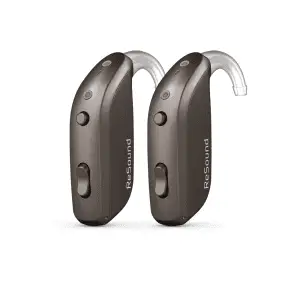
ReSound has one of the most distinctive histories in the hearing aid industry. The lineage traces to Denmark and to GN Great Nordic, a telecommunications company founded in 1869 that laid telegraph cables across continents and oceans. From that engineering heritage grew one of the world’s most innovative hearing aid companies.
For those of us who have worked in audiology since the 1990s, ReSound’s history is partly our professional history too. Their early digital hearing aids shaped how an entire generation of audiologists learned to fit hearing aids. Their newest Sensia platform is now leading the industry with a new AI approach to following speech in noise, building on the Auracast leadership Vivia established. Here is the full story.
The Origins: GN Great Nordic and the Birth of Hearing Aid Innovation
GN Great Nordic was established in Denmark in 1869 as a telegraph company, laying undersea cables connecting Europe to Asia and North America. The company’s deep expertise in signal transmission and audio technology eventually led it into the hearing care market.
ReSound as a distinct hearing aid brand emerged from GN’s audio division in the 1940s. Their new mission was creating hearing aids that reproduced sound faithfully rather than simply amplifying it. The foundational philosophy, that hearing aids should sound natural rather than processed, has remained central to ReSound’s identity across every platform generation since.
The 1980s: Digital Signal Processing Changes Everything
In the 1980s, ReSound introduced digital signal processing (DSP) to hearing aids. This was a development that marked a fundamental departure from analog devices. DSP allowed for precise, customizable adjustments to match individual hearing profiles in ways that analog circuits simply could not achieve.
Upon receiving my master’s degree from San Diego State University, one of the first companies I encountered that was making a significant impact in hearing aid technology was ReSound. Their digitally programmable hearing aids were changing clinical practice. The fitting process was genuinely complex, with compression ratios, knee points, and multiple technical parameters that had to be precisely calibrated. A colleague who had graduated a few years ahead of me described fitting hearing aids as solving puzzles. That was accurate. The technical depth required was real, and ReSound was at the center of it.
The 1990s: WARP Processing and Open-Fit Technology
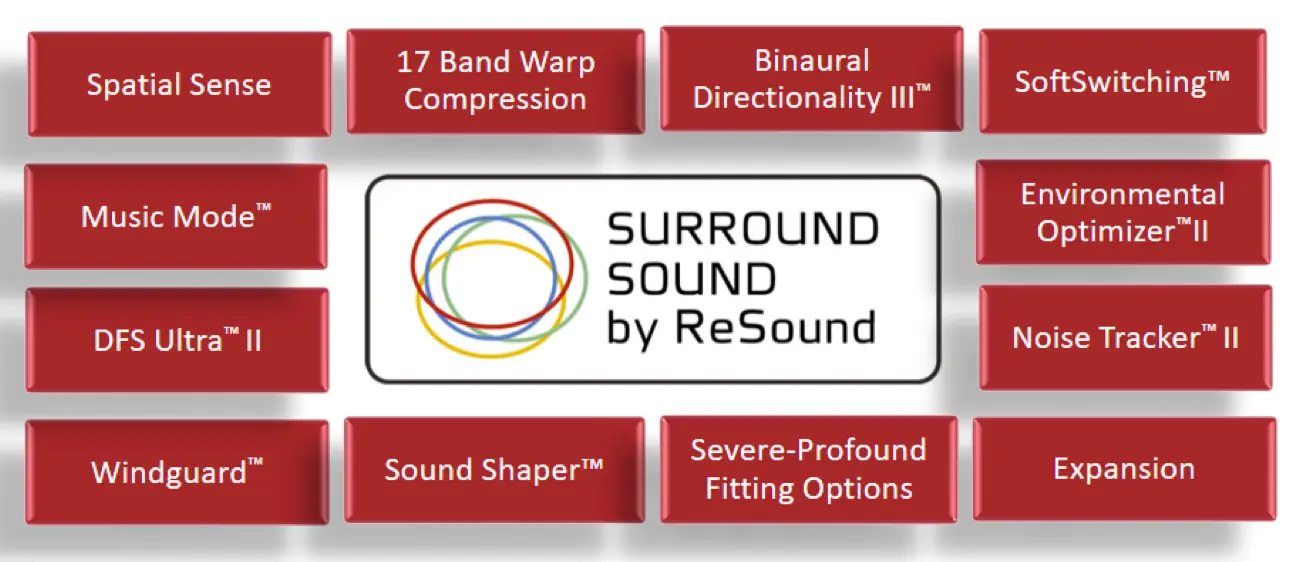
ReSound’s most distinctive technical contribution arrived in the 1990s with the development of WARP compression. WARP is a proprietary sound processing system modeled on the biology of the human cochlea rather than conventional digital audio conventions.
Where standard digital systems divide sound into uniformly spaced frequency bands, WARP maps sound into 17 nonlinearly spaced bands that follow the auditory Bark scale. Therefore, matching how the cochlea actually processes frequencies. The results were meaningful: lower processing delay than conventional systems, near-zero distortion, and a sound character that patients described as more natural than competing devices.
ReSound holds the distinction of being the first and still the only manufacturer to base their amplification strategy on an accurate model of cochlear frequency analysis. WARP compression remains the processing foundation of every current ReSound hearing aid, including the Vivia.
In the early 2000s, ReSound introduced open-fit hearing aids. Smaller and more comfortable devices that allowed wearers to hear natural sounds from their surroundings rather than feeling isolated. WARP compression’s low processing delay made open-fit sound particularly natural by keeping amplified and unamplified sound properly synchronized.
2010: Wireless Connectivity Arrives
ReSound made a major leap in 2010 when they introduced wireless connectivity in their hearing aids. This allows users to connect directly to smartphones and stream phone calls, music, and other audio. Working with Google, ReSound developed ASHA (Audio Streaming for Hearing Aids), the Android direct streaming standard that is now used across the industry.
This period was exciting for hearing care professionals. The combination of better sound processing and wireless connectivity was transforming what hearing aids could do for patients. The smartphone app ecosystem that grew alongside the connected hearing aid made it easier for wearers to adjust their devices in real environments without clinical visits.
2018: Rechargeable Technology
ReSound addressed the persistent inconvenience of battery replacement in 2018 with the introduction of rechargeable hearing aids. The lithium-ion battery systems offered full-day performance on a single charge. Therefore, reducing environmental waste, and eliminating the fine motor challenge of changing small batteries, which matters significantly for older patients and those with limited dexterity.
2021 to 2022: The Omnia and AI
The ReSound Omnia platform introduced artificial intelligence into ReSound’s processing architecture. This architecture built on the WARP compression foundation with machine learning capabilities that allowed hearing aids to adapt to different environments and user preferences with greater precision. The Omnia also introduced the M&RIE (Microphone and Receiver In Ear) design. M&RIE placed a third microphone inside the ear canal to capture sound the way the ear naturally receives it, improving spatial awareness and sound localization.
2023: The Nexia and the Arrival of Auracast
The Nexia platform marked a pivotal moment in hearing aid history. ReSound became the first manufacturer to activate Auracast in a consumer hearing aid. Auracast is a Bluetooth LE Audio broadcast technology that allows one transmitter to stream audio to unlimited compatible receivers simultaneously, without pairing, enabling hearing aid users to receive audio from public venues directly in their devices.
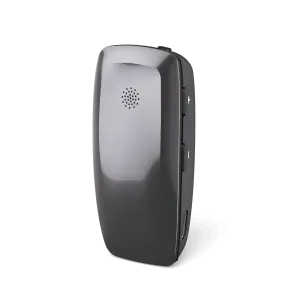
The Nexia also introduced a new TV Streamer with Auracast broadcasting capability. With Auracast, multiple hearing aid users can receive TV audio simultaneously at their own preferred volumes. The ReSound Nexia represented the hearing aid industry’s most significant connectivity advance since the introduction of direct smartphone streaming in 2010.
2025: The Vivia and Auracast Leadership
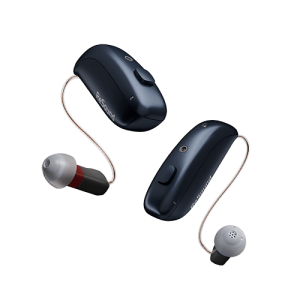
The ReSound Vivia launched in 2025 as ReSound’s most advanced hearing aid at the time and the most complete Auracast implementation in the industry. Its dual-chip architecture pairs the 360 chip for ongoing sound processing with a dedicated Deep Neural Network chip for the Intelligent Noise Tracker, trained on 13.5 million spoken sentences across 3.9 million tuned sound parameters.
The Vivia introduced the world’s first dedicated Auracast Assistant built into a hearing aid companion app, making it easier to find and connect to Auracast broadcasts in public venues than any other brand’s implementation. In our clinic we tested the Vivia’s Auracast capability and found the Smart 3D app setup genuinely intuitive, the easiest Auracast experience currently available across all hearing aid brands.
ReSound’s US operations are based in Bloomington, Minnesota, near our Hears to U clinic in Hopkins. That proximity has meant a close professional relationship with ReSound over many years of clinical practice.
2026: The Sensia and a New AI Approach
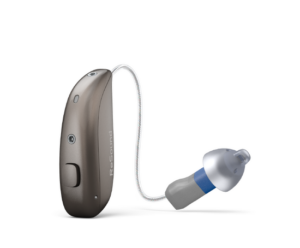
ReSound introduced Sensia in August 2026 as its new flagship, built on a different approach than the Vivia’s DNN chip: an AcoustIQ environmental classifier, 4-microphone directional beamforming, and automatic DNN denoising working together as Intelligent All-Around. Where the Vivia’s Intelligent Noise Tracker required Level 9 rechargeable to access the DNN chip, Sensia’s Intelligent All-Around follows the same Level 9 rechargeable pattern, continuing ReSound’s approach of reserving its most advanced AI processing for the premium rechargeable tier.
Sensia shares its charger and accessory ecosystem with Vivia, so the TV Streamer+, Multi Mic+, and Remote Control 3 all carry over. We have ordered our first pair for the clinic and will share our hands-on impressions soon.
GN Today: A Global Hearing Care Company
GN Group, ReSound’s parent company, is one of the world’s largest hearing care companies with operations across more than 100 countries. Alongside ReSound, GN’s hearing aid brands include Jabra, Beltone, Lively (now Jabra Enhance Select), and Audigy. All are built on the ReSound platform and share the same accessory ecosystem.
From telegraph cables laid across ocean floors in 1869 to the AI-driven Sensia platform in 2026, GN ReSound’s history is a consistent thread of engineering innovation applied to the challenge of helping people hear more naturally. The WARP compression philosophy that distinguishes ReSound’s sound from every other manufacturer in the market today is the same philosophy that has guided the company since its earliest days: sound should be reproduced faithfully, not simply made louder. WARP compression remains the processing foundation of every current ReSound hearing aid, including Sensia and Vivia.
2026: GN Sells ReSound to Amplifon; What It Means
On March 16, 2026, GN Store Nord announced an agreement to sell its entire hearing business to Amplifon, the world’s largest hearing aid retailer. This transaction is valued at approximately €2.3 billion (US$2.64 billion). The deal is expected to close by the end of 2026, pending regulatory approval.
The sale includes ReSound, Beltone, Interton, Danavox, and related brands, along with all associated intellectual property, research and development, and manufacturing operations. GN will exit the hearing care business entirely and refocus on its audio, video, and gaming divisions. GN will hold approximately 16% of Amplifon’s shares after the transaction closes.
Amplifon is an Italian company and the world’s largest hearing aid retailer, with clinics in more than 100 countries. Unlike the hearing aid manufacturers (Sonova, WS Audiology, Demant), Amplifon has historically been on the retail side of hearing care rather than the manufacturing side. Acquiring ReSound transforms it into a vertically integrated company that both makes and sells hearing aids.
What Happens Next
This is the largest straight acquisition in hearing industry history, and it will reshape the competitive landscape. Here is what is known and not yet known for patients and providers:
- The brands remain: Amplifon has stated its intention to preserve the identity and capabilities of ReSound, Beltone, and the other GN hearing brands within the combined organization.
- R&D and manufacturing continue: the deal includes all IP, R&D, and manufacturing operations. This means the technology pipeline and product development should continue under Amplifon’s ownership.
- Vertical integration is the goal: Amplifon’s primary motivation is to bring hearing aid volume in-house. Currently they purchase devices from manufacturers including Sonova and Demant. Owning ReSound’s manufacturing changes that equation significantly.
- Independent providers should watch carefully: when a major retailer owns a major manufacturer, the question of whether independent audiology clinics receive equitable access to products and pricing is legitimate. This is the same concern that arises with Sonova’s ownership of Phonak and UHC Hearing, or WS Audiology’s ownership of TruHearing. We will be watching this closely and will update our position as the situation develops.
As of late-2026, the transaction has not yet closed. ReSound’s technology, products, and customer relationships are operating normally. The Sensia technology is now the current flagship. The accessory ecosystem, remote care capabilities, and clinical programs are unchanged. When material changes occur that affect our patients, we will communicate them directly.
Frequently Asked Questions: History of ReSound Hearing Aids
When was ReSound founded?
ReSound traces its origins to GN Great Nordic, a Danish telecommunications company founded in 1869. The hearing aid division grew from GN’s audio technology expertise. ReSound as a distinct hearing aid brand has been a major presence in audiology since the 1940s, with significant milestones including digital signal processing in the 1980s, WARP compression in the 1990s, wireless connectivity in 2010, and the industry’s first Auracast implementation in 2023 and the Sensia AI platform in 2026.
Who owns ReSound?
ReSound is owned by GN Group, a Danish company headquartered in Copenhagen. GN Group also owns Jabra, Beltone, Lively (now Jabra Enhance Select), and Audigy, all built on the ReSound platform. GN Group has operations in more than 100 countries and is one of the world’s largest hearing care companies.
What is WARP compression and when was it developed?
WARP compression is ReSound’s proprietary sound processing system, developed in the 1990s. It models sound processing on the biology of the human cochlea, mapping sound into 17 nonlinearly spaced frequency bands that follow the auditory Bark scale rather than the uniform band spacing used by conventional digital systems. ReSound was the first and remains the only manufacturer to base amplification strategy on an accurate model of cochlear frequency analysis. WARP compression is the processing foundation of all current ReSound hearing aids, including the Sensia.
When did ReSound introduce Auracast?
ReSound activated Auracast in the Nexia hearing aid in 2023 and the Sensia AI platform in 2026. It was the first manufacturer to offer consumer Auracast in a hearing aid. The 2025 Vivia launch introduced the world’s first dedicated Auracast Assistant built into a hearing aid companion app. As of late-2026, ReSound remains the only manufacturer with a fully activated and consumer-complete Auracast implementation including a dedicated app-based assistant, now carried forward on both Sensia and Vivia
Is ReSound made in Denmark?
GN Group, ReSound’s parent company, is headquartered in Copenhagen, Denmark. The brand has Danish origins dating to GN Great Nordic in 1869. ReSound’s US operations are based in Bloomington, Minnesota, near our Hears to U clinic in Hopkins. The company has manufacturing and development operations globally.
What is ReSound Sensia?
ReSound Sensia is ReSound’s current flagship, launched in August 2026. It replaces the Vivia’s dual-chip DNN design with a coordinated AI system called Intelligent All-Around: an AcoustIQ environmental classifier, 4-microphone beamforming, and automatic DNN denoising, available at Technology Level 9 in the rechargeable microRIE style. Sensia shares its charger and accessory ecosystem with Vivia, which remains available as a strong current-platform option.