Hearing loss is common among older adults, and left untreated, it can lead to isolation, frustration, and even depression by making it harder to connect with the people and world around you. Hearing aids don’t just improve your ability to follow conversations; they support social engagement, safety, and cognitive function, helping you stay genuinely connected to daily life, from a grandchild’s laughter to music and the sounds of the outdoors.
Before you buy, here’s what’s worth understanding so you can make an informed decision with realistic expectations.
1. See an Audiologist First
A thorough hearing evaluation from a licensed audiologist determines the type and degree of your hearing loss and points you toward the options that actually fit. Knowing your hearing thresholds also helps you set realistic expectations and advocate for yourself in different listening environments.
2. Understand the Different Styles
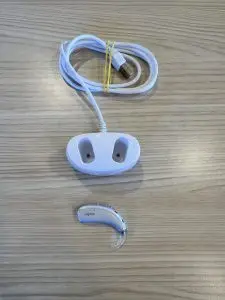
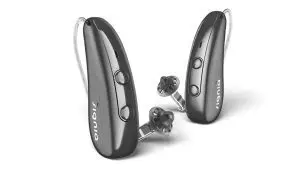
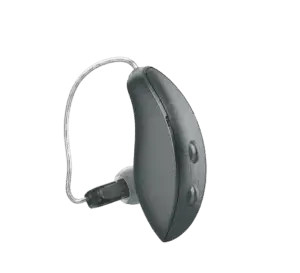
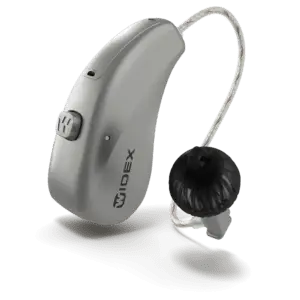
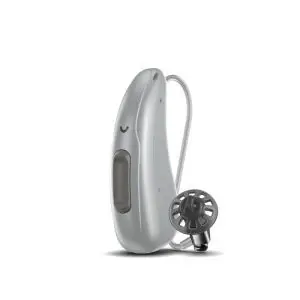
Hearing aids come in several styles, behind-the-ear (BTE), in-the-ear (ITE), in-the-canal (ITC), and completely-in-the-canal (CIC), each suited to different degrees of hearing loss and personal preference. Battery type matters too: rechargeable lithium-ion batteries are convenient at home, while some frequent travelers prefer replaceable zinc-air batteries so they’re not tied to a charger.
3. Consider the Technology Level
Hearing aids range from basic to advanced technology, and higher tiers generally perform better in challenging listening environments but cost more. We also carry consignment hearing aids, which offer premium technology at a more affordable price point. The right level is the one that matches your actual lifestyle and needs, not necessarily the most advanced one available.
4. Set a Realistic Budget
Hearing aid prices vary widely, and Medicare typically doesn’t cover them, so your insurance and financial resources are worth reviewing early. Budget-friendly options like Costco offer lower prices with a more limited range of service and support. Private clinics offer more personalized, comprehensive care, thorough evaluations, custom fittings, and ongoing adjustments. Which fits you better depends on how straightforward your hearing needs are and how much you value personalized support.
5. Keep Your Expectations Realistic
Hearing aids significantly improve hearing, but they don’t fully restore it to its original state, and adjusting to new sounds takes time. Very noisy environments, like a crowded party, remain genuinely challenging even with hearing aids. Assistive devices like remote microphones or smartphone apps, used alongside your hearing aids, can meaningfully improve speech clarity in those tougher settings.
6. Plan for Maintenance and Care
Hearing aids are sophisticated devices that need regular cleaning, battery changes, and occasional professional adjustment. Good ongoing service minimizes downtime and keeps your devices performing the way they should.
7. Use the Trial Period
Most providers offer a trial period so you can test a device in real settings before committing. If a hearing aid doesn’t meet your expectations, don’t keep it out of obligation; talk to your audiologist about adjustments or a different option. Hearing aids are a long-term investment, and it’s worth getting the fit right.
8. Check Device Compatibility
Ask about compatibility with your smartphone and other devices. Bluetooth connectivity enables hands-free calls and audio streaming, remote microphones help in noisy settings, and TV streamers improve the television-watching experience. Understanding what’s available helps you get the most out of your hearing aids.
9. Understand the Warranty & Service
Know what’s covered by the manufacturer or provider warranty, and what isn’t, so you understand your ongoing protection and any associated costs.
10. Work on Communication Skills Too
Hearing aids help, but active listening and communication strategies matter alongside them. Aural rehabilitation programs can strengthen your ability to process and understand speech, especially in noisy environments, and can meaningfully boost confidence in social situations.
11. Plan for Regular Follow-Ups
Hearing can change over time, so periodic reassessment lets your audiologist fine-tune your devices as your needs shift, keeping your hearing experience as sharp as possible.
12. Don’t Skip Emotional Support if You Need It
Hearing loss can be emotionally difficult. If it’s weighing on you, counseling or support can help address that alongside the practical side of treatment.
13. Look Into Local Assistance Programs
Some local regulations or assistance programs help offset the cost of hearing aids. Your state government or local Department of Health website is usually the best place to check.
Why This Matters More As You Age: Falls and Cognitive Health
Two things make treating hearing loss especially important for seniors specifically, beyond the everyday benefits of better conversation. Research has linked untreated hearing loss to a higher risk of falls, likely because your ears play a real role in balance and spatial awareness, not just hearing. Untreated hearing loss has also been linked to a higher risk of cognitive decline, and some of the strongest research in this area points to hearing loss as one of the largest modifiable risk factors for dementia identified so far. Neither of those risks means hearing loss causes falls or dementia directly, but treating hearing loss is one of the more meaningful things within your control.
Speed Matters as Much as Volume: Why Speaking Slower Helps
One of the best-documented effects of aging on hearing isn’t about volume at all, it’s about speed. As we age, the brain’s ability to process rapid changes in sound naturally slows down, even in people without significant hearing loss. That means quick, fast-paced conversation can be genuinely harder to follow, not because the words weren’t loud enough, but because the brain needs more time to process them.
This is exactly why raising your voice to a parent or grandparent so often doesn’t help as much as you’d expect, and can even backfire. Speaking louder addresses volume. It does nothing for processing speed, and can actually make speech harder to follow by distorting normal speech patterns. The far more effective strategy is simply asking people to slow down. A slightly slower pace, with normal volume and clear enunciation, gives the brain the extra processing time it needs and often improves understanding more than raising the volume ever will.
This is worth sharing with family and friends directly, not just discovering on your own. Most people don’t realize that slowing down helps more than speaking up, and a simple, direct request, please just slow down a little, can make a real difference in how well a conversation actually lands. Hearing aids help address the volume and clarity side of hearing loss, but they don’t fully solve processing speed on their own. Combining well-fit hearing aids with the people around you speaking a bit slower is often what actually closes the gap.
Choosing a Device You Can Actually Use
A hearing aid only helps if you can comfortably manage it day to day, and that’s worth thinking through honestly rather than assuming you’ll adapt. If arthritis or reduced dexterity makes small objects hard to handle, a tiny completely-in-the-canal device with a small battery door may be genuinely frustrating to use, where a rechargeable behind-the-ear model with a simple charging dock might fit your daily routine far better. If vision changes make small text or tiny buttons hard to see, ask about companion apps with large, high-contrast controls, or hearing aids with simpler physical controls that don’t rely on a smartphone app at all. There’s no wrong answer here, just the version that actually works for your hands and your eyes, not just your ears.
Involve Family in the Process, If You Want To
Many of our patients bring a spouse, adult child, or close family member to their appointment, and it genuinely helps. A family member often notices patterns you don’t, when you miss things at dinner, when the TV volume creeps up, when you’ve stopped joining group conversations, and that outside perspective can be useful during the evaluation. Family involvement can also help with the practical side of adjusting to hearing aids in the first few months, and with remembering the details of a fitting appointment that can be a lot to take in all at once. This is entirely your decision to make, but you don’t have to make it alone if you’d rather not.
We’re Here to Help You Navigate All of This
Hears Hearing & Hearables’s providers are known for trustworthy, transparent, comprehensive hearing care. We take the time to walk through your options, the pros and cons of each, and how different technology fits your specific needs and lifestyle, so you’re an active participant in the decision, not just handed a device. If you’re not in Minnesota, we’re working on building a network of reliable clinics elsewhere, and we offer telehealth support in the meantime.
We’re also glad to help you explore specialized solutions beyond hearing aids themselves, like hearing loops and FM systems for theaters, classrooms, or group settings, so you’re equipped for the specific situations where you need it most.
Browse our prescription hearing aid selection.