Most hearing aid manufacturers offer their current platform at two, three, or four technology tiers. The name on the box is the same. The chip is the same. The form factor and charging system are the same. What changes between tiers is how sophisticated the automatic processing is, and whether that sophistication translates into meaningfully better hearing for the person wearing the devices. So the burning question is: Is premium hearing aid technology worth the additional cost?
The honest answer from both the research literature and clinical experience: it depends on your life. For some patients, the premium tier is genuinely worth the cost difference. For others, a mid-level device programmed well to their audiogram will serve them just as effectively. The determining factor is not how much hearing loss you have. It is how complex your listening environments are.
What Actually Changes Between Technology Levels
It is worth being precise about what tiers do and do not change, because manufacturers are not always transparent about this.
Features that Stay the Same Across All Tiers
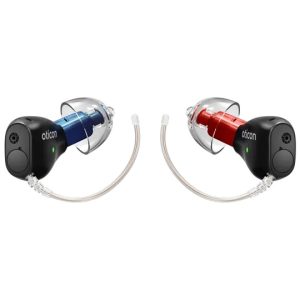
- The core hardware: same chip, same battery, same physical device, same Bluetooth connectivity, same charging system. An Oticon Intent 1 and an Oticon Intent 3 are physically identical devices. The same holds for Phonak, Widex, ReSound, Signia, Starkey, and every other major brand we carry.
- Maximum amplification: the amount of gain available is determined by the receiver, not the technology tier.
- Basic sound quality: all tiers of a current-generation platform produce fundamentally good sound. The question is not good versus bad. It is how well the device handles specific challenging conditions.
- Warranty and support: manufacturer warranty terms are consistent across technology levels within the same platform.
What Actually Changes Between Tiers
- Automatic environment classification: higher tiers classify more acoustic environments, switch more precisely between programs, and adapt more quickly.
- Noise reduction sophistication: the algorithms that identify and reduce background noise are more aggressive and more precise at higher tiers.
- Number of listening programs: premium tiers typically offer more distinct programs covering a wider range of situations.
- Directionality and beam forming: the most sophisticated spatial processing is often reserved for the top tier or substantially enhanced there.
- Data logging and learning: some manufacturers offer more sophisticated personalization features at higher tiers, including the ability to learn from patient adjustments over time.
What the Research Says
The research on hearing aid technology tiers is more nuanced than either manufacturers or budget-minded critics typically present it.
The Bor, Souza, and Driscoll Findings
Research published in the Journal of the American Academy of Audiology examined speech recognition across technology tiers and found that for patients with mild to moderate hearing loss in quiet or low-noise environments, differences between technology levels were not clinically significant. The same study found that for patients regularly exposed to complex, noisy listening environments, higher technology levels produced measurable improvements in speech understanding and listening effort.
The Ng, Classon, and Lyxell Research
Research on listening effort and cognitive load consistently shows that the benefit of higher-tier noise processing extends beyond what patients can measure on a speech-in-noise test. Reducing the cognitive work required to follow a conversation in a noisy environment, even when speech understanding scores are similar, reduces fatigue. This is a real, clinically important benefit that simple audiometric testing does not capture.
The Cox and Xu Meta-Analysis
A meta-analysis examining hearing aid satisfaction across technology levels found that satisfaction was more strongly predicted by fitting quality, counseling, and follow-up care than by technology tier alone. A well-fitted lower-tier device consistently outperformed a poorly-fitted premium device on patient satisfaction measures.
HearAdvisor Independent Testing
HearAdvisor’s independent testing consistently shows that premium platforms outperform lower tiers most dramatically in their most challenging test conditions: multi-talker noise, directional listening in complex acoustic environments, and speech understanding at distance. In simpler test conditions, the gap narrows considerably.
The consistent finding across the research: technology tier differences are most meaningful for patients who regularly encounter complex, noisy listening environments, and least meaningful for patients whose primary listening challenges occur in quiet or low-demand situations.
How Tiers Work Across the Brands We Carry
Each manufacturer names and structures their tiers differently, but the underlying pattern is consistent: premium tiers offer more sophisticated automatic adaptation and more granular noise processing; mid and entry tiers deliver the core platform benefits at lower cost. Brand-specific tier breakdowns for each of the eight prescription brands we carry are linked below as individual guides. Here are the individual posts for manufacturer-specific tiers:
A general pattern that holds across all brands:
- Top tier (e.g. Oticon Intent 1, Phonak Infinio Sphere 90, Widex Allure 440): full platform feature set, most sophisticated automatic environment classification, highest number of automatic programs, most advanced directionality. Best for active social lives, noisy professional environments, and patients with demanding acoustic situations.
- Mid tier (e.g. Oticon Intent 2, Phonak Infinio 70, Widex Allure 330): core platform features intact, somewhat less granular noise processing and fewer automatic environment categories. Best for patients with moderate social activity and occasional challenging environments, where the top tier’s incremental improvement does not justify the cost difference.
- Entry tier (e.g. Oticon Intent 3 or 4, Phonak Infinio 50, Widex Allure 220): fundamental platform performance including Bluetooth, rechargeability, and basic automatic adaptation. Best for patients whose primary listening needs are quiet and one-on-one, or for whom budget is a meaningful constraint.
When Premium Technology Is Worth It
- Active social lives with frequent noisy environments: restaurants, parties, family gatherings, events with competing voices. This is where sophisticated noise processing makes the most audible difference.
- Professional environments requiring sustained listening: meetings, conferences, classrooms, any setting where missing speech has real consequences, and listening effort accumulates over a full day.
- Significant listening fatigue: end-of-day mental exhaustion from hearing effort indicates high cognitive load. Premium noise processing reduces that load measurably.
- Musicians and audiophiles: the most sophisticated sound processing at premium tiers generally produces the most natural sound quality for patients with refined auditory discrimination.
- Patients with auditory processing complexity: those with significant word discrimination difficulty, not just audibility, often benefit more from premium processing.
When Mid-Level Technology May Serve Just as Well
- Primarily quiet listening environments: patients who spend most of their time at home, in one-on-one conversation, or in consistently low-noise settings.
- Mild hearing loss: patients with mild loss often find that any current-generation device, fitted well, addresses their primary challenges.
- Budget is a genuine constraint: a mid-level device worn consistently is always better than a premium device that creates financial stress or gets left in a drawer.
- Primary use for one-on-one conversation: if the overwhelming majority of listening need is following one person at a time in relatively quiet settings.
How to Decide
- Where do you struggle most? noisy restaurants and meetings points toward premium. TV at home and one-on-one conversation points toward mid-level being sufficient.
- How much do you notice listening fatigue? end-of-day mental exhaustion from hearing effort is a real indicator. Premium technology typically reduces this more than mid-level.
- What does your audiogram show? speech discrimination scores in noise specifically tell your audiologist how much the AI processing has to compensate for.
- What is the realistic budget? a mid-level device that creates no financial stress and gets worn every day will produce better outcomes than a premium device that creates anxiety or gets returned.
Technology tier does not compensate for poor fitting. The most sophisticated noise processing cannot overcome an audiogram taken incorrectly, a prescription not verified with real-ear measurement, or inadequate follow-up. Fitting quality remains the most important variable in hearing aid outcome, regardless of tier.
Not sure which technology level fits your listening life? We offer hearing aid demonstrations that let you hear the difference between tiers in real listening conditions before committing. Contact Hears Hearing & Hearables to arrange one.
Frequently Asked Questions: Hearing Aid Technology Levels
Is the most expensive hearing aid always the best?
No. The best hearing aid for any individual patient is the one that addresses their specific listening challenges, fits their anatomy, and gets worn consistently. A premium device fitted poorly will underperform a mid-level device fitted well. Technology tier matters most in complex, noisy listening environments. For patients whose primary needs occur in quiet settings, the highest tier often provides no meaningful additional benefit over a well-fitted mid-level device.
What is the actual difference between premium and entry-level hearing aids from the same brand?
Both run the same core platform hardware. The differences are in the depth of automatic sound classification, the sophistication of the directional processing system, the number of automatic programs, and the granularity of noise reduction. In demanding acoustic environments, premium tiers outperform entry tiers measurably. In quiet and low-demand settings, the practical difference is minimal.
Does research support paying more for premium hearing aid technology?
The research is nuanced. Studies consistently show that premium technology produces measurable benefits in complex, noisy listening environments, both in speech understanding scores and in reduced listening effort and fatigue. The same research consistently shows that in quiet or low-demand environments, the benefit gap narrows substantially and may not be clinically meaningful. Fitting quality, counseling, and follow-up care account for more outcome variance than technology tier in studies that examine patient satisfaction directly.
Can I start with a lower tier and upgrade later?
Not within the same device. Hearing aid technology levels are set at the point of manufacture and cannot be unlocked or upgraded after purchase. If you start with a mid-level device and later find the noise processing insufficient, upgrading means purchasing a new device. We offer demonstrations so you can compare tiers before committing.
How do I know if I need premium technology without trying it first?
The clearest indicators are the complexity and frequency of your challenging listening situations, the degree of listening fatigue you experience, and your speech discrimination scores in noise. An audiologist can use your audiogram data to estimate how much AI processing benefit you are likely to experience. A demonstration in realistic listening conditions is the most reliable way to hear the difference before deciding.