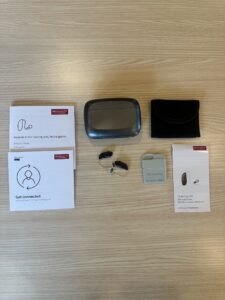
A consignment hearing aid is not a new hearing aid. It will not perform like one, it will not look like one came out of the box, and it will not come with the same warranty or the same features. If you go in expecting a new hearing aid at a fraction of the cost, you will likely be disappointed.
But if you go in with accurate expectations, understanding exactly what you are getting and what the device can do for your specific hearing loss, a consignment hearing aid can be a genuinely good solution that improves your daily life at a price that makes it accessible. This post gives you the complete picture before you purchase.
What You Are Getting
A Professionally Tested Device
Every hearing aid in the Hears Hearing & Hearables consignment store has been tested in an ANSI-certified electroacoustic test box. This measures actual output levels, distortion, microphone function, and frequency response, not just a subjective listening check. If a device does not meet performance standards, it does not go in the store. You are not buying a hearing aid on faith that it works. You are buying one that has been objectively measured.
A Cleaned and Sterilized Device
Physical cleaning removes all wax and debris. UV-C sterilization in our sterilization chamber addresses bacteria, viruses, and fungi on all surfaces. New ear tips and domes are fitted before listing. The device is hygienic.
A Verified Device
Serial numbers are checked against manufacturer databases to confirm U.S. purchase history, original registration, and warranty status. The product listing tells you what warranty coverage remains, if any.
A Device That Will Be Programmed to Your Audiogram
This is the single most important factor in how well a consignment hearing aid will work for you. A hearing aid running on a generic preset is a very different experience from one programmed specifically to your audiogram. When you purchase a consignment hearing aid from us, we strongly recommend and facilitate professional programming.
What You Are Not Getting
The Latest Technology
Consignment hearing aids are often previous-generation devices, but not always. They may not have deep neural network processing, the latest Auracast Bluetooth LE Audio, the most current noise management algorithms, or the newest app features. If these capabilities are important to your daily listening demands, a new prescription hearing aid is the right choice. You will be able to tell the consignment hearing aids that have the most latest technology will often be more expensive than others, and still have warranties.
A Full Manufacturer Warranty
Depending on the device’s age and history, manufacturer warranty coverage may be partial, expired, or unavailable. We communicate warranty status clearly in every product listing. Optional service warranty coverage is available for consignment purchases at additional cost, ask us for details.
The Same Cosmetic Condition as a New Device
Used hearing aids show use. There may be minor scuff marks, slight discoloration at the receiver, or wear marks on the shell. We note any significant cosmetic issues in the product listing. A device that is cosmetically worn but electronically sound is what consignment is. The electronics are what matter for hearing.
Instant Results Without Professional Fitting
A consignment hearing aid shipped to you and placed in your ears without professional programming will not sound right. It is preset to a generic mild to moderate profile, it will provide some amplification, but it will not be optimized for your specific hearing loss until it is programmed. Plan for a professional fitting appointment before evaluating how well the device works.
The Adjustment Period
Even a properly programmed prescription hearing aid requires an adjustment period. First-time hearing aid users and patients returning to amplification after a gap both experience an initial phase where sounds seem too loud, too sharp, or unfamiliar. This is normal. The brain is re-learning to process sounds it has not been receiving at full volume.
Expect two to four weeks of consistent wear before the sound feels natural. During this period, work with your audiologist for fine-tuning adjustments. Most of the early discomfort resolves with use and with one or two programming tweaks, not with a different hearing aid.
The Realistic Performance Picture
- Quiet environments: home, one-on-one conversation, small gatherings, such as consignment prescription hearing aids, perform very well. This is where the prescription fitting makes the most difference and where older-generation processing holds up well against current technology.
- Moderate noise: small restaurants, group conversation, meetings: acceptable performance for most patients. Will not match current-generation noise processing but will be meaningfully better than unaided hearing for most mild to moderate losses.
- Complex noise: busy restaurants, large events, crowded spaces: this is where older technology shows its limits most clearly. If complex noise environments are a daily reality for you, a newer device’s noise processing is worth the investment.
- Telephone calls and streaming: depends on the specific device. Most devices from the last five years have Bluetooth streaming capability. Confirm the specific model’s streaming features before purchasing if this is important.
How to Get the Most From a Consignment Hearing Aid
- Get a current audiogram before purchasing, programming requires it
- Arrange a professional fitting appointment before the hearing aid arrives if possible
- Commit to consistent daily wear for at least two to four weeks during the adjustment period
- Schedule a follow-up programming appointment two to four weeks in, fine-tuning after initial wear is normal and expected
- Use the hearing aids in your real listening environments and give specific feedback to your audiologist about what is and is not working
- Contact Hears Hearing & Hearables if you need help finding a provider or have questions about your specific device
Ready to browse? Every device in our consignment store has been tested, cleaned, and verified. Product listings include brand, model, technology level, warranty status, and cosmetic condition notes. Contact us before purchasing if you have questions about a specific device.
Customers Who Bought Used Hearing Aids
Customers across the United States have purchased consignment hearing aids through Hears Hearing & Hearables, many replacing Costco or big-box devices with professionally tested and remotely programmed prescription aids. One buyer replaced two-year-old Costco hearing aids with a consignment Oticon Intent 1 and reported the upgrade was significant: clearer sound, better word understanding, programmed remotely by our team from another state using an emailed audiogram. Another described the process simply: wife is very happy, local audiologist set it up without issue. A third: best hearing aid I have used to date.
Professional testing, UV-C sterilization, and remote programming are what make the difference between a used hearing aid that works and one that does not. Every device in our consignment store has been through that process.
Frequently Asked Questions: What to Expect
How well do consignment hearing aids actually work?
Properly programmed to your audiogram, a consignment prescription hearing aid from a reputable source works well for mild to moderate hearing loss in everyday listening environments, home, one-on-one conversation, smaller gatherings. Performance in complex noise environments is where older technology shows its limits most compared to current platforms. The programming is the biggest variable: a well-fitted consignment device will significantly outperform one running on a generic preset.
Will a consignment hearing aid look obviously used?
Consignment hearing aids show cosmetic wear. There may be minor scuffs or marks on the shell or receiver. We note significant cosmetic issues in product listings. Functionally the devices are tested and verified, the electronics are what affect your hearing experience, and those are what we assess objectively.
How long does the adjustment period take?
Most patients need two to four weeks of consistent daily wear before amplification sounds natural. First-time hearing aid users typically need the full adjustment period. Patients returning to hearing aids after a gap often adapt more quickly. One or two follow-up programming appointments during this period usually address the specific sounds that feel unnatural or uncomfortable.
Can I try a consignment hearing aid before buying?
Consignment hearing aids are sold as-is and are non-refundable, in-person trial fittings are not available for online consignment purchases. The mitigation for this is our professional testing process: every device has been electroacoustically verified before listing, so you are not purchasing a device of unknown performance. If you have specific questions about a device’s suitability for your audiogram, contact us before purchasing and we can discuss whether it is likely to be a good fit.
💙