UV-C Hearing Aid Sterilization: The Science Behind Our Consignment Protocol
Choosing a pre-owned hearing aid is a significant decision. The technology is sound; hearing aids are durable medical electronics that retain their processing capability long after their original owners no longer need them. The hesitation most people have is about hygiene: these devices have been inside someone else’s ears.
At Hears Hearing & Hearables, every hearing aid in our consignment store undergoes professional UV-C sterilization before being offered for sale. This is not a marketing claim; it is a scientifically validated disinfection process with a century of supporting research. This post explains the science, our specific protocol, and why you can shop our consignment store with confidence.
What UV-C Light Does
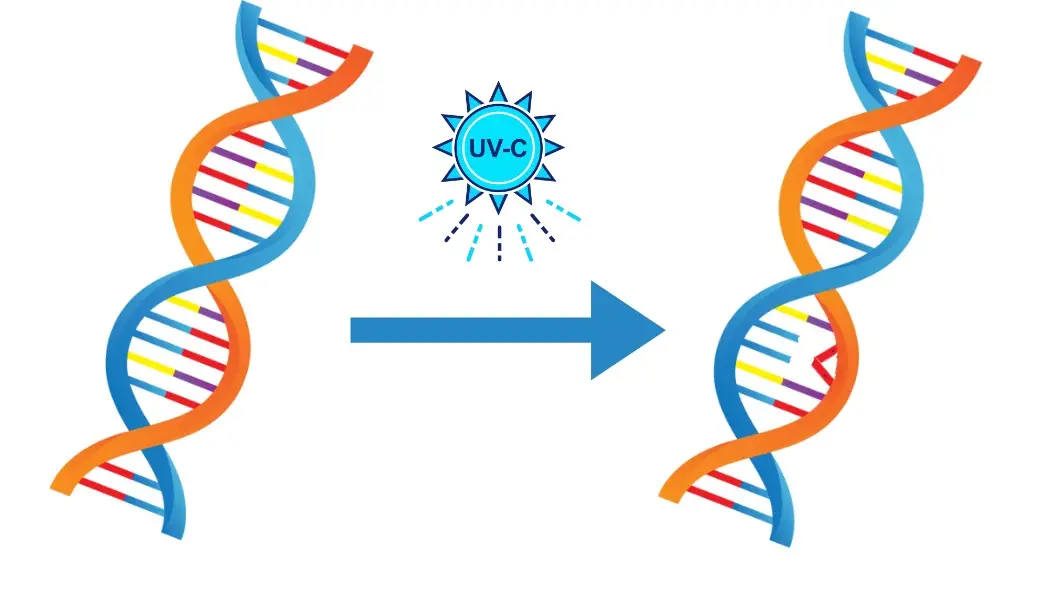
UV-C refers to ultraviolet light in the 200 to 280 nanometer wavelength range, shorter than the UV-A and UV-B that cause sunburn, and significantly more energetic. When UV-C light strikes a microorganism, it is absorbed by the organism’s DNA and RNA. The energy causes photochemical damage, specifically, it creates thymine dimers in DNA and uracil dimers in RNA that prevent the pathogen from replicating.
A pathogen that cannot replicate cannot cause infection. UV-C does not kill microorganisms in the way that heat or chemicals do; it disables their ability to reproduce, which is clinically equivalent. The organism is neutralized.
UV-C sterilization is not a new technology. It has been used in hospitals, water treatment facilities, air purification systems, and medical device disinfection for nearly a century. What is relatively new is its incorporation into consumer hearing aid dryers and professional hearing care protocols, a practical application of well-established science.
The Research Supporting UV-C for Hearing Aids
While dedicated clinical trials on UV-C for hearing aids specifically are limited, the supporting evidence from adjacent fields is robust and directly applicable:
Cadnum et al., 2020, American Journal of Infection Control
This study evaluated UV-C for decontaminating high-touch plastic surfaces, specifically airport security bins that pass through hundreds of hands daily. Twenty to thirty seconds of UV-C exposure at modest dosing achieved a significant reduction of MRSA and surrogate viruses, including Phi6, a bacteriophage used as a SARS-CoV-2 surrogate.
Rutala and Weber, 2019, Infection Control and Hospital Epidemiology
A comprehensive review of disinfection and sterilization practices for medical equipment validated UV-C as effective for non-critical medical devices, including stethoscopes and blood pressure cuffs. Hearing aids, as non-critical non-invasive medical devices made from non-porous plastics, silicones, and metals, fall directly into this category.
Raeiszadeh and Adeli, 2020, Journal of Hospital Infection
A COVID-19 era review confirming UV-C efficacy for surface decontamination with two important practical caveats: the surface must be pre-cleaned before UV-C exposure, and direct line-of-sight exposure is required. Shadowed areas receive less UV-C energy and may not be fully decontaminated. Both points directly inform our protocol.
Kowalski’s Ultraviolet Germicidal Irradiation Handbook, 2009
The landmark technical reference for UV-C system design, documenting UV-C lethal dose values for more than 200 pathogens and providing dosing formulas for consistent germicidal efficacy. This reference underpins proper UV-C system calibration across medical and industrial applications.
Why UV-C Works on Hearing Aids Specifically
Three properties of hearing aids make them well-suited to UV-C disinfection:
- Non-porous materials: hearing aids are made from hard plastics, silicones, and metals, with non-porous surfaces that UV-C light can penetrate and decontaminate effectively. UV-C is less effective on porous materials where microorganisms can shelter from direct exposure.
- No heat sensitivity concern at proper dosing: UV-C disinfection at standard clinical dosing does not generate heat and does not damage the electronics of hearing aids when used correctly within recommended exposure times.
- Chemical-free: UV-C leaves no residue, no chemical film, and no off-gassing. There is nothing on the hearing aid surface after sterilization except a dry, disinfected device.
Our UV-C Sterilization Protocol
Understanding the research limitations, particularly the line-of-sight requirement identified by Raeiszadeh and Adeli, we designed our protocol to address them directly:
|
Step |
Action |
Why It Matters |
|
1 |
Pre-clean with soft dry cloth |
Removes wax, debris, and oils that could shield microorganisms from UV-C exposure. Pre-cleaning is required for effective UV-C — this step is not optional. |
|
2 |
Expose to UV-C at 254 nm |
254 nm is the peak germicidal wavelength — the point at which UV-C energy is most efficiently absorbed by microbial DNA and RNA. |
|
3 |
3 to 5 minutes at 2 to 5 inch distance |
Sufficient dosing for the non-porous surfaces of hearing aids without overexposure that could degrade plastics over time. |
|
4 |
Open battery compartments |
Ensures all surfaces receive direct UV-C exposure. The line-of-sight limitation means enclosed spaces must be opened for the process to be effective. |
|
5 |
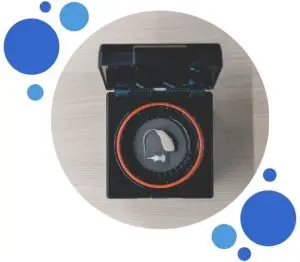
Validated UV-C chamber for electronics |
A calibrated chamber prevents overheating and ensures consistent, reproducible UV-C dosing. We do not use general-purpose UV-C wands or uncalibrated sources. |
What UV-C Sterilization Does and Does Not Do
- Does: inactivates bacteria, viruses, and fungi on hearing aid surfaces through direct DNA and RNA damage. Leaves no chemical residue. Works in minutes. Safe for the non-porous materials hearing aids are made from.
- Does not: remove physical debris, earwax, or oils — which is why pre-cleaning is required before UV-C exposure. Cannot decontaminate areas not reached by direct UV-C light, which is why we open battery compartments during the process.
- Is not a substitute for: physical cleaning, wax guard replacement, or mechanical maintenance. UV-C sterilization addresses microbial contamination. The hearing aid also needs to be physically clean and mechanically functional before sale.
Every hearing aid in our consignment inventory has been physically cleaned, mechanically inspected, and UV-C sterilized before being listed. The UV-C step is one part of a comprehensive reconditioning process, not a shortcut that replaces the others.
UV-C in Everyday Hearing Aid Care
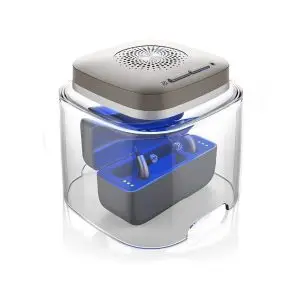
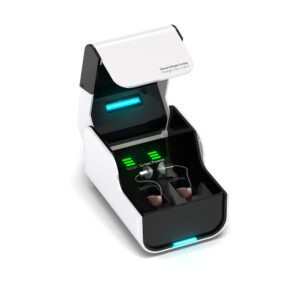
UV-C is not only for consignment devices. Many hearing aid dryers for home use now incorporate UV-C alongside their drying function, providing ongoing surface sterilization as part of the nightly routine. This is a meaningful hygiene benefit for all hearing aid wearers, not just those buying used devices.
- Widex Charge N Clean: combines overnight charging with UV-C sterilization.
- Signia Dry&Clean Charger: charges IX and AX platform hearing aids while applying UV-C and gentle heat.
- Oticon Smart Dryer: combines drying with UV-C for compatible rechargeable models.
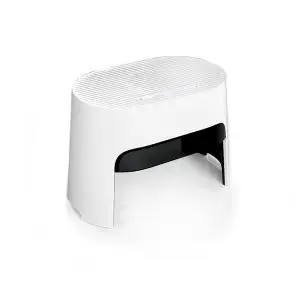
- PerfectDry Lux and similar: standalone UV-C dryers for all hearing aid styles.
For patients who sweat during wear, have high earwax production, or simply want the most hygienic possible hearing aid care routine, a UV-C dryer as part of nightly maintenance is worth considering.
Who Benefits Most From UV-C Sanitizing
UV-C sanitization is worth adding to any hearing aid wearer’s routine, but it is particularly valuable for certain patient groups:
- Patients with recurring ear canal infections: hearing aids that re-enter the ear canal daily without sanitization reintroduce bacteria to the canal environment. UV-C reduces the surface microbial load on every cycle.
- Patients who sweat heavily during wear: sweat accelerates bacterial and fungal growth on hearing aid surfaces. The combination of moisture and heat that active wearers create inside the ear canal is ideal for microbial growth. UV-C combined with drying addresses both.
- Active lifestyle patients and athletes: outdoor wear in warm weather, humidity, and physical activity all increase microbial exposure. A UV-C cycle after activity provides a hygiene reset before the next wear.
- Patients with sensitive skin or chronic ear canal inflammation: reducing bacterial load on hearing aid surfaces eliminates one potential contributing irritant for patients whose ear canals are already prone to irritation.
- Anyone who wants a simpler care routine: a charger-sanitizer combination, Widex Charge N Clean, Signia Dry&Clean, Oticon Smart Dryer, handles charging, drying, and UV-C sanitization in one overnight step. Less to remember, more consistent compliance.
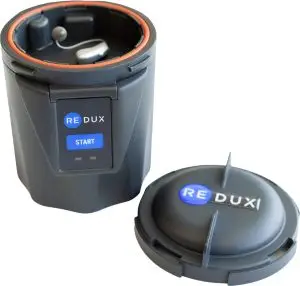
UV-C sanitization addresses surface bacteria and viruses. For patients with significant moisture accumulation inside hearing aid components, from heavy sweating, water exposure, or extended wear without drying, a professional Redux treatment removes internal moisture that UV-C cannot reach. Consider adding a Redux session when UV-C alone is not resolving moisture-related performance issues.
Shop Our Consignment Store With Confidence
Every hearing aid in the Hears Hearing & Hearables consignment store has been through our full reconditioning protocol: physical cleaning, mechanical inspection, wax guard replacement where applicable, Redux moisture treatment where needed, and UV-C sterilization. The science supporting each step is documented, and the protocol is designed with the research limitations in mind, particularly the pre-cleaning and line-of-sight requirements that distinguish effective UV-C application from ineffective.
Browse our consignment store for professionally reconditioned hearing aids at significantly lower prices than new devices. Every device has been cleaned, inspected, and UV-C sterilized.
Frequently Asked Questions: UV-C Hearing Aid Sterilization
Is UV-C sterilization safe for hearing aids?
Yes, when used correctly. UV-C at standard clinical dosing (254 nm, three to five minutes at two to five inch distance) does not damage the hard plastics, silicones, or metals hearing aids are made from. The risk of damage comes from excessive exposure duration or uncalibrated UV-C sources. Our protocol uses a validated UV-C chamber designed specifically for electronics with controlled dosing that prevents overexposure.
How effective is UV-C at killing bacteria and viruses on hearing aids?
Research on UV-C for non-porous surfaces including medical devices consistently shows significant microbial reduction. Cadnum et al. (2020) demonstrated effective decontamination of MRSA and viral surrogates on plastic surfaces in twenty to thirty seconds. Rutala and Weber (2019) validated UV-C for non-critical medical devices in the same category as hearing aids. The key requirements for effectiveness are pre-cleaning the surface before UV-C exposure and ensuring direct line-of-sight exposure to all surfaces, both of which our protocol addresses.
Do UV-C dryers for home use actually work?
Yes, for surface sterilization of hearing aids. Consumer UV-C dryers combined with heat drying provide both moisture removal and ongoing surface sterilization as part of the nightly routine. The UV-C component inactivates bacteria and fungi on the hearing aid surface. The effectiveness depends on the device being pre-cleaned before the UV-C cycle and the device being positioned so all surfaces receive direct exposure. For the drying function specifically, see our comparison of dryer types.
Are used hearing aids from a consignment store safe to wear?
Yes, when they have been properly reconditioned. The concern about pre-owned hearing aids is microbial contamination from the previous wearer. UV-C sterilization addresses this directly, inactivating bacteria, viruses, and fungi on hearing aid surfaces through DNA and RNA damage without chemical residue. Our consignment protocol includes physical cleaning, mechanical inspection, and UV-C sterilization before any device is offered for sale.
Why do you open the battery compartment during UV-C sterilization?
UV-C light travels in straight lines and cannot decontaminate surfaces it does not directly reach. A closed battery compartment creates a shadowed interior that UV-C cannot penetrate. Opening the battery compartment during the sterilization cycle ensures all interior surfaces receive direct UV-C exposure. This is one of the practical protocol requirements identified in the infection control research; line-of-sight coverage is essential for effective decontamination.
Can I use UV-C to sterilize my own hearing aids at home?
Yes. Several hearing aid dryers for home use incorporate UV-C sterilization alongside their drying function. For effective results, clean the hearing aids with a dry cloth before placing them in the UV-C dryer, and open battery compartments during the cycle to allow direct UV-C exposure to interior surfaces. UV-C home dryers provide ongoing surface sterilization as part of a regular nightly maintenance routine.