Not everyone who struggles to hear the TV wears hearing aids, and not everyone who wears hearing aids wants to stream television through them. Some people have not gotten hearing aids yet or maybe only have mild difficulty that does not warrant a full hearing aid. Others just want a dedicated TV listening solution they can hand to a spouse, a parent, or a houseguest without any pairing process tied to a specific person’s ears.
This guide covers the TV listening devices we carry that work entirely on their own, no hearing aid required, no hearing aid compatibility needed. If you already wear hearing aids and want a streamer that works with them specifically, see our hearing aid TV streamer guide instead.
Two Ways These Devices Connect to Your TV
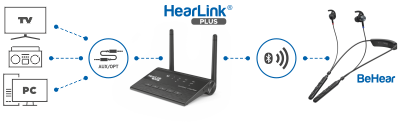
- Bluetooth transmitters: plug into your TV’s audio output and broadcast the sound wirelessly via Bluetooth to compatible headphones or earbuds. Modern, low latency on the better units, and many double as a general-purpose Bluetooth transmitter for other audio sources.
- RF (radio frequency) systems: an older but very reliable wireless technology, using radio waves rather than Bluetooth. RF systems typically have longer range and fewer dropout issues through walls and floors than Bluetooth, which is why several of the most trusted brands in this category still use RF.
Note: All prices are subject to change. Please refer to the product page for the actual price.
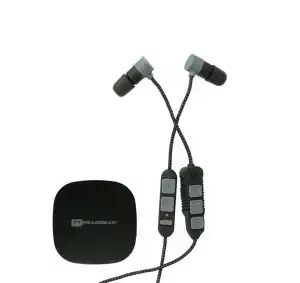
TV HearGear Wireless Bluetooth Transmitter and Earphones — ~ $99.95
An affordable, complete out-of-box Bluetooth solution, a TV transmitter paired with wireless earphones built specifically for this purpose. A strong starting point for anyone who wants to try a wireless TV listening device without a large investment. HSA/FSA eligible.
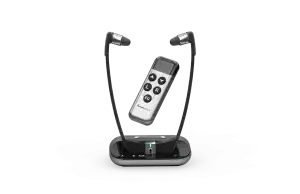
Amplicomms TV3500 Streamer — ~ $175
A dedicated TV streaming transmitter with a focus on clear, amplified speech from the television. A solid mid-range option for patients who specifically struggle with TV dialogue clarity rather than wanting a full headphone bundle.
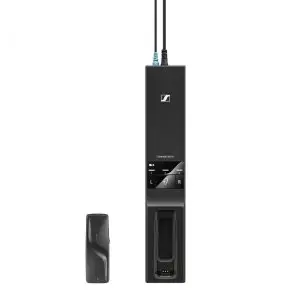
Sennheiser Flex 5000 Wireless RF System for Headphones — ~ $225.75
A trusted RF wireless system from Sennheiser, built specifically for TV listening with reliable range and minimal dropout. RF technology tends to perform more consistently than Bluetooth through walls and across larger rooms, which makes this a strong choice for bigger homes or anyone who has had frustrating Bluetooth dropout experiences with other systems.
Sennheiser RS 175 RF Wireless Headphone System — ~ $407 (members $400 / $286.20 sale)
Sennheiser’s higher-tier RF wireless headphone system, offering richer sound quality and a more premium headphone build than the Flex 5000. Worth the step up for patients who want the best possible audio fidelity from a dedicated TV headphone system, not just clear speech.
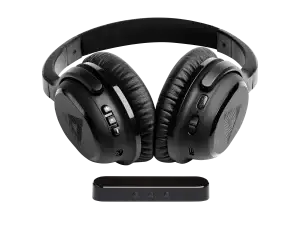
Audeara A-02 Noise Cancelling Headphones with Bluetooth Transmitter — ~ $490
The most full-featured option in this lineup: noise cancelling headphones paired with a Bluetooth TV transmitter, with the added benefit of Audeara’s personalized sound calibration built into the headphones themselves. Best suited to patients who want one premium set of headphones that handles TV listening, music, and general use, calibrated to their individual hearing.
Bundle: BeHear ACCESS + TV Link Streamer — ~ $299
This bundle pairs a TV Link streamer with the BeHear ACCESS wearable personal amplifier, giving you all-day amplification for everyday listening plus dedicated TV streaming in one purchase. A good fit for patients who want a single device that handles both general hearing difficulty and TV specifically, rather than a separate dedicated TV-only unit.
Shop the BeHear ACCESS + TV Link bundle
Bluetooth vs RF vs Headphones vs Earbuds: How to Choose
- Want the simplest setup with included earphones: TV HearGear.
- Want the most reliable connection across a bigger home or through walls: Sennheiser Flex 5000 or RS 175 (RF technology).
- Want the best possible audio quality and personalized calibration: Audeara A-02.
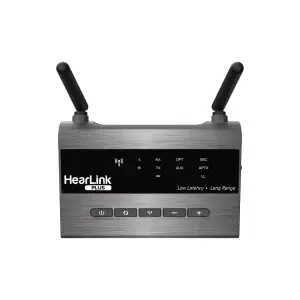
- Want the most affordable option, especially for long-range whole-house listening: HearLink Plus.
- Want amplification for everyday life plus TV, not just TV alone: BeHear ACCESS + TV Link bundle.
- Have an older TV without optical or HDMI ARC output: make sure you also have an RCA cable on hand.
None of the devices on this page require a hearing aid or hearing aid compatibility. They work as a complete standalone system between your TV and a set of headphones or earbuds. If you already wear hearing aids and specifically want your TV audio streamed into them, see our hearing aid TV streamer guide instead, since the right product depends on your specific hearing aid brand.
Not sure which TV listening device fits your room size, budget, or audio priorities? Contact Hears Hearing & Hearables. We carry the full range covered here and can help you choose based on your specific TV setup and listening needs.
Frequently Asked Questions: TV Listening Devices
Do I need hearing aids to use these TV listening devices?
No. Every device covered in this guide is a standalone system, a transmitter that connects to your TV and headphones or earbuds that receive the audio directly. None of them require hearing aids or hearing aid compatibility. They work for anyone who wants clearer TV audio without raising the volume for the rest of the room.
What is the difference between a Bluetooth and an RF TV transmitter?
Bluetooth transmitters use the same wireless technology as phones and most modern headphones, and tend to be more affordable and widely compatible. RF (radio frequency) transmitters use a different wireless technology that generally provides longer range and more consistent connection through walls and across larger rooms, with less risk of audio dropout. If you have had frustrating experiences with Bluetooth dropping out, an RF system like the Sennheiser Flex 5000 or RS 175 is worth considering.
Can I use these devices if my TV does not have Bluetooth built in?
Yes. All of the transmitters in this guide connect to your TV’s audio output, not its Bluetooth capability, so they work with any television regardless of how old it is. Most connect via optical audio, RCA, or headphone jack output. If your TV only has the older red and white RCA-style audio output, make sure you have an RCA cable on hand.
What is the difference between the Sennheiser Flex 5000 and the RS 175?
Both are RF wireless headphone systems built for reliable TV listening. The RS 175 is the higher-tier model, offering richer audio quality and a more premium headphone build. The Flex 5000 is a strong, more affordable option with the same reliable RF connection. Choose the RS 175 if overall sound quality is your top priority; choose the Flex 5000 if you want solid reliable performance at a lower price point.
Is the Audeara A-02 worth the higher price compared to other options?
The Audeara A-02 is the most full-featured option in this lineup because it combines noise cancelling headphones, a Bluetooth TV transmitter, and personalized sound calibration based on your individual hearing test results, taken through the Audeara app. If you want one premium set of headphones that works well for TV, music, and general use, calibrated specifically to your hearing, the A-02 is the strongest choice. For TV-only use, the Sennheiser or Amplicomms options provide excellent results at a lower price.