BeHear, Bellman, and More: Personal Sound Amplifiers Beyond the Pocket Talker
Our first personal sound amplifier guide covered the Williams Sound Pocket Talker 2.0 and the Trihear Liber and Convo More, three of our most popular amplifiers for one-on-one conversation and remote microphone use. But that is not the whole shelf. We carry several other personal amplifier lines that solve different problems: all-day wearable amplification, professional one-on-one communication, and bone conduction headphones that work alongside hearing loss rather than around it.
This guide covers the rest of what we carry, organized by what each product is actually good at.
BeHear: Our Flagship Wearable Amplifier Line
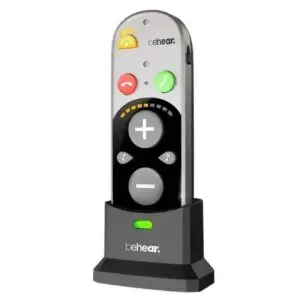
BeHear is the personal amplifier family we recommend most often for patients who want an all-day wearable amplifier rather than a one-on-one handheld device. The BeHear line has three tiers, and the right one depends on how much amplification and how many features you need.
BeHear ACCESS II — ~ $290
The ACCESS II is the most fully featured BeHear model, a wearable, app-controlled personal amplifier that adjusts to your hearing through an in-app hearing check, then continuously amplifies the world around you throughout the day. It streams Bluetooth audio from your phone directly, doubling as a set of hearing-loss-aware Bluetooth headphones.
- Best for: patients who want one device that handles both all-day environmental amplification and phone or media streaming.
- App control: in-app hearing check personalizes amplification without a clinic visit.
BeHear NOW — ~ $256 (members ~ $240)
The NOW is BeHear’s mid-tier model, offering wearable amplification and Bluetooth streaming with a more streamlined feature set than the ACCESS II. A good option for patients who want the core BeHear experience without the most advanced app features.
- Best for: patients who want reliable all-day amplification and phone streaming without needing every ACCESS II feature.
BeHear SMARTO — ~ $230 (members ~ $180)
The SMARTO is the entry point into the BeHear line, simplified compared to the NOW and ACCESS II, focused on straightforward amplification for patients who want the BeHear wearable form factor without the full feature set or price tag.
- Best for: patients new to personal amplifiers who want to try the BeHear approach at a lower cost before considering the NOW or ACCESS II.
Bundle: BeHear ACCESS + TV Link Streamer — ~ $299
For patients whose primary frustration is hearing the television, this bundle pairs the BeHear ACCESS personal amplifier with a dedicated TV Link streamer that sends television audio directly to the BeHear unit, clear TV sound without raising the volume for the rest of the household. [LINK to A2: TV streamers guide for additional brand-specific options]
Shop the BeHear ACCESS + TV Link bundle
Choosing between the three BeHear tiers comes down to budget and features rather than severity of hearing loss. All three use the same wearable open-ear form factor. The ACCESS II adds the most app-based personalization, the NOW sits in the middle, and the SMARTO is the simplest and most affordable entry point. Contact us if you want a recommendation based on your specific situation.
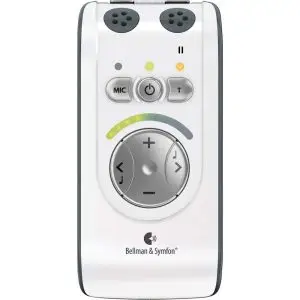
Bellman Mino Professional Communicator — ~ $560 (members ~ $420)
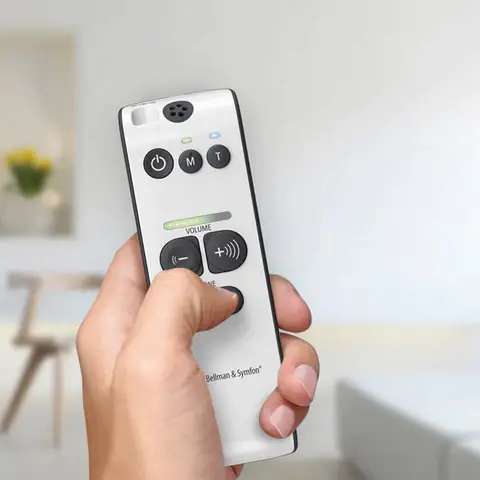
The Bellman Mino is a professional-grade communicator built for one-on-one conversation in demanding situations, clinical settings, professional consultations, or any scenario where clear, reliable amplified conversation matters and durability is a priority. It carries a higher price point than our other personal amplifiers, reflecting its build quality and professional positioning.
- Best for: professional settings, caregivers, and patients who want the most robust one-on-one communication device we carry.
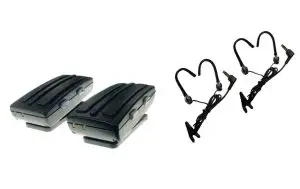
C-Mic HearHooks Communication System — Starting at ~ $695
The C-Mic HearHooks is our most advanced communication system, designed for situations where a simple amplifier is not enough, group settings, professional environments, or patients who need a more complete communication solution than a handheld or wearable amplifier provides. As our highest-priced personal amplification product, it is best suited to patients with specific communication demands who have already tried simpler solutions and need more.
Shop the C-Mic HearHooks system
Williams Sound Pocketalker Ultra — ~ $225 (members ~ $200)
The Pocketalker Ultra is a sibling product to the Pocket Talker 2.0 covered in our first amplifier guide, same trusted Williams Sound design philosophy, packaged with headphones as a complete out-of-box solution. If the Pocket Talker 2.0’s feature set appeals to you but you want a version that comes with headphones included, the Ultra is the simpler complete package. [LINK to ALD2 for the full Pocket Talker 2.0 review]
Shop the Williams Sound Pocketalker Ultra
Bone Conduction Headphones: A Different Approach Entirely
Bone conduction headphones do not go in or over the ear canal at all. They sit just in front of the ear and transmit sound through small vibrations conducted through the cheekbone directly to the inner ear, leaving the ear canal completely open. This matters for two groups of patients in particular: people with certain types of conductive hearing loss where the ear canal itself is the obstacle, and people who want to listen to audio while remaining fully aware of their surroundings, running outdoors, cycling near traffic, or simply not wanting anything blocking the ear canal.
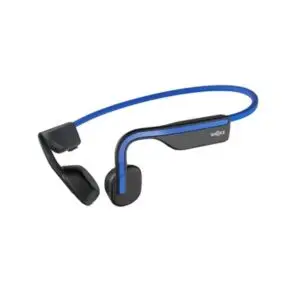
Shokz Aeropex Open Run — Starting at ~ $135
A wireless bone conduction headphone built for active use, secure fit for exercise, open-ear awareness, and solid battery life for long sessions. A strong option for patients who want music or calls during exercise without sacrificing awareness of traffic or surroundings.
Shokz OpenMove — Starting at ~ $81
The entry-level bone conduction option in our lineup, same open-ear bone conduction principle as the Open Run at a lower price point, with a partial titanium frame, Bluetooth 5.0, and sweat and dust resistance. A good starting point for patients curious about bone conduction who want to try it before investing in the higher-tier model.
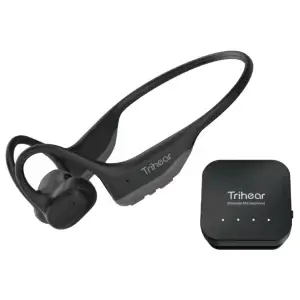
Bone Conduction Headphones with Remote Microphone — ~ $350
A bone conduction option built specifically with hearing loss communication in mind, pairing the open-ear bone conduction approach with a remote microphone for one-on-one or small group conversation use rather than purely music and exercise. HSA/FSA eligible.
Shop bone conduction headphones with remote microphone
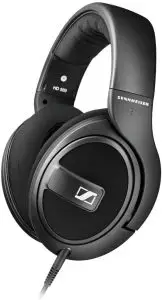
Sennheiser HD569 Noise Isolating Headphones — ~ $215
Unlike the bone conduction options above, the HD569 is a traditional over-ear noise-isolating headphone, a strong choice for patients who want to block out ambient noise entirely while listening to music, calls, or streamed audio, rather than staying aware of their surroundings. A good complement to a hearing aid or personal amplifier for focused, distraction-free listening at home.
Which Personal Amplifier Is Right for You
- Want all-day wearable amplification plus phone streaming: BeHear ACCESS II, NOW, or SMARTO, depending on budget and feature needs.
- Want the most durable option for professional or clinical one-on-one use: Bellman Mino.
- Need a more complete communication system beyond a simple amplifier: C-Mic HearHooks.
- Want a simple out-of-the-box amplifier with headphones included: Williams Sound Pocketalker Ultra.
- Want to stay aware of your surroundings while listening to music or calls: Shokz bone conduction headphones.
- Have hearing loss and need a remote mic combined with bone conduction: bone conduction headphones with remote microphone.
- Want noise-isolating headphones for focused home listening: Sennheiser HD569.
- Want a handheld amplifier for one-on-one or TV use, or a wireless remote mic system: see our Pocket Talker 2.0 and Trihear guide instead.
Looking for a simpler one-on-one amplifier or a wireless remote mic system instead? Start with our Pocket Talker and Trihear guide before diving into the options below.
Not sure which personal amplifier fits your specific situation? Contact Hears Hearing & Hearables. We carry the full range covered here and can help you choose based on your hearing needs, lifestyle, and budget.
Frequently Asked Questions: BeHear and Other Personal Amplifiers
What is the difference between BeHear ACCESS II, NOW, and SMARTO?
All three are wearable, open-ear personal amplifiers from BeHear, differing mainly in features and price. The ACCESS II offers the most complete feature set, including an in-app hearing check for personalized amplification and full Bluetooth streaming. The NOW provides core amplification and streaming with a more streamlined feature set. The SMARTO is the simplest and most affordable entry point. Severity of hearing loss is less of a factor in choosing between them than budget and how many smart features you want.
Are bone conduction headphones good for hearing loss?
Bone conduction headphones can be helpful for certain types of conductive hearing loss, where the obstruction is in the outer or middle ear rather than the inner ear, since bone conduction bypasses the ear canal entirely. They are also popular with patients who simply want to keep their ear canal open and stay aware of their surroundings while listening to audio. For sensorineural hearing loss, where the inner ear itself is affected, bone conduction does not address the underlying loss the way a hearing aid or amplifier does. Contact us if you are unsure whether bone conduction fits your specific type of hearing loss.
What is the difference between the Bellman Mino and the C-Mic HearHooks?
Both are higher-tier communication devices, but for different scenarios. The Bellman Mino is a professional-grade one-on-one communicator, well suited to clinical settings, caregiving, or any situation needing durable, reliable amplified conversation. The C-Mic HearHooks is a more advanced communication system designed for situations beyond simple one-on-one amplification, such as group settings or more complex communication needs. The HearHooks carries a higher starting price reflecting its more advanced capability.
Is the Williams Sound Pocketalker Ultra different from the Pocket Talker 2.0?
They share the same core Williams Sound design approach. The Pocketalker Ultra comes packaged with headphones included for a complete out-of-box solution, while the Pocket Talker 2.0 has a few additional features including a T-coil button for hearing loop access. See our full Pocket Talker 2.0 review for the complete feature breakdown.