Phones for People With Hearing Aids and Hearing Loss: All Options Explained
Communication by phone is one of the most common frustrations for people with hearing loss, and one of the most solvable. The options range from simple amplified landlines to direct Bluetooth streaming into hearing aids to captioned phone services that display real-time text of the conversation. Understanding which solution fits which situation helps you find the right answer for your specific hearing loss and phone habits.
Direct Bluetooth Streaming to Hearing Aids
The most seamless phone solution for current hearing aid users is direct Bluetooth streaming, the phone call audio streams wirelessly from the smartphone directly into both hearing aids simultaneously. The hearing aids function as a wireless headset, delivering the call audio at the wearer’s programmed amplification levels.
- Phonak: universal Bluetooth to both iPhone and Android via the SWORD chip, the most reliable cross-platform streaming available. Hands-free calling on both platforms.
- Signia, ReSound, Oticon, Starkey: direct streaming to iPhone natively; Android streaming via ASHA protocol on Android 10 and later.
- Widex Moment: direct streaming to iOS and Android.
- Widex Allure: Bluetooth LE Audio streaming.
For hearing aid users with current platforms, direct streaming is typically the best phone solution, no additional device required, call audio delivered at prescription levels to both ears. [LINK to Phonak accessories] [LINK to Widex Sound Assist for remote mic plus streaming]
Hearing Aid Streaming Accessories
For hearing aid models that do not stream directly, or for patients who want additional features like remote microphone capability during calls, hearing aid streaming accessories bridge the phone and the hearing aids:
- Widex Sound Assist: remote microphone, Bluetooth streamer, and remote control in one. Compatible with Moment and Moment Sheer. Streams calls directly to hearing aids and serves as the call microphone, improving clarity for both parties.
- Signia StreamLine Mic: clips to clothing for call streaming directly to compatible Signia IX and AX platform hearing aids. See our guide for Signia rebranded hearing aids.
- Phonak PartnerMic: clips to a partner’s clothing for remote microphone during calls. See our Phonak rebranded accessory brand guide.
- ReSound Multi Mic+: remote mic and streaming accessory for compatible ReSound hearing aids.
Hearing Aid Compatible (HAC) Phones
Some landline and mobile phones are rated for hearing aid compatibility, labeled with an M (microphone) or T (telecoil) rating. HAC-rated phones generate reduced electromagnetic interference, which reduces the buzzing and feedback that unrated phones can cause when held near a hearing aid microphone.
- M rating: compatible with hearing aids using microphone mode, reduces interference with the hearing aid microphone.
- T rating: compatible with hearing aids in telecoil mode, generates a magnetic field that a T-coil-equipped hearing aid can receive directly.
Amplified Phones
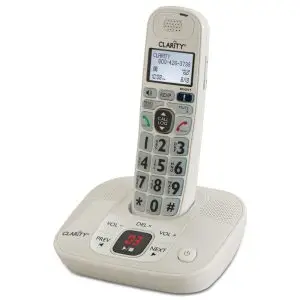
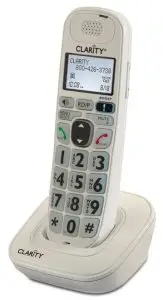
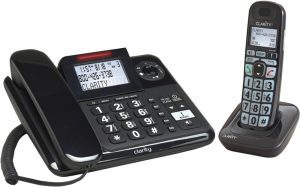
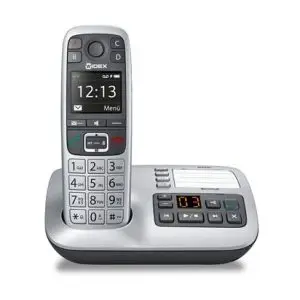
Amplified phones increase the volume of incoming call audio, useful for patients who do not wear hearing aids, or for those who want a louder landline without relying on the hearing aid to do all the work. Key things to know when choosing an amplified phone:
- Amplification range: amplified phones range from 5 dB of amplification to 50 dB. Match the amplification level to your hearing loss, a 20 dB phone will not help a patient with significant hearing loss.
- With or without hearing aids: consider whether you will use the phone with your hearing aids in or out. Without hearing aids, you need more amplification. With hearing aids, you may need less if the aids are already amplifying appropriately.
- Tone control: some amplified phones include adjustable frequency settings, useful if your hearing loss is primarily in high or low frequencies.
Captioned Phones
Captioned phones display real-time text of what the other person is saying during the call, allowing the listener to read and hear the conversation simultaneously. This is particularly valuable for patients with significant speech discrimination difficulty who can detect that someone is talking but struggle to understand the words.
Hears Hearing & Hearables does not sell captioned phones directly, but we can point you toward services that provide them. In the United States, the National Deaf-Blind Equipment Distribution Program and state telecommunications equipment distribution programs provide captioned phones at no cost to qualifying individuals with hearing loss. ClearCaptions and CapTel are the primary captioned telephone service providers.
Video Calls and Real-Time Transcription
Video calls such as FaceTime, Zoom, Google Meet, benefit patients who rely on lip reading or visual cues to supplement their hearing. The ability to see the speaker’s face significantly improves speech comprehension for many patients with hearing loss.
Real-time transcription apps, Google Live Transcribe, Apple Live Captions, Otter.ai, display live text of spoken conversation on a smartphone screen. These are free or low-cost tools that work with any phone and do not require hearing aids or any additional device. For patients who struggle to follow fast conversation or phone calls in noise, these apps can be a meaningful supplement.
Relay Services Under the ADA
The ADA requires telephone companies to provide telecommunications relay services, intermediary services that allow people with hearing loss to communicate by phone. Video Relay Service (VRS) allows users to communicate through a sign language interpreter via video. Text Telephone (TTY) services allow text-based communication over phone lines. These services are available at no cost to qualifying individuals.
Not sure which phone solution works with your specific hearing aids? Contact Hears Hearing & Hearables with your hearing aid brand and model and we will identify the best streaming or accessory option for your situation.
Frequently Asked Questions: Phones and Hearing Aids
Can hearing aids stream phone calls directly?
Most current prescription hearing aids support direct Bluetooth streaming from smartphones. Phonak hearing aids stream to both iPhone and Android universally. Most other major brands stream to iPhone natively and to compatible Android devices via ASHA. Check your specific hearing aid model’s connectivity specifications, or contact us to confirm.
What is HAC rating on a phone?
Hearing Aid Compatible (HAC) ratings indicate that the phone is designed to reduce electromagnetic interference with hearing aids. M ratings indicate microphone mode compatibility; T ratings indicate telecoil mode compatibility. HAC-rated phones cause less buzzing and feedback when used near a hearing aid. Look for M3/M4 or T3/T4 ratings for the best hearing aid compatibility.
Where can I get a captioned phone?
Hears Hearing & Hearables does not sell captioned phones, but several programs provide them at no cost to qualifying individuals. ClearCaptions and CapTel are the primary captioned phone services in the United States. Many states also have telecommunications equipment distribution programs, contact your state’s assistive technology program for local options.
What is the best phone setup for someone with hearing aids who wants hands-free calling?
For most current hearing aid users, direct Bluetooth streaming from a smartphone to the hearing aids is the most seamless solution, calls stream directly to both ears at the programmed hearing aid levels. For calls where the speaker’s voice needs additional boost, a remote microphone accessory like the Widex Sound Assist or Phonak PartnerMic clips to the other person and streams their voice directly to the hearing aids. Contact us for a recommendation specific to your hearing aid brand and model.