Fitting hearing aids involves a comprehensive process:
Hearing Aid Fitting Standards: Domes, Receivers, Earmolds, and Protocol
Most people who get a hearing loss diagnosis wait before doing anything about it. Studies commonly cite an average delay of around seven years; we have seen patients wait closer to thirty. By the time someone is ready for a fitting, getting the technical details right matters enormously, because the difference between a hearing aid that gets worn every day and one that ends up in a drawer often comes down to fit, not just programming.
This is the technical side of that process: the components a fitting actually involves, how they are chosen, and the verification steps that confirm the fitting worked. For the patient-facing version of this, what to expect at your own fitting appointment, see our companion guide.
Fitting Is Individualized, Not Standardized
There is no single correct way to fit a hearing aid. The right approach depends on the type and degree of hearing loss, ear canal anatomy, lifestyle, and whether the patient needs a custom earmold, an open dome fit, a BiCROS configuration, or something else entirely. A good fitting starts with an assessment of whether the ear canal can comfortably and securely hold the selected device, evaluated both for physical comfort and for sound quality, since a technically secure fit that sounds bad is just as much a failure as one that sounds good but will not stay in place.
Domes
Domes are the small, soft pieces attached to the end of a receiver or tubing, most commonly used with open-fit or receiver-in-canal (RIC) hearing aids. They come in several types, each suited to different hearing profiles:
- Open domes: allow natural sound to enter the ear canal alongside amplified sound. Best for patients with normal or near-normal low-frequency hearing.
- Power domes: provide a tighter seal for patients with more severe hearing loss who need higher amplification without feedback.
- Tulip domes: offer a secure fit without requiring a full custom earmold, a middle ground between open and closed fitting.
- Double domes: provide enhanced sound control for specific hearing profiles where a single dome does not achieve the right seal.
Dome sizing varies by manufacturer, and the right size depends on the individual ear canal, assessed directly by the fitting provider rather than chosen generically.
Receivers
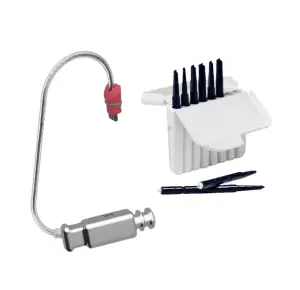
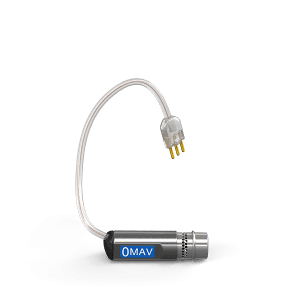
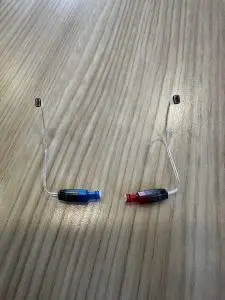
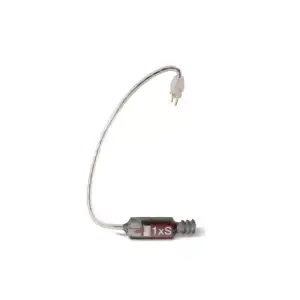
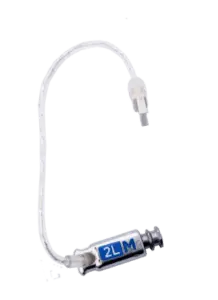
The receiver, sometimes called the speaker wire, delivers sound from the hearing aid body into the ear canal. Receivers come in different power levels matched to the degree of hearing loss shown on the audiogram:
- Standard receivers: suited to mild to moderate hearing loss.
- Moderate receivers: suited to moderate to moderately severe hearing loss, offering more amplification than standard receivers.
- Power receivers: engineered for severe to profound hearing loss, delivering the highest amplification levels.
Receiver choice is determined directly by the audiogram, the map of hearing loss across frequencies. Getting this wrong, undersized for the loss or oversized for the patient’s comfort, is one of the more common avoidable fitting errors.
Earmolds
Earmolds are custom-made pieces, typically acrylic or silicone, shaped to fit securely into the ear canal. Several earmold styles exist, each suited to different needs:
- Standard earmolds: commonly used for behind-the-ear (BTE) hearing aids, custom-fit to ear canal shape.
- Skeleton earmolds: a thinner design for a more discreet appearance while maintaining a customized fit.
- Canal lock earmolds: extend into the bony part of the ear canal for added stability, useful for active patients.
- Swim molds: designed to keep water out of the ear canal during water activities.
- Ventilated earmolds: include vents that reduce the occlusion effect, producing a more natural sound perception.
- Acoustic filter earmolds: incorporate filters that modify frequency response for comfort and sound quality.
- Full shell earmolds: fill most of the concha, providing increased amplification for more severe hearing loss.
- Half shell earmolds: cover a portion of the concha, balancing amplification with a more discreet appearance.
- Custom canal earmolds: fit within the ear canal itself for comfort and minimal visibility.
Choosing the right earmold depends on hearing needs, lifestyle, and the specific hearing aid in use. This is a professional judgment call, not a one-size-fits-all decision.
Ear Impressions
When a custom earmold or custom-fit device is needed, the process starts with an ear impression, a mold of the ear canal used to manufacture the final piece. A good impression process prioritizes patient comfort, accounts for the unique shape and size of the canal, uses appropriate impression material, and gives the patient clear instructions throughout.
The audiologist also factors in lifestyle and specific hearing needs when deciding on material and approach, then verifies the result at a follow-up appointment to confirm the final product is both comfortable and accurate.
Fitting Configurations Beyond Standard Domes and Molds
BiCROS Hearing Aids
BiCROS (bilateral contralateral routing of signal) devices are designed for patients with hearing loss in one ear and better hearing in the other. A microphone on the impaired side picks up sound and routes it to a receiver on the better-hearing side, allowing the patient to perceive sound from both sides of their head even though one ear cannot process it directly.
Custom Hearing Aids
Custom devices are built from precise ear impressions rather than fitted with standard domes, producing an individually tailored shape that improves both comfort and acoustic performance for patients whose ear canal anatomy benefits from a fully custom approach.
Open Fitting
Open-fit hearing aids leave the ear canal unoccluded, using small domes or tips to hold the device in place while natural sound continues to enter the ear directly alongside amplified sound.
Thin Tube Fittings
Some hearing aids deliver sound through a thin tube rather than a standard receiver wire, paired with either domes or a custom earmold, depending on the patient’s preference and hearing needs.
Verifying the Fitting: Two Complementary Tools
Choosing the right components is half the job. Confirming they actually work is the other half. Fitting standards define what a best-practice fitting should accomplish; two verification tools confirm that it did.
Real ear measurement (REM) answers whether the programming actually delivered your prescription to your eardrum, measuring what the hearing aid is producing in your specific ear canal and comparing it against target. Electroacoustic analysis answers a different question: whether the hearing aid hardware itself is performing as designed, measuring output, gain, distortion, and frequency response against the device’s original specification.
Together, REM and electroacoustic analysis cover both sides of the verification picture: programming accuracy and hardware integrity. A fitting that uses both gives you the most complete picture of whether your hearing aids are doing what they should.
Speech Mapping and Ongoing Fine-Tuning
Speech mapping is a verification technique closely related to real ear measurement, confirming that the hearing aid is performing as intended specifically for speech signals, the sounds that matter most for everyday communication. Combined with patient counseling about what to expect during the adjustment period and clear instruction on insertion, battery care, cleaning, and troubleshooting, this rounds out a complete fitting protocol.
Regular follow-up appointments remain part of the standard, addressing real-world listening feedback, making adjustments, and ensuring the fitting continues to meet the patient’s needs as their hearing or lifestyle changes over time.
Want to know whether your own hearing aid fitting included real ear measurement, or whether your current devices might benefit from a more thorough fitting review? Contact Hears Hearing & Hearables.
Frequently Asked Questions: Hearing Aid Fitting Standards
What is the difference between a dome and a custom earmold?
A dome is a small, soft, non-custom piece that attaches to a receiver or tubing, available in standard sizes for different ear canals and hearing needs. A custom earmold is individually made from an impression of the patient’s specific ear canal, offering a more precise and secure fit, generally recommended for more severe hearing loss, active lifestyles, or patients who need a stronger acoustic seal than a standard dome provides.
How is the right receiver power level chosen?
Receiver power, standard, moderate, or power, is determined directly by the patient’s audiogram, which maps hearing loss across frequencies. A provider matches receiver power to the degree of loss shown on the audiogram rather than choosing based on device size or patient preference alone.
What is a BiCROS hearing aid and who needs one?
BiCROS hearing aids are designed for patients with significant hearing loss in one ear and better hearing in the other. A microphone on the impaired side routes sound to a receiver on the better-hearing ear, allowing the patient to perceive sound from the impaired side even though that ear cannot process it directly.
Why does taking an ear impression matter for a custom earmold?
The accuracy of the final custom earmold or custom hearing aid depends entirely on the quality of the initial ear impression. A good impression process accounts for the canal’s unique shape, uses appropriate material, and is followed up with a verification appointment to confirm the final product fits comfortably and performs as intended.
What is speech mapping and how is it different from real ear measurement?
Speech mapping is closely related to real ear measurement; both use a probe microphone to verify hearing aid output in the ear canal, but speech mapping focuses specifically on confirming performance for speech signals, the sounds most relevant to everyday communication, rather than verifying against prescription targets across the full frequency range.
💙