
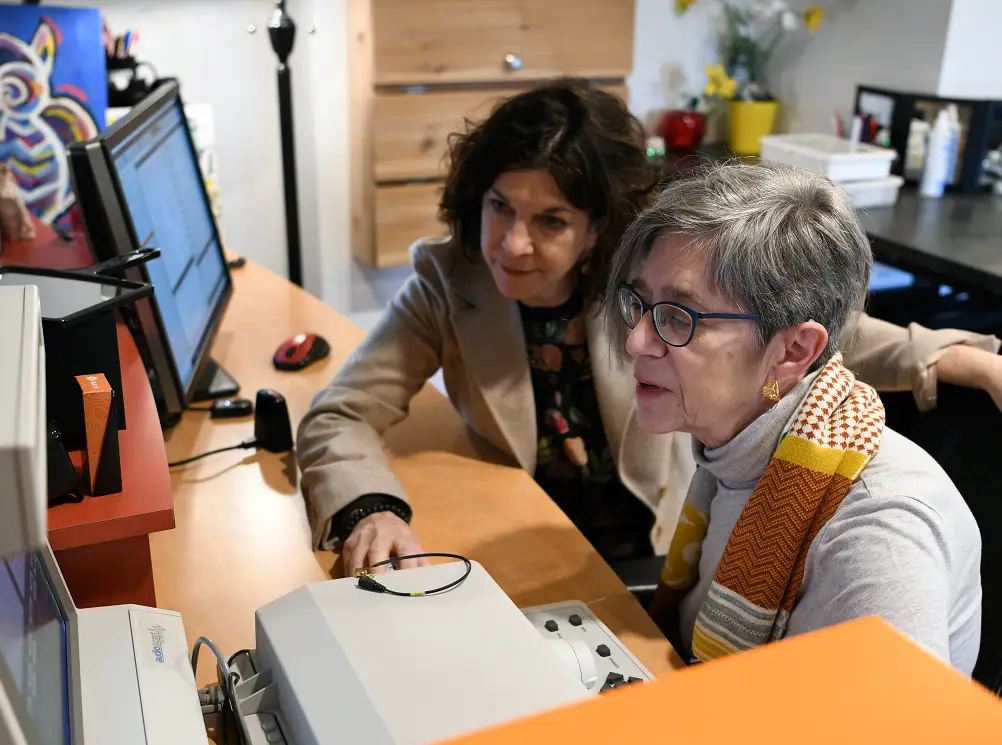
In the field of audiology, the hearing aid fitting appointment holds a special place. It is not a routine visit. It is the moment when sound returns to someone’s life after a prolonged absence, and after nearly three decades of these appointments, the feeling has not worn off. If you are preparing for your first fitting, or considering hearing aids for the first time, here is what actually happens and why this appointment matters more than people often expect.
The First Moment of Sound
There is a specific look that happens when someone hears clearly for the first time after years of loss. Initial surprise, then a pause, then a smile that comes from somewhere deeper than the room. It happens every time, and it never becomes ordinary.
One patient, in an outdoor appointment during the pandemic, heard a squirrel on a nearby tree for the first time in years. The sound of small nails on bark, the kind of subtle detail that vanishes quietly with hearing loss, stopped her mid-sentence. That moment is why this work exists.
The first fitting is also when many patients hear music or a podcast streamed directly to their hearing aids for the first time. The difference between amplified room sound and direct streaming is immediate and often overwhelming in the best way. No other appointment in healthcare produces this kind of instant, tangible change in someone’s daily experience.
What Actually Happens at a Hearing Aid Fitting
A hearing aid fitting is more than placing a device in the ear and turning up the volume. It is a clinical process that combines technical precision with the kind of individual attention that makes the outcome work for a specific person in a specific life.
Finding the Right Physical Fit
The receiver size, dome style, and placement in the ear canal affect not just comfort but performance. A dome that is too large creates occlusion, that plugged, hollow quality that makes hearing aids feel unnatural. A dome that is too small allows feedback. The right fit is the one that disappears, the patient stops noticing the device is there. This takes attention and sometimes a few iterations to get right.
Programming to the Audiogram
The hearing aid is programmed specifically to the patient’s audiogram, the map of which frequencies are lost, by how much, in each ear. This is not a generic preset. The amplification targets are calculated from the prescription, applied to the hearing aids, and then adjusted based on what the patient actually reports hearing in real listening conditions.
Real Ear Verification
Best-practice fitting includes real ear measurement, a small probe microphone placed in the ear canal measures what the hearing aid is actually delivering at the eardrum, compared to what the prescription requires. This objective verification step confirms that the programming is working as intended for that specific ear canal and hearing loss.
Program Setup and Counseling
Additional programs are set up for the patient’s specific listening situations, a speech-in-noise program for restaurants, a music program for listening, a telecoil program for hearing loops. The patient learns how to use the app, what each program does, and what to expect during the adjustment period. This counseling is as important as the programming itself.
The Adjustment Period: What to Expect After the Fitting
A hearing aid fitting is the beginning of the process, not the end of it. The brain needs time to adapt to sounds it has not been receiving at full volume. This is normal and expected:
- Days one through seven: sounds will seem louder than expected. Your own voice may sound unfamiliar. Background sounds you had stopped noticing will be present again. This is the hearing aid working correctly, the brain is re-learning to process the full acoustic environment.
- Weeks two through four: adaptation continues. Most patients report that sounds begin to feel more natural. Specific complaints, something too loud, a certain environment that is uncomfortable, are the most useful feedback for the follow-up appointment.
- The follow-up appointment: scheduled two to four weeks after fitting. This is where fine-tuning happens based on real-world experience. One or two follow-up adjustments are standard, not a sign that something went wrong.
The fitting appointment sets the foundation. The follow-up appointments build on it. Patients who come back for adjustments with specific feedback about what is and is not working get better outcomes than patients who wait until something is significantly wrong. Communicate early and specifically, ‘the restaurant was too noisy’ is more useful than ‘it’s not quite right.’
The Demo: Hearing Before You Decide
At Hears Hearing & Hearables, the fitting process begins with a demonstration before any purchase is made. Patients try hearing aids, different brands, different sound philosophies, and hear the difference for themselves. Some patients immediately prefer the natural quality of Widex. Others respond better to Phonak’s directional processing. Some are surprised to find that a brand they had not considered sounds exactly right.
No description of sound quality substitutes for actually hearing it. The demo is where patients discover what they are looking for, and where clinicians learn what will actually work for each person’s ears, lifestyle, and preferences.
If Your Hearing Aids Were Not Fitted by an Audiologist
Not every hearing aid is fitted through the process described above. Hearing aids purchased online, received as gifts, bought at Costco, or acquired through other channels may be running on preset programs rather than a personalized fitting to your audiogram. If your hearing aids have never been programmed by a licensed professional to your specific hearing loss, you may not be experiencing what they are actually capable of.
Hears Hearing & Hearables offers programming and fitting optimization for hearing aids purchased elsewhere, including consignment aids, online purchases, and devices from other providers. If your hearing aids are not sounding the way you hoped, a proper fitting appointment may be the step that was missing.
Ready for a fitting or a demonstration? Contact Hears Hearing & Hearables to schedule. We fit hearing aids in person at our Hears to U clinic in Hopkins, Minnesota, and offer telehealth programming for most major brands nationwide.
Frequently Asked Questions: Hearing Aid Fitting
What happens at a first hearing aid fitting appointment?
A first fitting appointment includes physical fitting of the hearing aid to the ear, selecting the right receiver size and dome for comfort and acoustic seal, programming the device to the patient’s audiogram, real ear measurement to verify that programming is delivering the correct prescription, program setup for specific listening environments, and counseling on what to expect during the adjustment period. The appointment typically takes one to two hours for a thorough fitting.
How long does it take to adjust to hearing aids?
Most patients need two to four weeks of consistent daily wear before hearing aids feel natural. The brain is relearning to process sounds it has not been receiving at full volume, this takes time regardless of how well-fitted the devices are. Specific sounds that feel too loud or uncomfortable during this period are useful feedback for the follow-up appointment, not a sign the hearing aids are wrong.
How many follow-up appointments will I need?
Most patients benefit from one to two follow-up appointments in the first three months after fitting. The first follow-up is typically two to four weeks after the initial fitting, once the patient has real-world experience to report on. Follow-up appointments are for fine-tuning based on actual listening situations, not because the initial fitting was inadequate. Ongoing annual appointments are standard for monitoring hearing changes and updating programming over time.
What is real ear measurement and should I ask for it?
Real ear measurement is the objective verification step that confirms the hearing aid is delivering the correct amplification targets to your specific eardrum. A small probe microphone is placed in the ear canal and measures the actual output, compared to what your prescription requires. It is the gold standard for fitting verification and catches discrepancies between what the software says and what is actually reaching your ear. If your audiologist offers it, yes, ask for it.
Can hearing aids be adjusted after the fitting?
Yes, this is expected and normal. The initial fitting sets the prescription targets based on your audiogram. Real-world experience reveals how the hearing aids perform in your actual listening environments, which may require adjustments. Most changes are made through the fitting software during follow-up appointments. Remote programming via telehealth is also available for most major brands, meaning adjustments can be made without a clinic visit for patients who qualify.
What if my hearing aids were not fitted properly?
If your hearing aids were purchased online, received as a gift, or fitted without real ear measurement and a personalized audiogram-based program, you may not be experiencing what they are capable of. A proper fitting appointment with a licensed audiologist can optimize performance significantly. Hears Hearing & Hearables offers fitting and programming services for hearing aids purchased elsewhere. Contact us to discuss.
💙



