If you’ve started researching hearing aids and encountered the phrase ‘over the counter’, or OTC, you’re in the right place. The OTC hearing aid category is still relatively new. The rules around it can be confusing, and the product landscape changes quickly. This guide explains exactly what OTC hearing aids are, who they’re designed for, how FDA regulation works, what you should know about purchasing them in Minnesota, and what we currently carry at Hears Hearing & Hearables.
Think of this as the reference post, the one to bookmark when you want a clear, current, professionally sourced overview of everything OTC hearing aids involve for when you’re ready to narrow down a specific device.
What Are Over-the-Counter Hearing Aids?
An over-the-counter hearing aid is a medical-grade hearing device that adults with mild to moderate hearing loss can purchase without a prescription, medical exam, or professional fitting. You can buy them online, in retail stores, at pharmacies, or from an audiology practice like ours.
They’re not reading glasses for your ears, exactly– hearing loss is more individual than vision correction. Also, the best results still come from matching the right device to your specific hearing profile. But the analogy captures one important truth: OTC hearing aids democratize access. People who have been putting off addressing hearing loss because of cost, hassle, or stigma now have a faster, more affordable starting point.
OTC hearing aids are for adults 18 and older with perceived mild to moderate hearing loss. They are not appropriate for children or for adults with severe or profound hearing loss, for whom a professionally fit prescription device is the appropriate path.
How OTC Hearing Aids Work: The Typical Setup Process
Most OTC hearing aids follow a similar setup process, though the details vary by brand and model:
Step 1: Purchase
Buy directly from an authorized retailer, online or in-store. At Hears Hearing & Hearables, you can purchase from our online store or connect with our team for guidance before buying.
Step 2: Registration and Warranty Activation
When you set up the device through its companion app, most brands automatically register your hearing aid and activate the manufacturer’s warranty, which is typically one year. Keep your proof of purchase for warranty claims.
Step 3: Hearing Profile / Self-Test
Many OTC hearing aids include a built-in hearing assessment in the app. Essentially a simplified hearing test that helps configure the device to your hearing. The accuracy of these self-tests varies by brand and by how quiet your environment is during the test. If you have a recent audiogram from a hearing professional, some devices allow you to input those results directly for more accurate programming.
Step 4: Customization
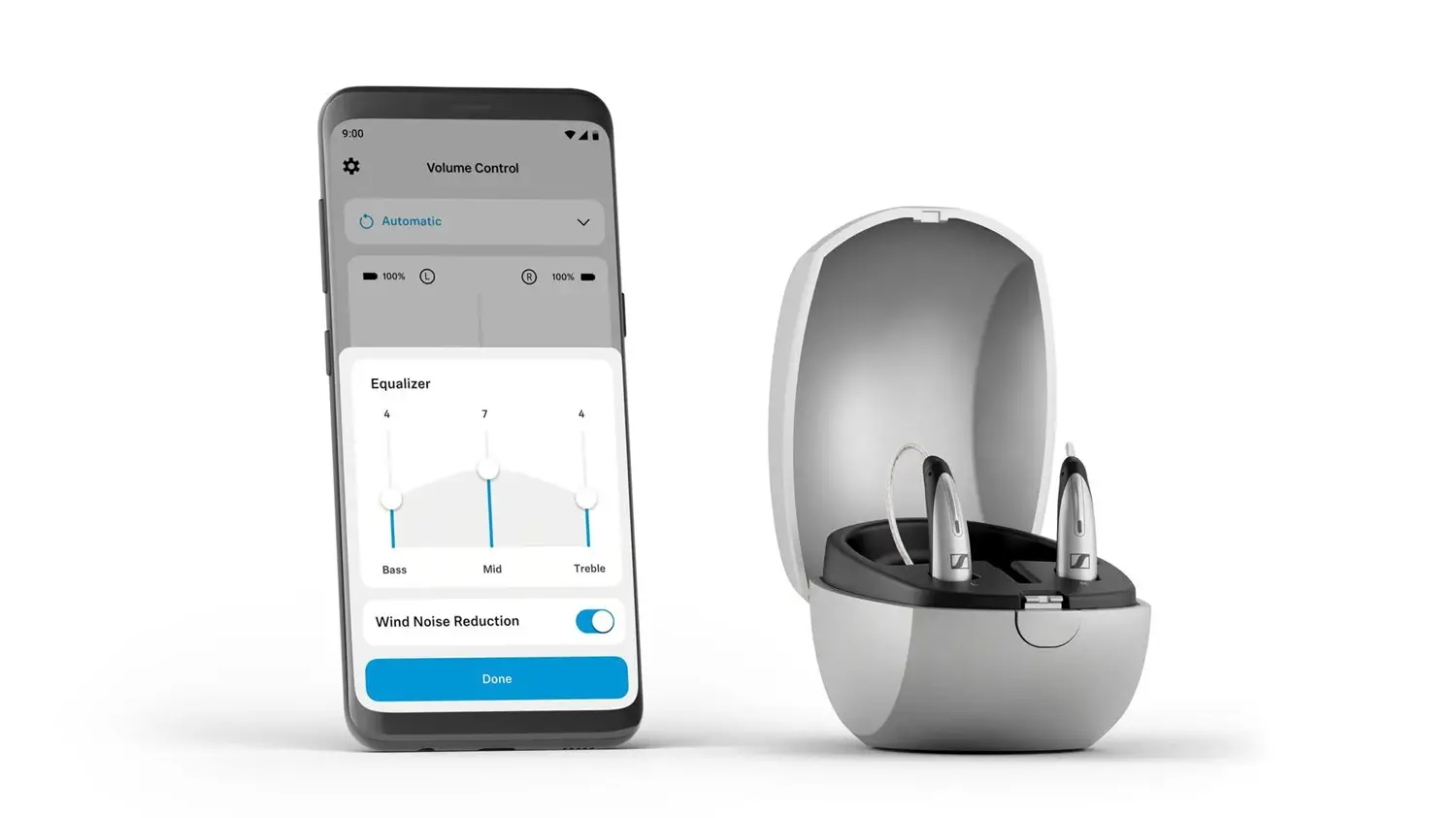
Through the app or manual controls, you adjust volume, tone, balance, and sometimes directional settings to match your specific listening needs. Better apps allow you to save multiple programs for different environments, quiet home, noisy restaurant, phone calls, and so on.
Step 5: Ongoing Adjustment
You adjust OTC hearing aids yourself. Over time, most users learn which settings work best for which situations. If you purchased through Hears Hearing & Hearables, our team is available to help troubleshoot or refine settings, and our telehealth service means that support can happen remotely.
FDA Regulation: What OTC Hearing Aids Must Meet
In 2022, the FDA established specific regulatory guidelines for OTC hearing aids. Creating a formal, defined category of device for the first time. This was a meaningful consumer protection step: before this rule, the category of ‘things you could buy to help with hearing’ included legitimate hearing technology alongside unregulated amplifiers that looked similar but carried no safety standards.
Here’s what the FDA requires of true OTC hearing aids:
- Safety standards: Output limits, insertion depth limits, and acoustic safeguards to protect users from overamplification
- Performance standards: Devices must function as labeled and meet specifications for the type of hearing loss they address
- Labeling requirements: Manufacturers must clearly state who the device is intended for, how to fit and use it, and any warnings or contraindications
- Adult-only: OTC hearing aids are regulated exclusively for adults 18 and older
- Mild to moderate hearing loss only: Devices must specify they are not for severe or profound hearing loss
How to verify a device is a true OTC hearing aid: Look for ‘FDA-registered’ or ‘FDA-cleared’ in the product listing. If it says ‘sound amplifier,’ ‘PSAP,’ or ‘personal sound amplification product,’ or doesn’t reference FDA status, it is not a regulated hearing aid. At Hears Hearing & Hearables, every OTC device we carry is FDA-registered.
Minnesota Return Policy: What You’re Entitled To
Minnesota state law provides specific consumer protections for hearing aid purchases. OTC hearing aids purchased in Minnesota come with a 45-day trial period. Because our business is based in Minnesota, this means you have 45 days to evaluate whether the device meets your hearing needs, and you can return it within that window.
At Hears Hearing & Hearables, we honor this 45-day trial on all applicable OTC products. When you return a device, please note that we keep restocking fees, credit card processing fees, and outbound shipping costs. These are standard costs of processing a return. We’ll walk you through the process if you need to return a device, and if appropriate, we’ll help you find an alternative that’s better suited to your needs.
If a device isn’t working well for you, don’t give up on hearing aids; come talk to us first. Anne’s story is a good example of what can happen when we take the time to match the right solution to the right person.
Do You Need an Audiologist for OTC Hearing Aids?
Technically, no. That’s the entire premise of the OTC category. You can buy and set up these devices without professional involvement. But whether you need a professional and whether professional guidance adds value are two different questions.
Here’s what a hearing care professional like our team at Hears Hearing & Hearables can add to your OTC experience:
Accurate assessment:
- We can help confirm whether your hearing loss is genuinely mild to moderate, the range OTC devices are designed for, or whether your needs are more complex and would be better served by a prescription device. This isn’t a sales pitch for a more expensive product. It’s clinical honesty that saves you time and money.
Device matching:
- With dozens of OTC hearing aids on the market, knowing which one is right for your specific hearing profile and lifestyle takes experience. We’ve tested the devices we carry in our clinic. We know which ones perform well in noise, which ones are easiest to set up, and which ones work better for certain types of hearing loss.
Setup assistance:
- Even tech-comfortable users sometimes benefit from professional help with initial setup, dome fitting, and app configuration. Particularly if they want the device to perform optimally from day one rather than through weeks of trial and error.
Ongoing troubleshooting:
- If something isn’t working right, the fit is uncomfortable, the sound doesn’t seem right, or the device isn’t delivering the benefit you expected, we’re here to help figure out why. And if we determine your needs have outgrown OTC, we’ll tell you that honestly.
We charge a small service fee for setup assistance, separate from the device cost, transparently. You’re paying for a professional’s time and expertise, not a bundled add-on. If you don’t want setup assistance, that’s completely fine; you can manage the devices yourself. But the option is always there if you want it.
OTC Hearing Aids We Currently Carry at Hears Hearing & Hearables
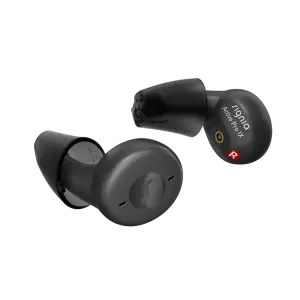
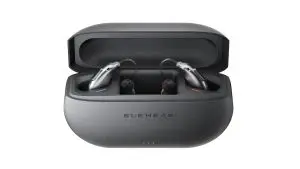
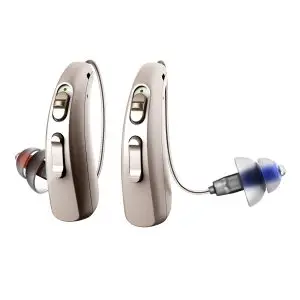
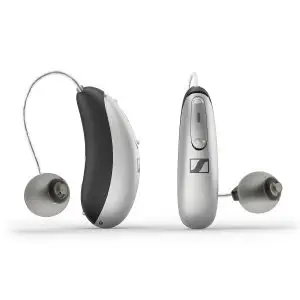
Our OTC selection is curated: we carry what we’ve evaluated, not everything available on the market. Here’s our current lineup, organized by brand. For detailed reviews of LINNER, ELEHEAR, and Yeasound products, see the dedicated blog posts in this series.
| Device | Style | Bluetooth | App | Best For |
|---|---|---|---|---|
| ELEHEAR Beyond | RIC behind-ear | iOS & Android | ELEHEAR app | All-day AI performance, tinnitus support |
| ELEHEAR Beyond Pro | RIC behind-ear | iOS & Android | ELEHEAR app | Speech in noise — top 2% of OTC tested |
| LINNER Mercury | RIC behind-ear | None | Push button only | Simple, app-free first-time use |
| Lucid Engage | BTE behind-ear | iOS & Android | otoTune app | Natural sound, 3 color options |
| Sennheiser All-Day Clear | RIC behind-ear | iOS & Android | All-Day Clear app | Premium OTC with in-clinic care package option |
| Yeasound RIC800 | RIC — nearly invisible | iOS & Android | iYeasound app | 31-hr battery, IPX8 water resistance, ranked #1 OTC by HearAdvisor |
| AirPods Pro 2 (Hearing Aid feature) | In-ear earbud | iOS only | iPhone Health app | iPhone users, mild loss, situational use |
For detailed specs, pricing, and our clinic-tested assessments of individual brands, see our dedicated brand review posts linked throughout this series.
OTC vs. Prescription: The Short Version
OTC hearing aids are designed for mild to moderate hearing loss, self-fitted, and available without a professional appointment. A hearing care professional custom-programs prescription hearing aids to your exact audiogram; they address a wider range of hearing loss severity and include ongoing professional support.
Neither is universally better. The right choice depends on your specific hearing profile, lifestyle, and needs. For a full comparison, see our dedicated post.
Not Sure Where to Start? We Can Help.
If you’re wondering whether OTC is the right path for you, start with our free Hearing Handicap Screening Test. It takes just a few minutes and gives us useful information to guide the conversation. Or reach out directly, and we’ll walk you through your options. After you take the test, you may make an appointment to be sure.
At Hears Hearing & Hearables, our job isn’t to sell you a product. We’re here to help you find the right solution for your hearing, whether that’s OTC, prescription, or something in between.
Take our Hearing Handicap Screening Test, browse our OTC selection, or contact us to get started.
— Kim Fishman, Audiologist | Hears Hearing & Hearables, Hopkins, Minnesota
Frequently Asked Questions: Over the Counter Hearing Aids
What are over-the-counter hearing aids?
Over-the-counter hearing aids are FDA-regulated medical devices that adults 18 and older with mild to moderate hearing loss can purchase without a prescription, medical exam, or professional fitting. They are self-fitted through companion apps or manual controls and are available at retail stores, pharmacies, online marketplaces, and audiology practices like Hears Hearing & Hearables.
Are OTC hearing aids the same as sound amplifiers?
No. The FDA registers OTC hearing aids as medical devices and requires them to meet specific safety and performance standards. Sound amplifiers (also called PSAPs — Personal Sound Amplification Products) are unregulated consumer electronics that make all sounds louder without the selective sound processing of a true hearing aid. Always look for ‘FDA-registered’ or ‘FDA-cleared’ in product listings to confirm you’re buying an actual hearing aid.
What is the return policy for OTC hearing aids in Minnesota?
Minnesota state law provides a 45-day trial period for hearing aid purchases. At Hears Hearing & Hearables, we honor this 45-day window on all applicable OTC products. Please note that when you return a device, we typically do not refund restocking fees, credit card processing fees, or outbound shipping costs.
Do I need an audiologist to buy or use an OTC hearing aid?
No, you can purchase and set up OTC hearing aids without professional involvement. However, audiologists can add significant value: confirming your hearing loss falls in the mild to moderate range, helping select the right device for your specific profile, providing setup assistance for optimal initial performance, and offering troubleshooting support if the device doesn’t meet expectations. At Hears Hearing & Hearables, we offer setup assistance as a separate service for a small fee.
What is the difference between OTC and prescription hearing aids?
OTC hearing aids are for mild to moderate hearing loss, self-fitted, and available without a prescription, typically priced from $200 to $1,500 per pair. A hearing care professional custom-programs prescription hearing aids to your exact audiogram, they address mild through profound hearing loss and typically cost $2,000 to $7,000+.See our full comparison post for a detailed breakdown.
How do I know if an OTC hearing aid is right for my level of hearing loss?
OTC hearing aids are appropriate for adults with mild to moderate hearing loss. If you’ve had a formal hearing test, your audiologist’s report will specify your level of loss. If you haven’t been tested, our free Hearing Handicap Screening Test is a useful starting point. Signs that your needs may exceed OTC capability include: following conversations in most environments is very difficult, a significant difference in hearing between ears, or a previous recommendation for high-powered prescription devices.
Which OTC hearing aids do you carry at Hears Hearing & Hearables?
Our current OTC selection includes ELEHEAR Beyond and Beyond Pro, LINNER Mercury, Lucid Engage, Sennheiser All-Day Clear, and Yeasound RIC 700/800. The ELEHEAR Delight is coming soon. AirPods Pro 2 (with iOS 18.1 hearing aid feature) is also available as a consumer option for iPhone users. All devices we carry have been evaluated by our clinical team.