Hearing Loss and Musicians: Common and Difficult for the Musician
According to the National Institute of Health, about 15% of people aged 20 to 69 have high-frequency hearing loss related to occupational or leisure noise exposure.
Professional musicians are almost four times as likely to develop noise-induced hearing loss (NIHL) compared to the general public, and 57% more likely to develop tinnitus, according to the British Medical Journal.
As we’ve mentioned elsewhere, noise-induced hearing loss can happen from a single event, like an explosion, or develop gradually from repeated exposure to loud noise. That repeated exposure damages the small hair cells of the inner ear that send sound signals to the brain.
There’s also music-induced hearing loss (MIHL): hearing loss resulting from exposure to high levels of music over prolonged periods. This is a common problem for anyone who frequently listens to or plays music. Musicians come from every background, not just rock; classical musicians are at risk too. One study found permanent hearing loss in 52% of classical musicians and 30% of rock musicians, and 80% of musicians had some degree of temporary music-induced hearing loss immediately following a performance. Brass, woodwind, and percussion players are especially susceptible because of high volume levels, high frequencies, daily practice, and often riskier placement within the ensemble.
Hearing protection is a good idea even if you already have a diagnosed hearing loss or tinnitus. Please protect the hearing you have left. If you have a musician in your life, talk to them about hearing protection.
What Do You Do If You Suspect a Loss?
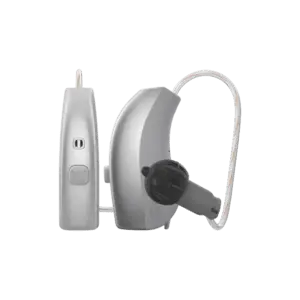
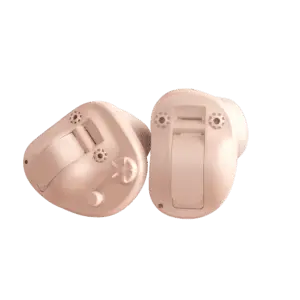
Musician or not, if you suspect hearing loss, see an audiologist and get an audiogram done. The audiologist will go over your results and recommend a treatment plan. If you do have a loss and need a hearing aid, the real work begins: you and your audiologist need to find the right device for you. If you’re reading this, you likely already care about hearing health, and you probably remember the process of choosing a hearing aid that actually treated your loss in the situations where you needed help most.
Musicians have different needs. Your brain has been trained to pick out things within a sound that non-musicians typically don’t notice, pitch, timbre, and tone quality. We’ve reviewed research on this enhanced auditory processing in musicians, and it’s genuinely impressive. You’re welcome to read that post as well.
Most hearing aid users prioritize speech understanding in noise above everything else, and manufacturers have designed accordingly: speech enhancers, directional microphones, and feedback cancellation are standard in most hearing aids. Those features help with speech, but not necessarily with music. Speech occupies a fairly narrow, well-defined range of pitch and loudness. Music doesn’t, which makes reproducing it a real technical challenge. A musician also needs to hear every note, where a listener following speech can often miss a word here and there and still follow the conversation, since speech has built-in redundancy and context. Music doesn’t offer that same forgiveness.
What Can You Do to Protect Your Hearing as a Musician?
You and your audiologist will need to work together to figure out your specific needs. This takes time, and patience on both sides helps enormously. Your audiologist needs to know where you struggle to hear, what instrument you play, and which frequencies give you the most trouble. You may need different settings for different listening situations, or different tips on the hearing aids themselves. Ask about a mute button, manual volume control, disabling the feedback manager, turning off the directional microphone, and lowering the compression rate, all of these are worth exploring together. It’s a process for every new hearing aid user, musicians included. Be patient with your audiologist, and with yourself. You didn’t lose your hearing overnight, and you won’t reach your best hearing overnight either.
Hearing aid manufacturers recognize musicians’ unique needs and have built dedicated music programs into their devices. Your audiologist can also adjust volume and gain directly. Accessories like an FM system, or simply covering the microphone, can help, and skipping the hearing aid altogether during a loud rehearsal or concert is sometimes the right call too. Talk through these options with your hearing care professional.
Hearing loss is frightening for anyone. For a musician, it can feel like a worst-case scenario. But it isn’t the end of your relationship with music. With the right hearing aid, the right settings, and an audiologist willing to work through the process with you, most musicians find their way back to hearing and making, the music they love.
See our review of the research on musicians’ enhanced auditory processing.
Learn how staying musically active supports the brain as you age.