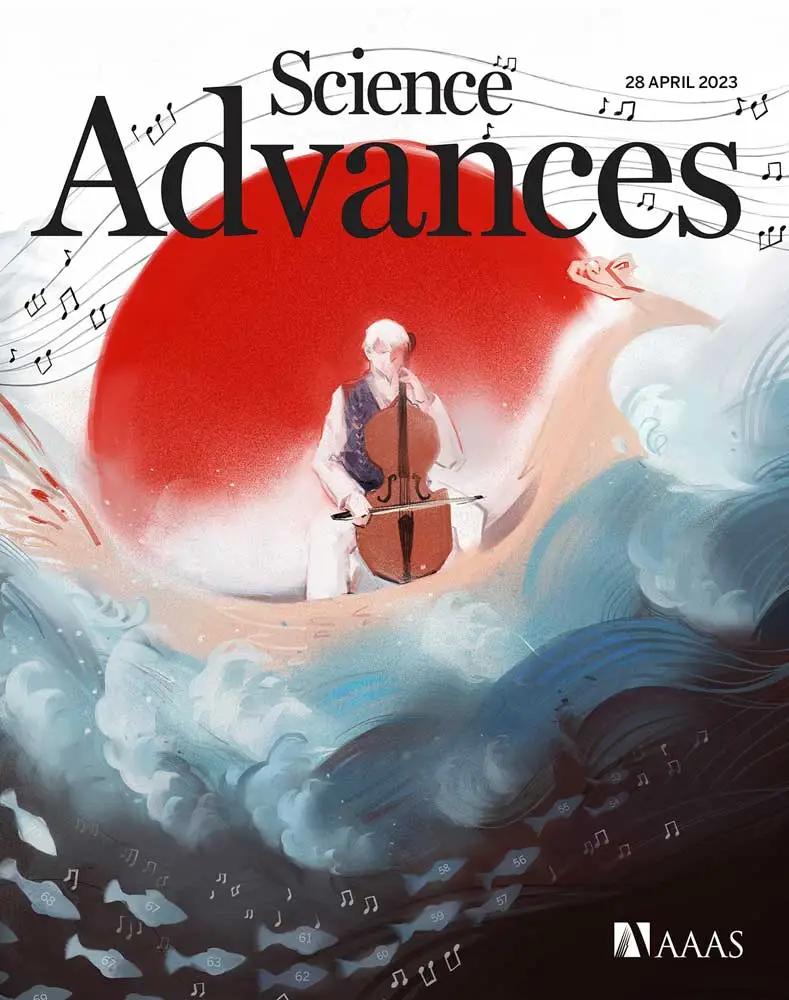
The impact of music on aging and the successful aging of musicians: Preservation of sensorimotor regions aids audiovisual speech-in-noise perception.
Written by: Lei Zhang, Xiuyi Wang, Claude Alain, Yi, Du
Sciences Advances
Research article: April 26, 2023
The impact of music on aging and the successful aging of musicians: preservation of sensorimotor regions aids audiovisual speech-in-noise perception.
A number of cognitive changes are associated with aging. According to the revised scaffolding theory of aging and cognition, both aging itself and our life experiences shape brain structure and function, including the brain’s ability to build compensatory pathways as it changes.
As we grow older, our experiences influence how the brain is structured and how it functions. Aging and the things we encounter along the way can push the brain to develop alternative connections that compensate for decline. This process is known as compensatory scaffolding, where the brain builds new pathways to support its own functioning.
What Is the Scaffolding Theory of Aging and Cognition?
Park and Reuter-Lorenz proposed the scaffolding theory of aging and cognition in 2009. Their theory holds that the brain adapts to neural atrophy by building alternative connections, the scaffolding itself. Aging is associated with reductions in cortical thickness, white-matter integrity, and functional engagement in certain brain regions, but it’s also associated with compensatory increases in frontal functional engagement.
In simpler terms: aging brings decline in some parts of the brain, along with a decrease in cortical thickness and white-matter integrity, but other regions, particularly the frontal areas responsible for decision-making and problem-solving, step up their activity to help make up for it.
This compensatory scaffolding can shore up declining structures whose functioning has become noisy, inefficient, or both. Positive lifestyle choices, like long-term musical training, contribute to neural resource enrichment, which can help offset the negative effects of aging.
Why This Matters for Musicians
One of the most common cognitive difficulties as we age is understanding speech in noisy environments. At Hears to U, hearing in noise is one of the most frequent reasons patients come in for help, and we love working with musicians, who sometimes need more specialized care.
The impact of music on aging plays directly into understanding speech in noise. Anatomical overlap in the brain networks that process music and speech is likely what drives the advantage musicians have with speech processing. Compared to older non-musicians, older musicians show enhanced central auditory processing and better-preserved cognitive abilities.
This study used functional MRI to test three hypotheses: that older musicians show speech representation patterns similar to young adults, that older musicians recruit additional sensory and frontal speech-motor regions to compensate, and that older musicians deactivate default mode network regions to a greater degree as compensation.
Twenty-five older musicians, twenty-five older non-musicians, and twenty-four younger non-musicians identified syllables in noise under three signal-to-noise ratios, with normal visual lip movements visible inside the MRI scanner. As hypothesized, older non-musicians performed worse than younger non-musicians, while older musicians performed better than older non-musicians and just as well as the younger group. The impact of music on aging genuinely makes a measurable difference.
This research shows that a long history as a musician helps reduce the difficulty older adults often have understanding speech in noisy situations, by preserving brain function and compensating for age-related decline. If you’re a musician who has kept up with your playing, that’s a real advantage. If you’re not, other research suggests learning an instrument later in life offers similar brain benefits.
If you’re a musician navigating hearing loss, see our guide on hearing aid options for musicians.
Curious what else the research says about musicians’ brains? See our post on musicians and enhanced auditory processing.