Have you ever wondered how music mixing affects our perception of songs? A recent study looked closely at mixing preferences, and the results are genuinely interesting. Let’s break down the science.
The study, “Exploring level- and spectrum-based music mixing transforms for hearing-impaired listeners” by Joseph Benjamin and Kia Siedenburg, examined mixing preferences for listeners with and without hearing loss.
The Groovy Experiment: Mixing Music for Different Ears
Picture a sound engineer at a concert adjusting the levels of vocals and instruments to create the right blend. That’s mixing, and it’s crucial to how a song sounds. People with hearing impairments might have different preferences when it comes to mixing, and that’s exactly what this study aimed to uncover.
Mixing Magic: What’s the Deal?
Mixing is a bit like cooking. You have several ingredients, the tracks, that need to be combined just right to make something that sounds good. In music, that means tweaking vocal levels, instrument balance, and frequency balance, how bright or deep the music sounds. People with hearing impairments may experience all of that differently, which is where this experiment comes in.
Meet the Listeners: NH and HI Groups
The researchers gathered two groups: listeners with normal hearing (NH) and listeners with hearing impairments (HI). Some of the HI participants wore hearing aids, others didn’t. The goal was to find out how each group actually preferred their music mixed.
Experiment 1: Hearing Loss and Music Mixing Preferences
In the first experiment, participants heard different versions of songs: some with louder vocals, some with more balanced frequencies, and some with a distinct EQ transformation. Both HI groups preferred louder lead vocals compared to the NH participants, similar to wanting a singer’s voice to stand out even more at a concert.
Experiment 2: The Hearing Aid Twist
The second experiment focused specifically on HI listeners who wore hearing aids, comparing their preferences with and without the devices on. Wearing hearing aids reduced their preference for louder vocals and changed how they preferred the frequency balance of the music.
What Does It All Mean?
These findings suggest that people with hearing impairments may have genuinely different musical tastes when it comes to mixing. Boosting the vocals a bit could enhance enjoyment for many HI listeners, and preferences around brightness versus depth in the frequency balance vary by listener as well.
A Solution for Those With Impaired Hearing
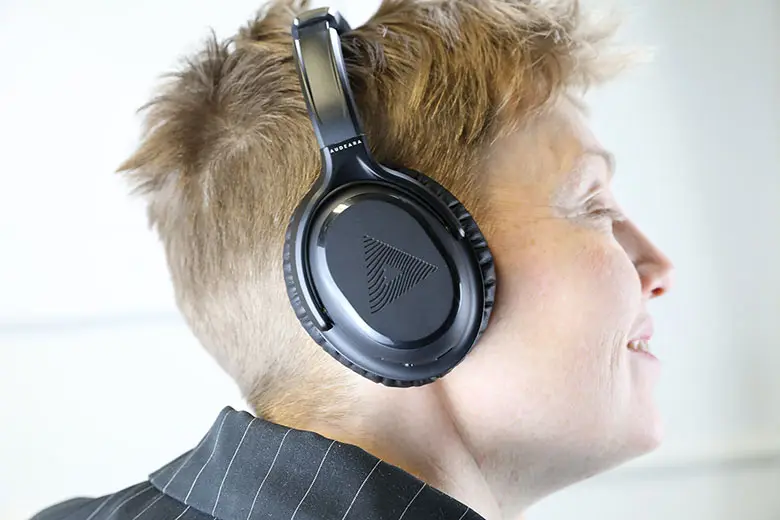
There are options for adjusting how music is mixed to suit your own hearing. We personally like the Audeara A-01 headphones, which are customizable with hearing-impaired listeners in mind.
Audeara headphones build a personalized sound profile from a quick hearing test you take during setup, accounting for your specific hearing sensitivity in each ear. From there, the headphones continuously adjust audio output in real time, boosting the frequencies you have more trouble hearing so they come through clearly.
The Takeaway: Music for All Ears
Music mixing isn’t just a technical exercise; it shapes how we experience and enjoy songs. This research shows that understanding the mixing preferences of people with hearing impairments can help make music more enjoyable across the board, not just for one group of listeners.
Picture a future where concert mixing is tailored to what actually works for your ears, whether you have normal hearing or a hearing impairment. That’s the value of research like this: it helps us understand how differently we all hear and feel music, and it points toward real ways to close that gap.
For more on why hearing aid processing changes how music sounds, see our post on hearing aid sound preference research.
The Takeaway: Music for All Ears
So, what’s the bottom line? Music mixing isn’t just about technical stuff; it’s about how we experience and enjoy songs. The experiment showed that understanding the mixing preferences of people with hearing impairments can help make music more enjoyable for everyone.
Imagine going to a concert in the future where the mixing is tailored to what you like, whether you’re a normal-hearing listener or someone with a hearing impairment. That’s the power of research and understanding how we all hear and feel music differently!
Remember, music is a universal language, and it’s all about making sure everyone gets to groove to the beat. So, next time you’re singing along to your favorite song, give a nod to the mixing engineers who make sure it sounds just right for your ears!