
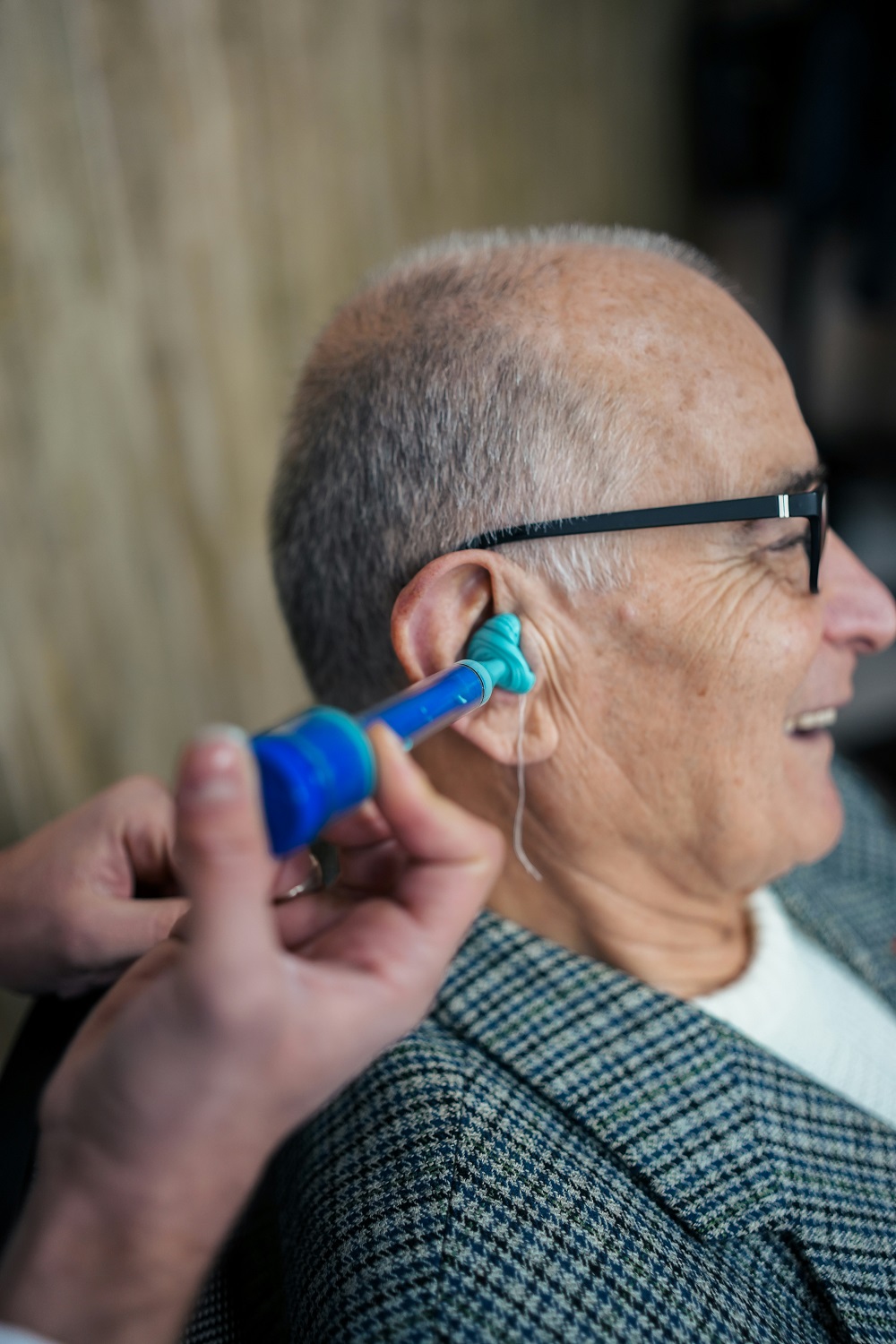
Earmold Styles, Materials, and Tubing: Why Your Fit Is Built for You
If you’ve ever wondered why your earmold looks and feels different from someone else’s, or why your audiologist recommended one material or style over another, the answer isn’t preference; it’s your specific hearing loss, your ear anatomy, and how you actually live your life. Earmolds are one of the most individualized parts of a hearing aid fitting, and the choices behind them matter more than most people realize.
Why Material Matters
Earmolds are typically made from one of a few core materials, and each has real tradeoffs that affect comfort, durability, and sound. In general, pediatric patients are fit with soft molds since they are active (safe) and need the flexibility for growth. They also have firm ears which soft are easier to get in. As we age, our ears soften with time, and hard molds are easier for seniors. The material also matters for the degree and type of hearing loss one has.
- Acrylic (hard shell): a rigid, durable material that holds its shape precisely over time. It’s often chosen for more severe hearing loss, since a firmer material creates a more reliable seal against feedback at higher amplification levels. It’s also a common choice for adults who want a long-lasting mold and don’t need much flexibility.
- Silicone (soft): a flexible, comfortable material that conforms more readily to movement, like chewing or jaw motion, without feeling rigid. It’s a common choice for children, whose ears are still growing and benefit from a gentler material, and for anyone who finds a hard acrylic mold uncomfortable for all-day wear.
- Vinyl: a mid-flexibility option, softer than acrylic but firmer than silicone, often chosen as a cost-effective middle ground. Vinyl can discolor or stiffen somewhat faster over time than acrylic or medical-grade silicone, which is worth knowing if long-term durability is a priority. Polyethylene is the best earmold for people who need the most hypoallergenic mold.
The material also matters for the degree and type of hearing loss one has, not just comfort. A softer material generally seals the ear canal less aggressively, which matters for milder hearing loss where you don’t want to feel overly plugged up. A firmer material holds a more precise seal, which matters more as amplification needs increase, since a weak seal at high volume is exactly what causes feedback, that whistling sound.
Why Style Matters
Beyond material, earmolds come in several shapes, each suited to different needs:
- Full shell: fills most of the outer ear bowl (the concha). Chosen for more severe hearing loss that needs the strongest possible seal and the most amplification.
- Half shell: covers only part of the concha, balancing a secure fit with a smaller, less visible profile. A common middle-ground choice.
- Skeleton: a thinner, more open design that removes extra material while keeping the mold secure, chosen when someone wants a more discreet, lighter-weight fit without giving up a custom seal.
- Canal lock: extends slightly into the bony part of the ear canal for extra stability, often chosen for more active patients, or anyone who’s had trouble with a mold working loose during movement or exercise.
- Custom canal: sits mostly within the canal itself for a smaller, less visible fit, generally suited to milder to moderate hearing loss where a smaller mold can still maintain an adequate seal.
- Ventilated: includes a small vent, a channel that lets some natural sound and air into the canal alongside the amplified sound. This reduces the occlusion effect, that plugged-up, boomy sensation of your own voice, and is typically used for milder hearing loss where a fully sealed canal isn’t necessary.
- Acoustic filter: built with filters that shape the frequency response for comfort and sound quality, a more specialized option chosen based on your specific hearing profile.
- Swim molds: built specifically to keep water out of the ear canal during swimming or water sports, a specialized option for people who are frequently in the water.
Choosing between these isn’t a matter of picking what looks best. Your audiologist matches the style to your degree of hearing loss, how sealed the canal needs to be to prevent feedback, and how you actually use your ears day to day, whether that’s swimming, exercising, or simply wanting the most discreet option that still performs well.
BTE Tubing vs. RIC Wiring: Not the Same Thing
If you’ve compared a behind-the-ear (BTE) hearing aid to a receiver-in-canal (RIC) device, you’ve probably noticed both have a thin connector running from the body of the device toward the ear. They look similar, but they’re doing completely different jobs.
In a BTE hearing aid, sound is actually generated inside the device body behind your ear, and it travels as sound down a physical tube into your earmold and canal. That tube is acoustic, it’s carrying real sound waves over a distance, which means its length, diameter, and condition genuinely affect what you hear. Standard tubing and thinner tube options exist for different power needs and comfort preferences, and because it’s a physical tube exposed to moisture and earwax, it hardens and discolors over time and needs periodic replacement to keep sound quality consistent.
A RIC device works differently from the ground up. The receiver, the actual speaker, sits in or near your ear canal itself, not back in the body of the device. The thin wire connecting the two isn’t carrying sound at all, it’s carrying an electrical signal to the receiver, which then produces the sound right where it needs to be. That’s a meaningful difference: less distance for sound to travel generally means a more natural sound experience, particularly in higher frequencies, and it’s part of why RIC devices are often described as sounding clearer than a comparable BTE fitting.
When a RIC device uses a custom earmold instead of a standard dome, that mold isn’t conducting sound the way BTE tubing does. Its job is to securely house the receiver and hold it in the right position in your canal, which is why RIC custom molds tend to be smaller and simpler than the molds used with BTE tubing.
BTE Tubing: Sizes, Types, and Options
If you wear a BTE hearing aid with a custom earmold, the tubing itself isn’t one-size-fits-all. A few different variables affect which tubing is right for you.
- Diameter: thinner tubing, often around 0.9mm, is used for more open, lower-power fittings, where a smaller tube is less noticeable and less occluding. Thicker standard tubing, often around 1.4mm, is used for higher-power fittings where a wider bore helps deliver more amplification without excess resistance. Exact diameters vary by manufacturer, your audiologist selects the size that matches your hearing aid’s power level and your fitting needs.
- Length and sizing codes: tubing is also sized by length, often labeled with codes like S (short), M (medium), T (thin), or TT (extra thin), depending on the manufacturer’s naming system. The right length depends on your ear anatomy, since tubing that’s too long or too short affects both comfort and how securely the earmold sits.
- Dry or moisture-resistant tubing: standard tubing can absorb moisture over time from humidity, sweat, or condensation, which contributes to it hardening, discoloring, and needing replacement. Moisture-resistant, sometimes called “dry,” tubing options are treated to resist that absorption, extending the usable life of the tubing between replacements.
- Clear or invisible tubing: standard tubing is often visible against the skin. Clear tubing options are designed to be less noticeable, which some patients prefer for discretion, particularly with an open-fit BTE style where the tubing runs along the outside of the ear.
- Skin-tone matched tubing: some manufacturers offer tinted tubing in a range of shades designed to blend with different skin tones, another option for patients who want their tubing to draw less visual attention than a clear or standard tube.
Whichever combination you have, tubing is a wear item, not a permanent part of your hearing aid. It hardens and discolors with normal use and should be replaced periodically, worth mentioning at a routine appointment if it’s been a while since yours was last swapped out.
Read our full guide to hearing aid fitting standards and protocol.
Not sure if RIC or BTE is right for you? See our comparison.
Learn how to clean and replace domes and earmolds.
Questions about which mold material or style fits you? Contact us.
Learn about your hearing loss to help you understand if you need an earmold.



