
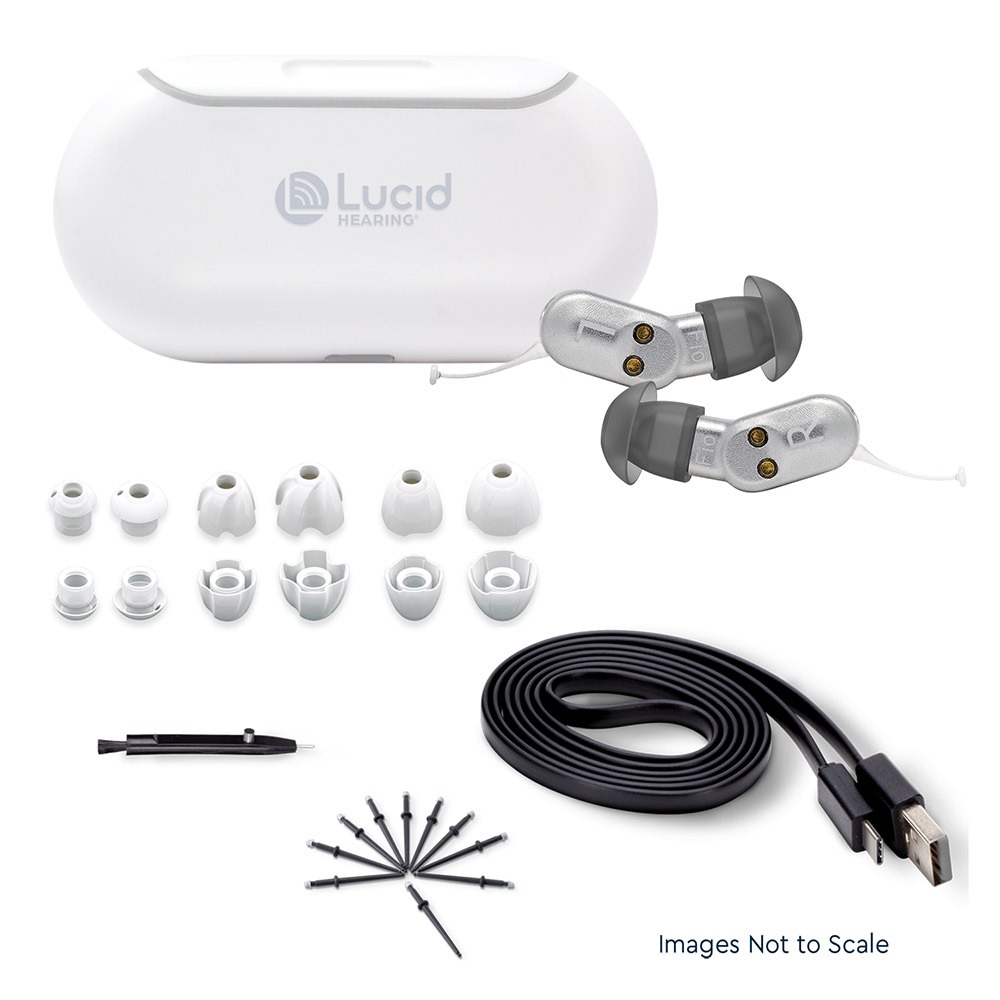
The same basic principles that keep any hearing aid working well- keeping it dry, keeping wax and debris out of the microphone and receiver- apply to OTC hearing aids too. But there are a few real differences worth knowing if you’ve bought an over-the-counter device rather than a prescription one.
What’s the Same
- Wipe your OTC hearing aid down daily with a soft, dry cloth.
- Check microphone ports and receivers regularly for visible wax or debris.
- Store it somewhere dry overnight, and open the battery door or place it in the charger, depending on the model.
- Avoid water, alcohol, and harsh cleaning products directly on the device.
What’s Different
Most OTC hearing aids use generic, standard-sized domes or tips rather than a custom earmold made from an impression of your ear. That’s convenient, but it also means the fit is less precise, so those generic tips tend to need more frequent replacement and closer wax monitoring than a custom earmold would.
OTC devices also typically don’t come with the same built-in professional cleaning and check-up cadence that prescription hearing aids do through regular clinic visits. That puts more responsibility on your own home routine, since there’s no standing appointment where a provider is checking and cleaning the device for you.
Replacement parts for OTC devices, domes, filters, and tips, vary by brand and aren’t always sold in the same place you bought the hearing aid itself. It’s worth knowing where to source replacements for your specific brand before you actually need one.
A Simple Routine for OTC Devices
Follow the same daily wipe-down and weekly check described in our daily cleaning routine guide. Pay closer attention to the fit and condition of your dome or tip specifically, since that’s the piece most likely to need more frequent attention on an OTC device than it would on a custom-fitted prescription hearing aid.
Start with our daily cleaning routine.
Browse our OTC hearing aid selection.
Not sure what your OTC device needs? Contact us.



