We will Help Venues Find A Solution for their Patrons
We communicate for a number of reasons. When we are babies we can only communicate by crying or fussing. Parents often teach children sign language to help them communicate their needs, since it tends to come easier than spoken language at that age. As we grow, our language skills improve and communication gets easier, mostly. Students need to communicate with their teachers and teachers with their students. We communicate for education, for fun, for training, for work, for love, and for nearly everything else in life.
As we get older, communication can get more difficult as vision, hearing, and cognitive ability start to decline. Communication is still important, and sometimes it’s genuinely as significant as life or death. When people get instructions about a medication, for instance, and don’t take it as prescribed because they didn’t hear the full instructions, that can have real consequences.
We truly believe communication is important enough that it drives our daily focus. When someone comes in to talk to us and they can’t hear well, communication gets hard fast. Our first step is always making sure the person is hearing as well as they can, seeing what they can see, and understanding to the best of their ability.
What the Research Shows
We recently read research from Nicholas Reed’s group at Johns Hopkins (2019) on hearing loss and communication within the healthcare system. Using a large claims dataset, the researchers compared adults with and without hearing loss, matched on age, race, sex, region, insurance, education, spending, and other factors, and tracked health care utilization outcomes over 2, 5, and 10 year periods.
Over that 10 year period, compared to people without hearing loss, people with hearing loss had a meaningfully higher rate of hospitalization, spent more days on average during hospital stays, faced a higher risk of an emergency department visit, and were more likely to experience a 30-day hospital readmission.
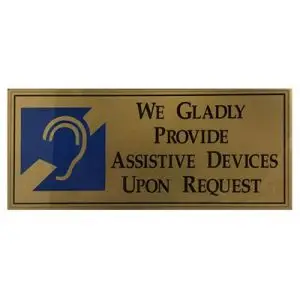
As audiologists, we have the ability to help with exactly this problem, and at Hears Hearing & Hearables we’ve put together a program that works with healthcare providers, clinics, and even hospitals to help them communicate more effectively with patients who have hearing loss.
Small Businesses Can Really Know and Help Their Communities
To provide meaningful support, we believe in a real consultation: understanding what a provider or venue actually needs, recommending the right products, getting those products into their hands, and training their team on how to use them, all at fair pricing. That kind of individual attention isn’t something you’d expect from a large corporation or a venture-backed company focused on scale.
Getting the Right Products and Service
- Hearing loops
- T-coil devices
- FM systems
- Personal sound amplifiers
- Wifi hotspot options
- Auracast
- IR systems
- Closed captioning
- Bluetooth
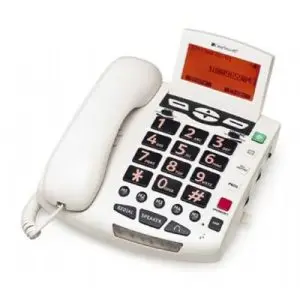
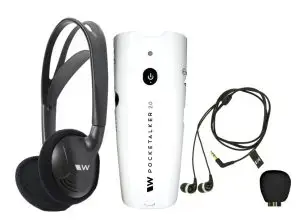
Along with the right products, we offer the right service: a consult to find better hearing in noise, a review of your current setup, help finding the right hearing aid accessory, connecting you with a provider near you, matching hearing aids to the right charger, guidance on OTC hearing aids, hearing evaluation consultations, venue consultations, hearing aid programming, troubleshooting Bluetooth issues, therapies for ear and hearing-related concerns like aural rehabilitation, and help finding the right manufacturer support line when you need it.
If you need help finding professional support for your community or your practice, we can help. Let us know if you’re interested in learning more.
Contact us to discuss an assisted listening solution for your venue or practice.