Amplified Stethoscopes for Healthcare Professionals With Hearing Loss
Hearing loss does not end a clinical career, but it does require the right equipment. A standard acoustic stethoscope depends on the listener’s unaided hearing, which means patients and clinicians with hearing loss often miss critical cardiac, pulmonary, and bowel sounds that inform diagnosis and treatment. Amplified and digital stethoscopes address this directly: they boost the acoustic signal, allow the output to be directed into hearing aids, and in some cases allow recording and sharing of sounds for remote review.
We carry two digital stethoscopes at Hears Hearing & Hearables: the 3M Littman EKO Core and the Thinklabs One. Both connect directly to hearing aids through multiple pathways.
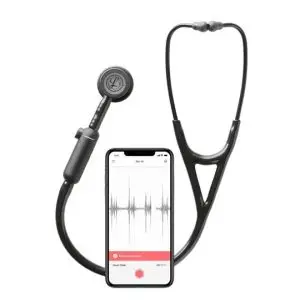
Littman 3M EKO Core Digital Stethoscope
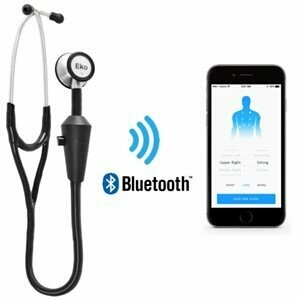
The EKO Core is an FDA-cleared digital stethoscope that amplifies heart, lung, and bowel sounds up to 40 times over analog, enough to make subtle sounds audible even with significant hearing loss. It connects to the EKO app on iPhone or iPad for visualization, recording, sharing, and remote consultation.
- Amplification: up to 40x over analog mode via toggle switch. Adult and pediatric diaphragms included.
- Noise cancellation: reduces ambient sound to improve signal clarity at the chest piece.
- EKO app: displays heart sound waveforms, allows secure recording and sharing for referrals, and integrates with platforms for murmur identification and live-stream telemedicine consultation.
- HIPAA compliance: recordings shared through the EKO platform are encrypted and HIPAA-compliant.
- Battery: rechargeable — 8 hours of use per charge via Micro-USB.
- Warranty: 2-year limited warranty.
A family member’s son would occasionally complain of a racing heart. His pulse was high, but by the time they reached the emergency room everything had normalized. After several trips they began to doubt themselves, until they made it in time and the EKG showed a heart rate of 210, a PSVT arrhythmia. He was treated successfully. A stethoscope that could have recorded and transmitted the sound in real time to a provider might have shortened that anxious journey considerably. The EKO Core is exactly that tool.
Shop Littman 3M EKO Core Digital Stethoscope
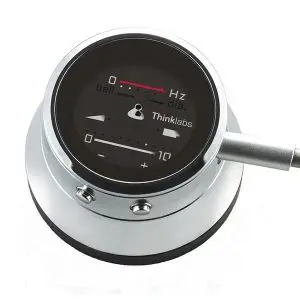
Thinklabs One Digital Stethoscope
The Thinklabs One is the smallest, most powerful digital stethoscope we carry, compact enough to fit in a palm, with amplification over 100 times the original acoustic signal. It is specifically designed for clinicians with hearing loss and connects to hearing aids through multiple pathways.
- Amplification: over 100x the original signal. Volume is adjustable. Frequency range adjustable by varying hand pressure on the diaphragm, more pressure increases higher frequencies.
- Battery: lithium-ion rechargeable, no battery replacement needed.
- App: connects to the stethoscope app on iPhone or iPad for recording and visualization of heart sounds. The iMurmur app provides a reference library of heart sounds with descriptions, placement guidance, and pathophysiology, ideal for students and clinicians wanting a quick refresher.
Connecting Digital Stethoscopes to Hearing Aids
The most clinically useful feature of digital stethoscopes for hearing aid users is the ability to direct the amplified sound into the hearing aids themselves, bypassing the external ear and delivering the signal at the wearer’s programmed hearing aid levels. Three connection methods are available:
3.5mm Audio Output to Hearing Aid Streamer
Both the Littman 3M EKO Core and Thinklabs One include a standard 3.5mm audio output. This connects to hearing aid streaming accessories that have a 3.5mm input. The Widex Sound Assist accepts a 3.5mm input and streams the stethoscope signal directly to Widex Moment hearing aids, placing the heart, lung, or bowel sounds in both ears at the hearing aid’s amplification levels. Note: the Uni-Dex previously used for this purpose is discontinued. The Sound Assist is the current Widex accessory for this connection.
T-Coil Neck Loop
For hearing aid users with telecoil capability, a T-coil neck loop connects to the stethoscope’s audio output and transmits the signal inductively to the hearing aids’ telecoils. Switch the hearing aids to T or MT mode and the stethoscope audio streams directly. This is the most universal method, it works with any telecoil-equipped hearing aid regardless of brand.
Headphones or Earbuds
For clinicians who do not wear hearing aids or want a standalone listening solution, the Thinklabs One and EKO Core both connect to standard 3.5mm headphones. For best heart and lung sound quality, headphones with strong bass response are recommended; low-frequency sounds (the ‘lub-dub’ of the heartbeat) require bass reproduction that many standard earbuds do not deliver well. The Audeara headphones we carry are calibrated to individual hearing and work well for this application.
Who These Stethoscopes Are For
- Nurses, physicians, physician assistants, and paramedics with hearing loss: clinical professionals who need to maintain auscultation capability despite hearing loss.
- Students in clinical training: medical, nursing, and allied health students with hearing loss who need reliable auscultation from the start of training.
- Healthcare professionals wanting to share cardiac sounds remotely: the app recording and sharing capabilities make these tools valuable for telemedicine and remote consultation regardless of hearing status.
- Family caregivers of patients with cardiovascular conditions: the ability to record and transmit heart sounds to a provider is clinically meaningful for monitoring irregular rhythms or arrhythmias between clinic visits.
ADA and the Workplace for Healthcare Professionals With Hearing Loss
Healthcare employers are subject to the ADA and must provide reasonable accommodations for clinicians with hearing loss. An amplified stethoscope that allows a nurse or physician with hearing loss to perform auscultation effectively is precisely the kind of accommodation the ADA supports. If your employer has resisted providing or approving the use of an amplified stethoscope as a workplace accommodation, that resistance may not be ADA-compliant. [LINK to ALD1: ADA workplace rights]
Clinician with hearing loss looking for the right stethoscope and hearing aid connection solution? Contact Hears Hearing & Hearables. We can help identify the best stethoscope-to-hearing-aid connection method for your specific hearing aids and clinical setting.
Frequently Asked Questions: Amplified Stethoscopes
Can a nurse or doctor with hearing loss use a regular stethoscope?
A standard acoustic stethoscope depends entirely on the listener’s unaided hearing. For clinicians with significant hearing loss, critical sounds, cardiac murmurs, subtle arrhythmias, early crackles, may be inaudible. Amplified and digital stethoscopes boost the acoustic signal substantially and allow connection to hearing aids, making reliable auscultation possible for most types and degrees of hearing loss.
How do digital stethoscopes connect to hearing aids?
Three main methods: a 3.5mm audio cable to a hearing aid streaming accessory with a 3.5mm input (such as the Widex Sound Assist for Moment hearing aids), a T-coil neck loop that transmits inductively to telecoil-equipped hearing aids, or standard 3.5mm headphones for hearing aid users who prefer to remove their aids during auscultation. The T-coil neck loop method is the most universal, it works with any telecoil-equipped hearing aid regardless of brand.
Is the Widex Uni-Dex still available for connecting stethoscopes?
No, the Uni-Dex is discontinued. The current Widex accessory for stethoscope connection via 3.5mm audio input is the Sound Assist, which accepts a 3.5mm input and streams to Widex Moment hearing aids. Contact us to confirm the current connection method for your specific Widex hearing aids. [LINK to contact page]
What is the EKO app and what does it do?
The EKO app connects to the EKO Core stethoscope via Bluetooth and displays heart sound waveforms in real time on an iPhone or iPad. It allows secure recording and sharing of auscultation sounds for remote referrals, integrates with telemedicine platforms, and supports murmur identification tools. All sharing through the EKO platform is encrypted and HIPAA-compliant.
Which stethoscope is better for hearing loss: the EKO Core or the Thinklabs One?
Both are strong for different priorities. The EKO Core’s 40x amplification and FDA-cleared status make it the more clinical-feeling choice, with robust app integration for recording and sharing. The Thinklabs One’s 100x amplification and extreme compact size make it the more powerful choice for auscultation in a pocket-sized form factor. For clinicians who primarily need to hear heart and lung sounds reliably in their own ears, the Thinklabs One’s higher amplification is the stronger performer. For clinicians who need recording, visualization, and telemedicine capability, the EKO Core’s app ecosystem is more developed. Contact us to discuss which fits your specific clinical situation.