
Every hearing aid manufacturer announces a “new platform” every year or two. New name, new marketing, new press release, often a genuinely improved hearing aid. What’s rarely made clear in that announcement is whether the platform is running on a new chip or the same chip as before, dressed up with new software, a new feature name, and new tuning. Below we will outline the difference in a hearing aid chip vs platform update.
That distinction matters more than most marketing lets on. A new chip is a hardware change: more processing power, a physically different piece of silicon, something that took years and real engineering investment to build. A new platform name can mean that, or it can mean a software update and a rebrand running on hardware the company already shipped. Both are legitimate. They are not the same thing, and manufacturers are not always upfront about which one you’re getting.
What a Chip Actually Is
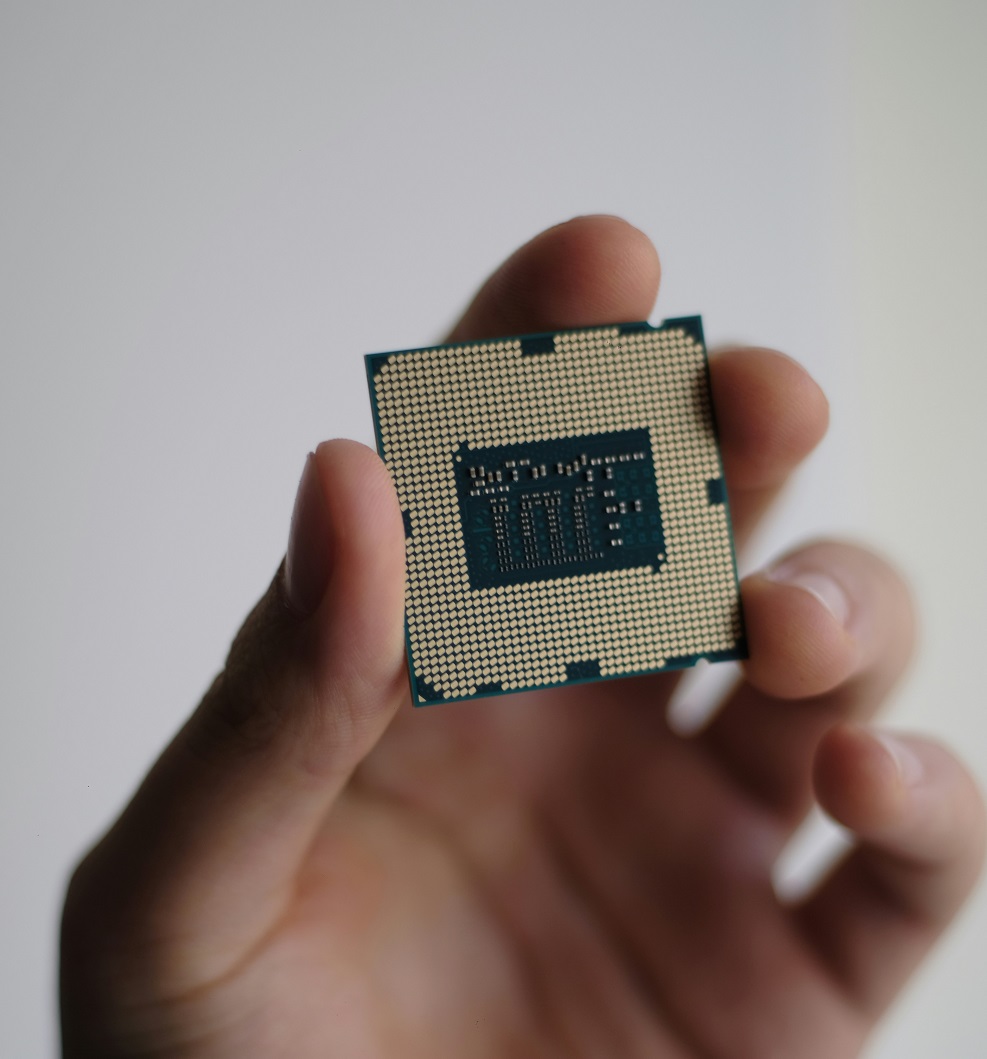
The chip is the physical processor inside the hearing aid, the hardware that does the computational work: running the deep neural network, managing feedback, classifying environments, handling Bluetooth. A new chip generation is expensive and slow to develop. It typically shows up every few years, not every year, because it requires new silicon, not just new code.
What a Platform Actually Is
The platform is the marketing name for a hearing aid family, the branding layer on top of the chip. A platform can introduce a genuinely new chip. It can also mean the same chip as the previous platform, with a new software build, retrained algorithms, a new feature name, and a new marketing push. Both show up in press releases as “new.” Only one of them is new hardware.
The Same Pattern Outside Hearing Aids
This isn’t unique to hearing aids. Apple releases a new iPhone lineup every year, but “new phone” doesn’t always mean new chip. The iPhone 15 shipped with the A16 chip, the same chip Apple had already put in the previous year’s iPhone 14 Pro. The iPhone 15 Pro, released the same day, got an actual new chip, the A17 Pro. Same launch event, same year, same “new iPhone” headline, two different hardware realities depending on which model you bought. Hearing aids work the same way: a “new platform” announcement can mean a new chip across the whole lineup, or it can mean one tier got new silicon while the rest got a new name on last year’s chip.
A Concrete Example: Oticon More vs. Real
Oticon’s own history shows both patterns happening back to back. More, released in 2021, introduced the Polaris chip. Real, released in 2023, ran on a refined version of the same chip family, called Polaris R, not a new chip generation. The improvements Oticon marketed with Real, RealSound processing and better wind and handling noise management- were built through software and tuning changes on the same underlying hardware. Then Intent, in 2024, introduced an actual new chip, Sirius, alongside the 4D Sensor system. Two of those three launches were platform refreshes. One was a chip change.
Brand by Brand: Chip vs. Platform
Oticon
- Current chip: Sirius, introduced with Intent (2024).
- Previous chip: Polaris, used in More (2021) and refined as Polaris R for Real (2023).
- Reveal (2026): Oticon’s newest platform, confirmed to run the same Sirius chip introduced with Intent. Reveal is a platform refresh, not a chip-level change, the same pattern as More to Real rather than Real to Intent.
Phonak
- Chip: a two-chip design, ERA (the base chip in every Infinio device) plus HYPERSONIC (a dedicated AI chip, present only in Sphere-tier models).
- Platform: EON. Non-Sphere EON models run ERA (same chip as the previous Infinio) alone with updated software (AutoSense OS 8.0); only Sphere models get the second chip. Two devices can share the EON platform name while one has genuinely different hardware than the other.
Widex
- Chip: W1, introduced with Allure.
- Platform: Allure. Allure AI adds a second, dedicated DNN chip alongside W1, similar to Phonak’s two-chip approach. Standard Allure and Allure AI share a platform name but not identical hardware. The previous platform, Moment, ran on an earlier chip generation.
Starkey
- Current chip: G2 Neuro Processor, introduced with Edge AI (2024).
- Previous chip: Neuro Processor, introduced with Genesis AI (2023).
- Note: Unlike Oticon’s More-to-Real transition, Starkey’s platform name change from Genesis AI to Edge AI did come with a new chip generation.
- Omega AI (2025): Starkey’s newest platform, following Edge AI. Reporting on Omega AI is inconsistent about whether it represents a new chip. Some coverage and Starkey’s own materials describe a new processor generation, at times named the G3 Neuro Processor, with substantially more memory and compute power. Other coverage describes Omega AI as software and algorithm additions, including three deep neural networks running in parallel, built on the existing Edge AI hardware. We have not confirmed which account is accurate and recommend verifying directly with Starkey before treating Omega AI as either a confirmed chip change or a confirmed platform-only refresh.
Signia
- Current chip: Signia MaX chip, introduced with MaX (2026).
- Previous platform: Integrated Xperience (IX). Signia never publicly named a chip for IX. It marketed platform-level capabilities like RealTime Conversation Enhancement and multi-stream processing without disclosing the underlying processor, which made it hard to independently tell whether a given IX update reflected new hardware or just a software refresh.
- MaX (2026): Signia’s newest platform, and notably the first time the company has publicly named its chip. The Signia MaX chip runs Signia’s Acoustic Intelligence architecture with four DNNs, and Signia states it delivers 54x more processing power, 2x the memory, and 75% more data points processed per second than IX. Unlike the More-to-Real pattern (same chip, new platform), MaX pairs a new platform with a newly disclosed, higher-powered chip.
ReSound
- Same pattern as Signia. ReSound’s newest platform, Sensia, is described in GN’s own materials only as “a new AI platform,” with no separately branded chip name surfaced publicly. Sensia replaces the previous ReSound flagship, Vivia.
Unitron
- Corporate family: Unitron is part of the Sonova family, the same corporate parent as Phonak.
- Unconfirmed pattern: industry pattern suggests Unitron’s chip and platform releases typically follow Phonak’s by roughly six months, using related but separately branded technology. We have not confirmed the specific chip or platform names or the exact release lag, and recommend verifying directly with Unitron before publishing specifics.
- Market positioning: Unitron is generally positioned as a non-premier brand, more commonly available through managed care, big-box, and insurance benefit channels, such as Costco and UnitedHealthcare hearing benefit plans, than through premium independent retail. This positioning is part of why chip and platform transparency is harder to find for this brand.
Rexton
- Corporate family: Rexton is part of the WS Audiology family, the same corporate parent as Signia and Widex.
- Unconfirmed pattern: following the same pattern as Unitron, Rexton’s releases are generally expected to lag Signia’s using related but separately branded technology. We have not confirmed specific naming or release timing and recommend verifying directly with Rexton before publishing specifics.
- Market positioning: like Unitron, Rexton is generally positioned as a non-premier, managed care and big-box channel brand rather than a premium independent-retail brand.
What This Means When You’re Researching Hearing Aids
A “new platform” announcement is not, by itself, evidence of a hardware leap. Sometimes it is. Sometimes it’s a rebrand of hardware you could already buy under a different name. The only way to know which one you’re looking at is to ask what changed at the chip level, not just what the press release calls the new feature set.
Contact Hears Hearing & Hearables if you want an honest answer, to the best of our ability, to that question for any specific device you’re considering. We carry and fit multiple brands and can tell you plainly whether a “new platform” you’ve read about is running new silicon or new software on hardware that’s been on the market for a while.



