
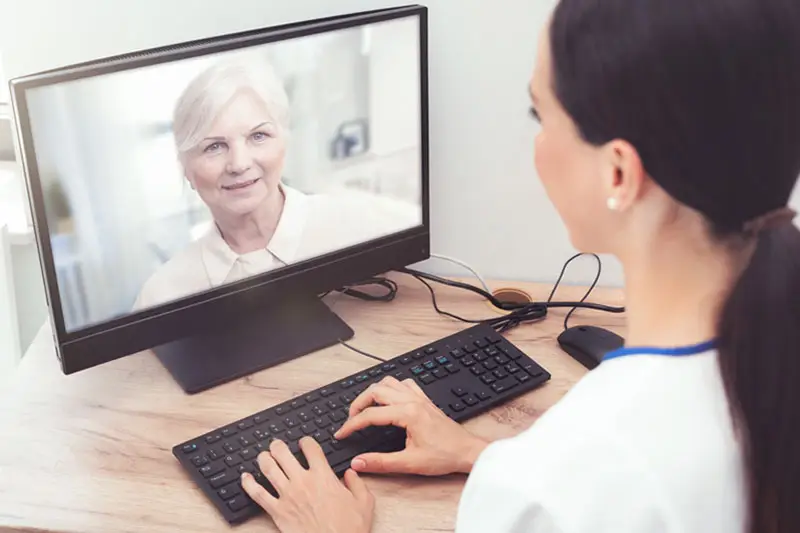
Telehealth, telecare, telehear, tele-something is becoming part of our daily vocabulary in healthcare. From general medical appointments to mental health services, telehealth is now widely available. More clinics, hospitals, and yes, even audiology practices are offering telehealth services. While it may not be the perfect fit for every situation, it can be incredibly helpful in many ways.
Why Telehealth Makes Sense
For patients, it’s about convenience. You can meet with your provider during a lunch break, no need to take time off work, drive to a clinic, or sit in a waiting room. It’s healthcare that fits into your life, not the other way around.
For providers, it’s about efficiency. Virtual appointments let us schedule more tightly and manage logistics more effectively. With the help of AI tools, we can streamline scheduling and make care more accessible.
Underused in Audiology. But Why?
Despite the benefits, telehealth remains underused in audiology specifically. When a patient wants to work with us for our reputation, personalized service, and fair pricing, but their existing hearing aids need remote support from the clinic that originally fit them, we’ll often reach out to that clinic on the patient’s behalf to ask if they can help remotely. Too often, the answer is a disappointing, “We don’t do that.”
Once in a while, we meet a young provider excited to work remotely, only to learn their clinic owners or administrators are resistant to implementing teleaudiology. We have to ask: why?
Is it resistance to change?
- Are some technologies, like older hearing aids, not compatible with remote fitting?
- Are hearing aid manufacturers pushing in-person visits to keep foot traffic in clinics?
- Are there concerns that older patients might struggle with the technology?
Some of these concerns are valid. Yes, some people have outdated hearing aids that don’t support remote services. And yes, technology can sometimes be frustrating; not everyone is tech-savvy. But we can teach. We can support. We can work through the technical hiccups together.
More Than Just a Tool: A Bridge
Telehealth isn’t just about convenience. It opens up connections across geography and culture. Through virtual care, we’ve met people from the South, from different cultural backgrounds, from all walks of life. We learn from them. We grow with them. It expands our world beyond our local clinic, and it can be genuinely enlightening.
It’s not just about hearing. It’s about listening, to people, to their needs, to their stories. It makes us better. It raises the bar for other clinics too. When we show our faces and our concern, it makes us human online. We recently got a review from someone who was simply happy to find thinking, caring humans on the other end of a screen.
A Note to Patients
If you’re trying telehealth and something goes wrong, your mic doesn’t work, your internet cuts out, you can’t see us, we can’t see you, your hearing aid app crashes, don’t get discouraged. We’ll help. We’ll try again. Technology is never perfect. Neither are we. But with kindness, patience, and a willingness to try, teleaudiology can be genuinely life-changing.
A Note to the Hearing Care Provider
Try telehealth. Advocate to your clinic owners or administrators about the benefits of offering teleaudiology. Help them see that telecare isn’t just a trend; it’s here to stay. It lets us meet patients where they actually are: online.
Don’t limit yourself to only seeing patients from your immediate neighborhood. Serving your local community is genuinely valuable, but expanding your reach lets you help even more people who are realizing how important it is to address their hearing health. Teleaudiology opens doors. Don’t get left behind.
The Interstate Compact: Doors Are Opening
There’s good news for teleaudiology on the horizon. The Audiology and Speech-Language Pathology Interstate Compact (ASLP-IC) is a formal agreement among states that lets audiologists practice across state lines. Under the compact, an audiologist licensed in good standing in a member state can apply for a “compact privilege” to practice in other member states, which is equivalent to a license. The first states began issuing privileges in October 2025, and more are joining as they connect to the system. The compact covers both telehealth and in-person care. For patients, that means the chance to work with an audiologist you trust, wherever you live. For providers, it means a clearer path to serve people beyond your own state. Each state still keeps its own rules, so we’re taking it one state at a time, but the direction is encouraging, and we’re excited to help bring independent, transparent care to more communities.
Affordable. Accessible. For Everyone.
You don’t have to be wealthy to access hearing care. Telehealth brings us closer to affordable, equitable support for hearing health. It’s time we embrace the future, not just because it’s new, but because it can genuinely make our lives better.
See how our telehealth hearing care actually works, brand compatibility, cost, and scheduling.
Ready to try telehealth or have questions? Contact us.



