f you’ve been researching Eargo hearing aids, you may have noticed things have changed. In July 2026, Eargo’s parent company, LXE Hearing, announced it was winding down its U.S. operations. Eargo hearing aids still work, but support, warranties, and the app are ending.
Eargo built its name on tiny, nearly invisible hearing aids that sit completely in the ear canal. If that design is what drew you in, there is a prescription hearing aid built around the same idea: the Signia Silk Charge&Go IX. It’s the new model hearing aid Sony’s discontinued CRE-C10 and CRE-C20 were based on.
This post covers what the Eargo shutdown means for you, how Eargo compares with Signia Silk Charge&Go X and how to decide what to do next.
Transparency note: Hears Hearing & Hearables never carried Eargo. We do carry Signia.
What Happened to Eargo
Eargo was founded in 2010 and sold completely-in-canal (CIC) hearing aids directly to consumers, years before the FDA created the over-the-counter (OTC) hearing aid category in 2022. In 2025, Eargo merged with hearX, the company behind Lexie Hearing, to form LXE Hearing.
In July 2026, LXE Hearing announced it was winding down its U.S. business after it could not find a viable path forward through restructuring. According to LXE’s notices:
- Existing Eargo hearing aids are expected to keep providing amplification and core functions using their onboard controls and last saved settings.
- The deadline for new warranty or repair requests was September 15, 2026.
- Eargo customer and technical support ends October 22, 2026.
- The Eargo app is removed from the Apple App Store and Google Play Store on October 22, 2026, and will not be available to download or reinstall after that.
- No further software or security updates are planned.
If You Already Own Eargo Hearing Aids
You don’t need to replace a pair that’s working. LXE recommends these steps to keep using yours as long as possible:
- Update the Eargo app to Version 9 and confirm the version under Menu.
- With the hearing aids connected and your phone online, open the app so your settings sync for offline use.
- Keep the app installed on that phone. If you delete it, reset your phone, or switch phones, you may not be able to reinstall it.
- Consider holding off on major iOS or Android updates until you know they won’t affect the app.
- Download and save the Eargo user guides.
Eargo’s rechargeable batteries are built in. Once the warranty and repair program ends, a failing battery or damaged device most likely means replacing the hearing aids. If you believe you are owed a refund or payment, LXE says customers can file a proof of claim with the court-appointed assignee by 5 p.m. Pacific Time on January 31, 2027. Follow the instructions posted on Eargo’s website.
What Eargo Got Right
Eargo earned its reputation fairly. Reviewers consistently praised the comfort of its soft silicone tips and how hard the devices were to see. Eargo also employed licensed hearing professionals for remote support, which was uncommon among direct-to-consumer brands.
Its final lineup included:
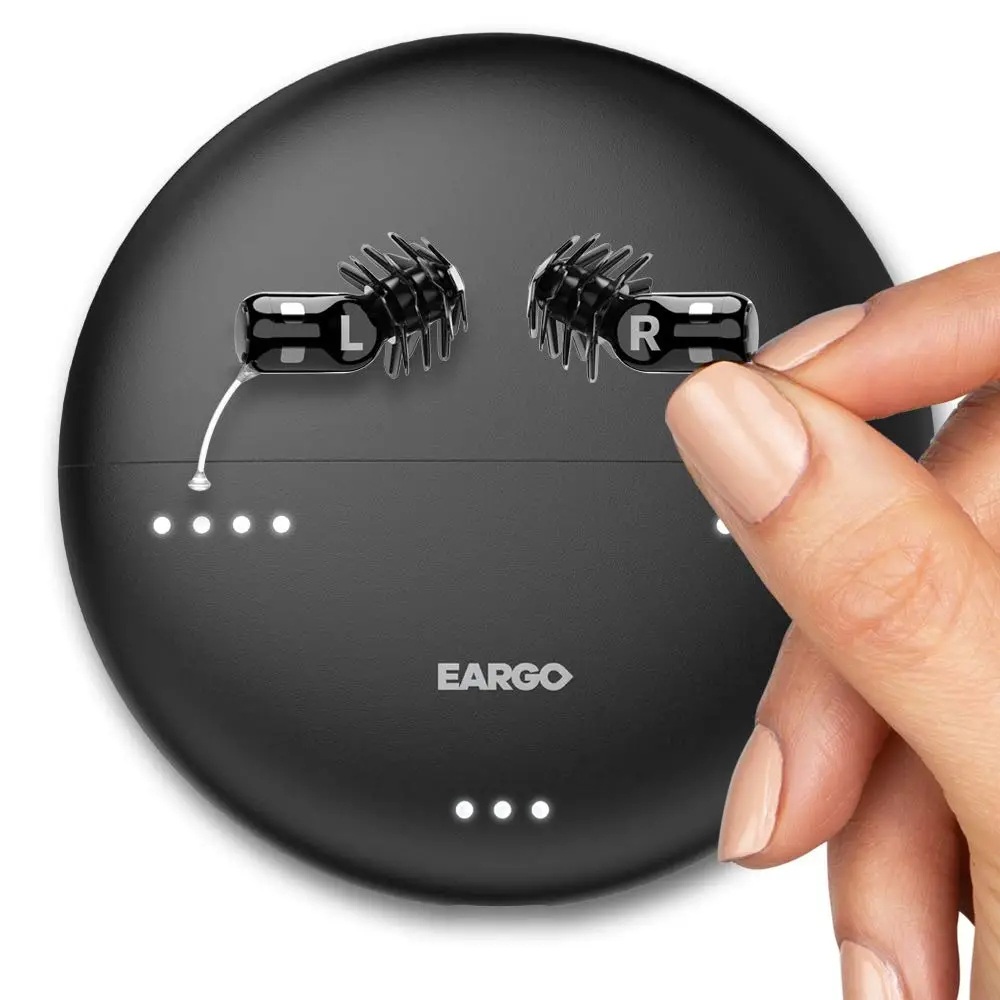
- Eargo 8 (about $2,699 per pair): CIC, rechargeable, with Eargo rating the battery at up to 16 hours. No Bluetooth streaming.
- Eargo SE (about $1,699 per pair): a simpler CIC version of the Eargo 8. No Bluetooth streaming.
- Link by Eargo (about $799 per pair): an earbud style, and the only Eargo model with Bluetooth streaming.
Where the Sony CRE-C10 and CRE-C20 Fit In
Sony’s OTC hearing aids were made with WS Audiology, the parent company of Signia. HearingTracker notes that the in-canal Sony design was originally Signia’s instant-fit prescription hearing aid.
- The Sony CRE-C10 used size 10 disposable batteries, like Signia’s earlier Silk X and Rexton’s Inox.
- The Sony CRE-C20 was rechargeable, like the current Signia Silk Charge&Go IX.
HearingTracker reported in April 2026 that Sony’s OTC hearing aids were discontinued. WS Audiology told HearingTracker it would honor warranty and service commitments for buyers. If you were considering a Sony C10 or C20, the Rexton Inox 40 and the Signia Active are the prescription hearing aid from the same manufacturer, in the same nearly invisible style.
Audicus Mini 2: A Similar Design Sold Online
If you’ve been searching for invisible hearing aids, you may also have seen the Audicus Mini 2. Audicus is an online hearing aid company that sells its own branded hearing aids and programs them remotely.
According to Soundly, the original Audicus Mini was made by WS Audiology, the same company that makes Rexton and Signia, and it is similar to Signia Silk. Audicus doesn’t say who makes the Mini 2.
According to Audicus, the Mini 2:
- Is a completely-in-canal hearing aid
- Is rechargeable, with a battery that lasts all day
- Is rated IP68 for water and dust resistance
- Does not stream audio over Bluetooth
- Is controlled with the Audicus app, with adjustments sent remotely by Audicus’s audiologists
- Costs $2,498 per pair on the Audicus website
The main difference from the Rexton Reach inoX-CIC Li is how you get care. Audicus programs and supports the Mini 2 remotely. With the Rexton, our licensed professionals program it to your hearing test, and you can get follow-up care by telehealth or in person at Hears to U in Hopkins, Minnesota.
Rexton Reach inoX-CIC Li: The Prescription Alternative
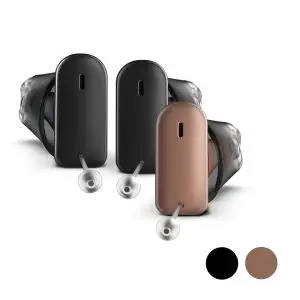
Rexton introduced the Reach inoX-CIC Li in November 2024 as the completely-in-canal model on its Reach platform. It’s an instant-fit hearing aid, so it uses a soft sleeve instead of a custom earmold. We carry it in the 40 technology level.
Ready to Wear
According to Rexton, the inoX-CIC Li fits completely in the ear canal with a soft sleeve. It works with Rexton’s Sleeves 3.0 and Eartips 3.0. If a stock sleeve doesn’t fit well, a custom Earmold IF CIC 3.0 is available. Because nothing has to be custom made, you can often start wearing them right away.
Battery Life
Rexton rates the battery at up to 28 hours per charge. Rexton says the charging case doubles as a power bank with 4 charges on the go, and it charges by USB or on a Qi wireless charging pad.
Sound Processing
Rexton says its Voice Stabilizer technology distinguishes between nearby and distant speakers, so you can focus on the voices you need to hear at the right volume.
Durability
Rexton rates the inoX-CIC Li IP68 for water and dust resistance. That covers everyday moisture and sweat, not swimming. Rexton also says it is ATEX certified for use in potentially explosive environments.
App Control and Remote Care
Uses Rexton app via phone tones.
Tinnitus Support
It includes masking sounds for tinnitus relief.
Limitations
- Rexton doesn’t list Bluetooth streaming for the inoX-CIC Li. Like the Eargo 8 and SE, plan on no streamed calls, music, or TV.
- Small to handle. People with limited dexterity or vision may find any CIC difficult.
- Mild to moderate hearing loss. Rexton designed it for this range, not for more severe losses.
Eargo 8 vs. Rexton Inox
How you buy it
- Eargo 8: OTC. You fit it yourself with an app.
- Rexton Inox: Prescription. A licensed professional programs it to your hearing test.
Style
- Both are completely-in-canal with soft silicone tips. Neither needs a custom earmold.
Battery
- Eargo 8: up to 16 hours per charge, according to Eargo.
- Rexton Inox up to 28 hours per charge, according to Rexton.
Bluetooth streaming
- Neither streams audio.
Fine-tuning
- Eargo 8: self-adjusted through the app. App and support end October 22, 2026.
- Silk Charge&Go IX: adjusted by your provider, including real-ear measurement, plus app control and remote adjustments.
Support going forward
- Eargo 8: support and new warranty claims have ended.
- Rexton Inox: backed by Rexton’s manufacturer warranty and your hearing care provider.
The biggest difference isn’t size or battery life. It’s who programs and supports the hearing aid. HearAdvisor’s testing of Signia Silk or Rexton Inox found that professional programming with real-ear measurement produced noticeably better speech clarity than the default settings. That’s the case for prescription fitting.
Who Rexton Inox Is Right For
Rexton Inox may be a good fit if you:
- Want the most discreet hearing aid possible
- Have mild to moderate hearing loss
- Don’t need to stream calls or music through your hearing aids
- Want a professional to program and fine-tune them
You may do better with a different style if you rely on Bluetooth for phone calls or TV, struggle with small objects, or spend a lot of time in noisy group conversations. A receiver-in-canal hearing aid or a custom in-the-ear model can add streaming and more microphones. If you need streaming, see the Signia Active IX and learn more below for our prescription alternative to Link by Eargo and the Sony CRE-E10.
If You Wanted Bluetooth: Link by Eargo and Sony CRE-E10
The Eargo 8 and the Rexton inoX-CIC Li don’t stream audio. If streaming calls and music matters more to you than an invisible fit, you may have looked at an earbud-style hearing aid instead.
- Link by Eargo was Eargo’s only model with Bluetooth streaming. It is affected by the same U.S. wind-down as the rest of the Eargo line.
- The Sony CRE-E10 was Sony’s earbud-style OTC hearing aid, made with WS Audiology. It was discontinued along with Sony’s other OTC hearing aids in 2026.
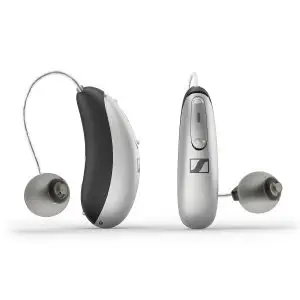
The Signia Active IX is a prescription hearing aid from WS Audiology with a similar earbud-style design. Our licensed professionals program it to your hearing test instead of you setting it up yourself in an app.
What It Offers
- Bluetooth streaming. According to Signia, it streams calls, music, and audio directly from iPhone and Android phones.
- Signia IX sound processing. Signia says its Integrated Xperience (IX) platform separates speech from background noise to help you follow conversations in noisy places.
- Earbud-style design. Signia designed it to be worn openly, with a look similar to wireless earbuds.
- Rechargeable. It charges in its included case.
The Tradeoff
It’s more visible than a completely-in-canal hearing aid. If you want an invisible fit, the Rexton inoX-CIC Li is the better match. If you want streaming, the Active IX is.
Next Steps
- Take our free Screening Test to see how your hearing affects daily life.
- Get a current hearing test. Rexton Inox is programmed from your audiogram before it ships.
- Browse or view Rexton Inox 40 product page. Our price is so affordable. Hearing aids and fitting services are sold separately.
- learn about a telehealth follow-up, or visit Hears to U in Hopkins, Minnesota.
- Want Bluetooth streaming? View our alternative to the Eargo and the Sony CRE-E10. See Signia Active rechargeable IX bud.
New hearing aids from Hears Hearing & Hearables come with a 45-day trial under Minnesota law.
Moving On From Eargo
If your Eargo hearing aids still work, keep them going as long as they serve you. When it’s time to replace them, you don’t have to give up an invisible fit.
Contact us and we’ll help you decide whether Rexton Inox 40, Signia Active IX or another style fits your hearing and how you live.
Frequently Asked Questions: Eargo Hearing Aids
Is Eargo going out of business?
Eargo’s parent company, LXE Hearing, announced in July 2026 that it is winding down its U.S. operations. Customer and technical support ends October 22, 2026, and the deadline for new warranty or repair requests was September 15, 2026.
Will my Eargo hearing aids stop working?
According to LXE, existing Eargo hearing aids are expected to keep working using their onboard controls and last saved settings. The app leaves the app stores on October 22, 2026, so update it to Version 9, sync your settings, and keep it installed on your phone.
Can I still buy Eargo hearing aids?
Eargo is no longer supported in the U.S. Even if you find a pair for sale, there is no ongoing support, app download, or warranty service, so we don’t recommend buying them.
What is the best alternative to Eargo hearing aids?
If you chose Eargo for its invisible fit, a close prescription alternative is the Rexton Reach inoX-CIC Li 40. It’s a rechargeable, instant-fit completely-in-canal hearing aid that Rexton rates at up to 28 hours per charge, and our licensed professionals program it to your hearing test. If you need Bluetooth streaming, the Signia Active IX is an earbud-style option.
What replaces the Sony CRE-C20?
The Sony CRE-C20 was a rechargeable, self-fitting OTC hearing aid that sat completely in the ear canal, and it was discontinued in 2026. The closest option we carry is the Rexton Reach inoX-CIC Li 40. Both are rechargeable, in-canal designs from WS Audiology technology, and Rexton rates the inoX at up to 28 hours per charge, the same rating Sony gave the C20.
Is the Rexton inoX-CIC Li the same as the Sony CRE-C20?
No, but they’re closely related. Sony made the CRE-C20 with WS Audiology, which also makes Rexton. The C20 was an OTC hearing aid you set up yourself in an app. The Rexton inoX-CIC Li 40 is a prescription hearing aid in a similar in-canal style, programmed by a licensed professional to your hearing test.
What is an alternative to the Sony CRE-E10 or Link by Eargo?
Both were earbud-style hearing aids with Bluetooth streaming, and both are no longer available. The Signia Active IX is a prescription hearing aid from WS Audiology with a similar earbud-style design. According to Signia, it streams calls and music from iPhone and Android phones, and our licensed professionals program it to your hearing test.
Is the Audicus Mini 2 the same as the Rexton inoX-CIC Li?
Not necessarily. According to Soundly, the original Audicus Mini was made by WS Audiology, which also makes Rexton and Signia, and the designs are similar. Audicus doesn’t say who makes the Mini 2. Both are rechargeable completely-in-canal hearing aids without Bluetooth streaming. Audicus programs the Mini 2 remotely, while the Rexton is programmed by a licensed professional you can also see in person.
Does the Rexton inoX-CIC Li have Bluetooth?
Rexton doesn’t list Bluetooth streaming for the inoX-CIC Li, so plan on no streamed calls or music. If streaming matters to you, the Signia Active IX streams from iPhone and Android phones, according to Signia.